
Self-Storage Roofing in College Station, TX
Self-Storage Roofing
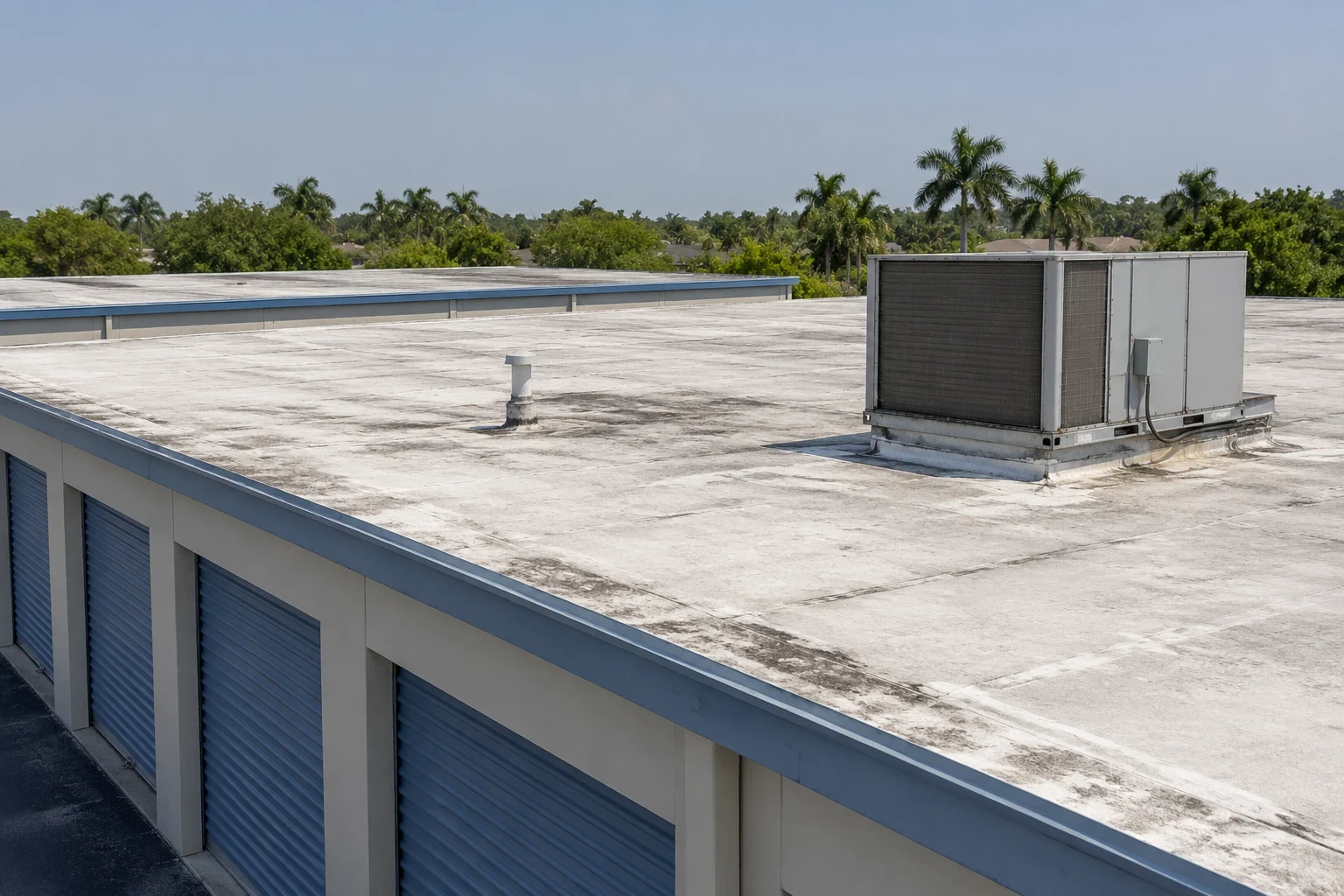
Self-storage roof maintenance has to account for unit access, tenant movement, and the value of property kept below the roof. A leak reported in one aisle or unit should be connected to an observed roof condition before the scope is set. We review accessible roof areas, drainage, edges, penetrations, and repair history, then coordinate with the facility manager on access and timing. In College Station and Bryan, each property requires its own condition record. The plan should identify what can be repaired now, what needs monitoring, and what information would support a larger capital decision.
Coordinate tenant access and unit protection
Before inspection, we ask how tenants enter the facility, which corridors must stay clear, and who can authorize access to a reported unit. The manager can identify gate procedures, service routes, loading or moving periods, and any areas needing notice. Those details help us position staging and plan a roof walk without interfering with normal operations.
Where an interior report includes only a unit number, we can work with the manager to match it to a building, row, and roof section before inspection. This avoids relying on guesses from a hallway location. The manager can also note whether water appeared during a particular weather period and whether a prior visit addressed the same area. The record then gives the next technician a focused starting point.
When a tenant reports water, we record the unit or interior location and the date of the report, then compare it with roof geometry and accessible details above. Water can travel before it appears indoors, so the source should be confirmed rather than assumed. Clear location notes also make follow-up easier if a second report appears in another area.
Read the roof layout as a set of service zones
Self-storage properties may have multiple buildings, interior corridors, exterior-access units, office areas, and different roof heights. We document each building or section separately and identify its roof assembly, edges, seams, curbs, and drains. A repair history can show whether a condition is isolated or has appeared in the same zone over time.
We keep photographs and observations tied to location references that a facility manager can use later. The record can distinguish an area that was repaired from a section that needs more review. If the portfolio also includes a warehouse or office building, its roof should be evaluated separately because access, interior use, and assembly details can differ.
Check water movement and perimeter details
Drains, scuppers, gutters, edge metal, and transitions affect how water leaves the roof and where it may collect. We inspect accessible connections, note debris or visible damage, and compare the location with any reported ponding or interior water. If a roof contains several sections with different slopes, the report should identify them rather than describe drainage as one condition for the whole property.
A focused drain and scupper review can help determine whether an inlet, connection, or surrounding roof area needs attention. We also record areas that were inaccessible. The facility team can then decide whether another visit or additional testing is needed before authorizing a larger repair.
Use local weather history to guide follow-up
Hail from 1 inch to 2.75 inches was recorded in Bryan and College Station during an April 8, 2021 storm. For a self-storage operator, that history can inform what to document after an event, but it does not confirm impact at a property. We note reported timing, visible conditions, and the roof area each photograph represents.
A separate College Station thunderstorm on June 3, 2023 produced an 85 mph gust. If an operator reports a wind concern, we inspect accessible perimeter details and compare them with prior repairs rather than infer damage from a regional measurement.
Set repair boundaries before discussing replacement
At a storage property, a useful proposal connects the reported unit or aisle with the roof section that can be examined above it. We note whether the evidence points to one penetration, a seam, perimeter detail, or a condition spanning more than one building area. Before choosing a repair, the manager should know which symptoms are confirmed and which remain unexplained. A TPO roof assembly needs repair details that suit the membrane and its transitions; observations from a neighboring structure should not be carried over without checking its system. If records show repeat trouble across multiple sections, a replacement scope can compare the affected zones, access needs, and future maintenance implications. The recommendation distinguishes a limited corrective action from items that merit further investigation.
Plan work around gate and facility hours
For a multi-row property, draw the proposed work area against the drive aisles, office, and occupied unit blocks. The site manager can identify normal gate hours, delivery patterns, and routes that must remain open for customers. We can then set a work boundary that avoids directing visitors through active staging or across a temporary protection area. If roof access requires a staff escort or a particular ladder point, document who will provide it and when. Keep the sequence in manageable blocks, with a brief handoff after each block describing completed work, any area not reached, and the next planned move. This lets the property team update its own notices while keeping the roofing crew’s work area clear and specific.
Keep local context separate from property findings
Storage properties in the Bryan and College Station market sit within an area that includes healthcare and research, retail, lodging, offices, manufacturing, and rail-linked industry. That mix can create different delivery and access schedules from one commercial asset to another. The operator's own records determine how a roof visit is arranged.
FM 2818, also called Harvey Mitchell Parkway, spans about twenty miles between SH 6 at its northern and southern ends. It serves as a useful reference when coordinating across Bryan and surrounding College Station locations, but it does not tell a crew where a specific storage property's gate or roof entrance is. Confirm those details with the manager.
For each building, keep a map of roof sections, drain locations, recurring leak reports, and prior repairs. That file can help separate an issue at one unit block from a concern in another section, while avoiding assumptions based on a neighboring property.
Commercial Roofing Questions
What does a self-storage manager need to share before inspection?
Provide the roof plan, reported unit or aisle locations, leak dates, gate and roof-access procedures, staging limits, and facility hours. We confirm access details with the manager before scheduling.
Can roof work proceed while tenants are using the property?
Often, yes, if the manager and crew define the active work boundary before arrival. We coordinate vehicle movement, office access, and temporary protection around the selected roof section, then confirm which customer routes must stay clear during that period.
How do you investigate water reported inside a storage unit?
We record the unit identifier supplied by the manager and the date of the report, then relate that information to the roof section and drainage route above. The inspection documents visible evidence without entering tenant space; unresolved paths are listed with the additional access needed.
Do you inspect the roof after a storm?
A post-event visit can document visible changes at accessible edges, seams, penetrations, and rooftop accessories. We keep the event date and reported area with the photographs, then compare those observations with the property's prior repair history before defining any corrective work.
What should be included in the closeout?
A useful closeout identifies reviewed zones, photographs, completed work, open items, access limits, and suggested follow-up. Those notes help the manager retain a clear property-specific condition history.
Coordinate a storage roof review
Share the roof plan, leak history, tenant-access procedures, and facility hours. We can review a College Station or Bryan property with your manager and document a practical next step.
Related Roofing Work
Request a Roof Assessment
Tell us about the building, the roof and what you are seeing. We look at leaks, storm and wind damage, aging membranes and planned replacements on commercial properties across College Station, Bryan and Brazos County.