
Commercial Roofing in Bryan, TX
Bryan
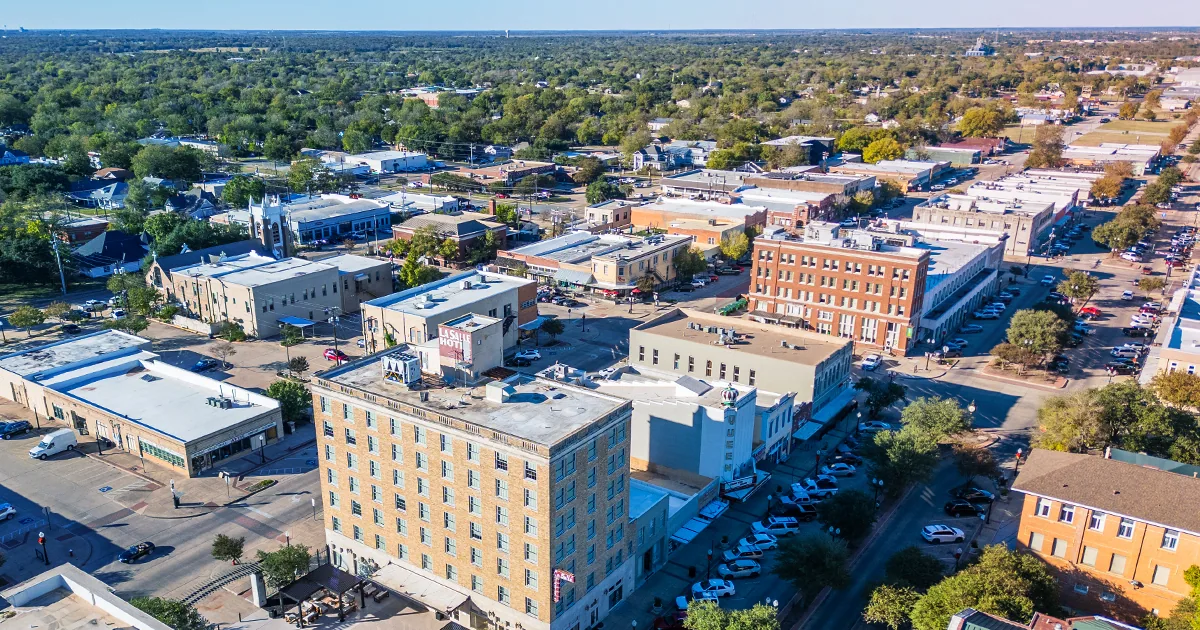
Manufacturing parcels in Bryan, TX sit within a commercial mix that also includes existing retail, developable property, advanced research, healthcare, and rail-ready industrial land. That range changes what a roof visit must answer. A tenant-facing storefront may need a short, contained repair window; a production or industrial building may need equipment access and work sequencing planned well ahead. We begin with the use, existing assembly, and condition record, then define what can be repaired now and what belongs in a capital scope.
Downtown Bryan and Texas Avenue are part of the city’s redevelopment activity, while industrial property and research uses extend beyond those commercial areas. On each property, our review follows the actual roof: seams, penetrations, drains, perimeter attachment, and transitions around equipment. We can pair field observations with a documented commercial inspection, giving the manager a set of locations and actions rather than a broad condition label.
Separate use from assembly
A building’s business category helps set the access plan, but it does not identify the membrane, insulation, or deck beneath it. We confirm what the roof reveals and compare it with available plans, prior scopes, and repair records. That step matters in a city with retail, manufacturing, research, healthcare, and industrial property, where similar exterior footprints can hide different roof layers and equipment loads.
Commercial design guidelines apply to existing and new commercial properties and to multifamily buildings three stories or taller along designated Bryan corridors. Roof work near those corridors may interact with broader exterior planning, so we coordinate roof scope with the property team’s design and permitting schedule. The specific review path depends on the project; we identify questions early and document the roof details that shape the design.
For the first field pass, we map access points and roof zones, then record visible repairs, surface changes, drain locations, flashing transitions, and edge conditions. We note which areas could not be reached and what equipment or tenant schedule constrained access. The result helps the owner compare follow-up findings with a future visit without treating an inaccessible area as if it had been inspected.
Follow the water path
A water mark below a roof assembly can sit far from the opening. We trace the report against the roof plane and inspect penetrations, curbs, membrane seams, wall transitions, and drainage details. On a production property, pipe supports and equipment bases can create several interfaces close together. Photos that label each transition help the maintenance team distinguish a confirmed defect from a nearby detail that only needs observation.
Repair scope depends on what the assembly shows after moisture and attachment are considered. A split seam over dry, stable insulation may be isolated and repaired; a soft area or widespread wetness can change the work boundary. We explain which observations support each option and plan leak repair around access and operating hours. If a temporary measure is needed to protect interior use, we record it separately from the permanent correction.
Drainage also deserves an independent check. We look for debris, outlet restrictions, damaged strainers, and low areas where water may remain. If the outlet is clear but the roof continues to hold water, the question shifts from housekeeping toward slope, deflection, or assembly condition. That distinction prevents a recurring symptom from being assigned the same maintenance task each visit.
Treat storm records as a prompt
Hail reports during an April 2021 severe storm covered Bryan and College Station, with reported stones from one inch to two and three-quarter inches. That regional record can help an owner decide when to schedule a post-event inspection; it cannot establish impact on a specific roof. We inspect the property that was reported, mark visible bruising or punctures, and check edge metal, rooftop equipment, and flashing where movement may have opened a path for water.
Wind findings call for a different look. Perimeter attachment, coping joints, corner details, and roof-to-wall transitions can be vulnerable even when the center field remains flat. We photograph a lifted or displaced component in context and note whether it exposes the assembly or leaves a water entry point. A qualified wind-damage roof repair scope can then address the urgent opening while preserving a record for any larger decision.
When weather reports and roof evidence are considered together, the file is more useful for maintenance and insurance documentation. We separate event timing, observed condition, testing performed, and work completed so later reviewers can follow the sequence without assuming that every mark came from the same event.
Match the scope to the roof
A repair budget and a replacement allowance answer different questions. When findings are isolated and the surrounding assembly is serviceable, targeted work can preserve the roof while the owner tracks condition. Repeated failures, extensive wet insulation, loose attachment, or failing transitions may support a larger project. We connect each recommendation to the location and condition that prompted it, then outline what additional testing would change the decision.
Industrial and manufacturing operations can make shutdown risk a major scheduling factor. We identify noisy or obstructive work, crane or lift access, rooftop equipment dependencies, and any areas that must remain available. A phased reroof plan can organize removal and installation by section, with temporary weather protection and interior coordination considered in the sequence. The field plan should state assumptions about staging, weather windows, and trade access.
Existing roof layers also limit the available alternatives. A recover may be practical only if the current assembly is dry, secure, and suitable for another layer; otherwise removal can be necessary. We document the reasons and describe insulation, drainage, flashing, and equipment transitions within the replacement scope. Those details let a facilities lead compare bids on the same roof conditions and planned interruptions.
Keep the property record current
Repair invoices and inspection notes are most useful when they point to a roof location. We mark each area on a plan or aerial, attach clear photographs, and state whether the observation was repaired, deferred, or left for verification. An owner can carry that record from maintenance into a replacement budget without trying to reconstruct the reasoning from a short work order. A condition report keeps those observations together.
Bryan’s industrial areas include the Brazos County Industrial Park and Texas Triangle Park, with rail-served property in the city’s broader industrial base. That regional context helps asset teams coordinate routes and contractors, while each roof still needs its own assembly record and inspection findings. Where a portfolio extends along the same commercial network, we can coordinate a separate College Station property review and keep Bryan’s building history distinct. A separate Downtown Bryan roof review can preserve the same location-based reporting for another part of the city.
For a follow-up, share roof plans, known leak locations, previous repairs, access restrictions, and the dates when production or tenant activity limits work. We will use that information to set an inspection window and prepare actions in an order that the building team can carry out.
Commercial Roofing Questions
Does a hail report confirm damage to a Bryan roof?
No. It gives the property team a reason to inspect, while the roof itself determines what can be documented. We check surface marks, penetrations, edge components, and areas where moisture testing may clarify the condition.
How do you inspect around active manufacturing?
We map equipment and access limits with the site contact, then agree on roof zones and work windows. If a task could affect production or another trade, we identify it in the sequence before the crew mobilizes.
What can make a leak repair expand in scope?
Moisture beyond the visible opening, unstable insulation, recurring seam separation, or several failed transitions can widen the repair boundary. We record the evidence and explain what confirmation is needed before extending the work.
Can Bryan commercial guidelines affect roof work?
Projects on designated corridors may involve exterior design review alongside the roof scope. We account for the property team’s applicable review schedule when documenting visible roof changes and planning construction details.
What should be included in a repair handoff?
A useful handoff identifies the roof location, observed condition, photographs, completed work, and any item left for follow-up. We include access assumptions and the next inspection need so the record remains actionable.
Plan a Bryan commercial roof review
Send the roof history, operating schedule, equipment-access needs, and target timing. We can inspect the property, document its condition, and prepare a coordinated repair or capital sequence.
Related Roofing Work
Request a Roof Assessment
Tell us about the building, the roof and what you are seeing. We look at leaks, storm and wind damage, aging membranes and planned replacements on commercial properties across College Station, Bryan and Brazos County.