
Commercial Roofing for Healthcare Systems in College Station, TX
Healthcare Systems
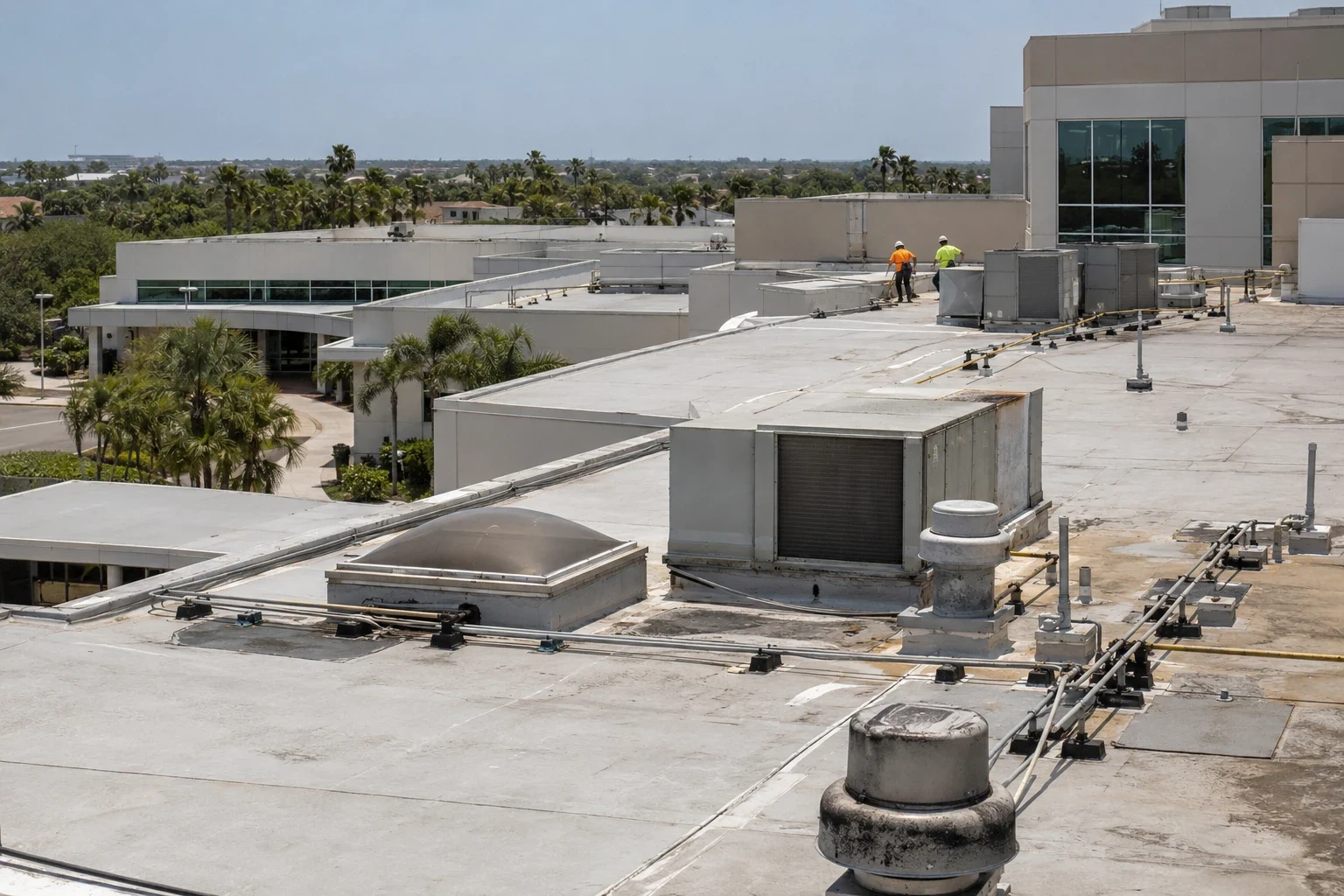
Clinical buildings keep operating while facilities staff manage access, equipment, patient movement, and vendor work. A roof inspection at a healthcare property in College Station, TX needs a route that protects those functions while giving the facilities team useful findings. We review accessible seams, flashings, drains, curbs, penetrations, and perimeter details, then connect roof observations with the locations and timing of reported interior symptoms. The result should show what needs attention now, what can be scheduled, and which access restrictions affect the next step.
Before a visit, share the approved access path, restricted areas, operating hours, equipment routes, and the person who can coordinate with clinical staff. We can plan roof work with a facilities contact and keep the findings tied to roof areas rather than making assumptions from a ceiling stain. For property teams overseeing a broader portfolio, our managed-property roofing coordination can help keep each building’s record distinct.
Protect the operating route
Healthcare access rules may shape where a crew can enter, what lift location is practical, and which roof sections can be reached during a given window. We confirm escort requirements, roof hatch access, staging, material movement, and any area that must remain clear. The site contact identifies how crews communicate before arriving and who receives an update if weather or a concealed condition changes the sequence. This preparation reduces confusion at the building boundary and helps facilities staff keep clinical routes available.
Work near air intakes, exhaust points, or rooftop mechanical equipment deserves specific coordination because those details connect the roof to building services. We note equipment operating restrictions, protect nearby surfaces, and avoid placing material or debris where it can affect service access. When a facility includes clinics and administrative space, each may have different hours and access procedures. Keep those requirements explicit for each healthcare building, even when several facilities share a portfolio reporting format.
Some roofs include access points that are shared with maintenance vendors or building engineers. We identify who can authorize entry, which ladders or hatches are available, and whether equipment needs to be isolated or observed during inspection. If the planned route changes on arrival, the crew checks with the designated contact before moving into another area. That simple boundary keeps the field review aligned with the facility’s access rules and leaves a clear note when a roof section still needs to be seen.
Follow symptoms to roof details
Interior water reports provide a starting point, not a roof diagnosis. We compare the reported room, date, and weather conditions with the nearest accessible drains, seams, wall transitions, penetrations, and equipment curbs. Water can travel within an assembly before appearing indoors, so we document the path examined and identify any area that was not accessible. If additional moisture testing is warranted, the report states what it is intended to answer and how the result will affect scope.
Healthcare facilities need findings that can be acted on without overstating certainty. We provide photographs by area, distinguish an open detail from staining or surface wear, and state whether temporary protection or a repair is recommended. Our infrared moisture survey can support a targeted investigation when roof conditions and access make it useful. A condition report with location-based photographs gives facilities and property staff a common record for approval, follow-up, and maintenance scheduling.
Choose work for the assembly
A repair may fit when the opening is identifiable and the surrounding roof remains serviceable. Broader moisture, recurring leaks, widespread seam separation, or deterioration across several roof areas can justify a different review. We examine the existing membrane, insulation, attachment, drainage, and penetrations before discussing restoration or replacement. The recommendation should explain the condition evidence, affected area, and operational consequences rather than begin with a product label. Where a replacement is warranted, the occupied-building sequence can account for patient access, interior protection, and continued building services.
Regional education, government, and healthcare organizations together represent a substantial share of major employment in the Bryan and College Station area. The local mix also includes research and health-science space, offices, retail, hospitality, and industrial property. That context makes healthcare roofs part of a diverse asset base, but it does not establish the construction or condition of any particular building. We verify roof type in the field and use its actual details to judge material compatibility, repair approach, and whether a longer capital scope should be considered.
Phase around clinical operations
Phasing can keep a project workable when each section has a different access route or interior consequence. We define boundaries, temporary protection, equipment needs, and transition points before moving between roof areas. Facilities staff can identify procedures, scheduled service windows, and spaces where noise, odor, or overhead activity needs advance notice. The plan also states how crews will secure tools and materials, keep drains clear, and respond if a forecast changes during an open work area.
FM 2818, known locally as Harvey Mitchell Parkway, connects commercial and residential uses across the urban area between Bryan and College Station. For healthcare operators with facilities on both sides of the corridor, nearby visits may be coordinated where schedules permit, while each roof receives its own access plan and condition report. A local Bryan roof service visit can be scheduled separately from a College Station inspection. Work that affects occupied space may also need a construction coordination partner to align adjacent trades and building notices.
Keep urgent repair and planning together
An active leak near care areas, electrical equipment, or stored supplies calls for a prompt response. Our emergency service is available around the clock, including weekends and holidays. We coordinate safe roof access, limit further water entry where practical, protect affected interior areas, and report what remains uncertain. Once conditions are stable, we can inspect the related assembly and prepare a permanent repair or broader recommendation. The first visit should leave the facilities contact with a clear status and a way to track follow-up.
Hail and severe wind events have occurred in the Bryan and College Station region, so a post-storm review process can help facilities teams prioritize reported conditions. It does not mean every roof sustained damage. We inspect the areas that can be reached safely, look for impact or movement at vulnerable details, and compare observations with known service history. A wind-related roof review can document conditions and repairs, while a later maintenance visit records whether earlier details remain sound. Facilities staff can then attach the work record to their building maintenance files.
Commercial Roofing Questions
Can roof work be coordinated around patient services?
Yes. We confirm access routes, operating windows, restricted zones, equipment requirements, and communication contacts, then set the sequence with the facilities team.
What should a healthcare leak report include?
Record the room or area, time observed, active water status, and any nearby equipment or sensitive use. We compare that information with accessible roof details and note what further access may be needed.
Do you inspect around rooftop mechanical equipment?
We review accessible flashing, curbs, supports, and adjacent membrane, coordinating with the site contact when equipment or service access is restricted.
How do you choose repair or replacement?
The assembly condition, moisture evidence, repair history, drainage, and extent of defects guide the scope. We document what supports the recommendation and any remaining question.
Can an emergency visit include a permanent repair?
When access, weather, and the visible condition permit, we can complete a defined repair. If the cause or extent needs more review, we stabilize the condition and document the follow-up work.
Plan a facilities-led roof review
Share access requirements, operating windows, equipment routes, recent reports, and maintenance history. We will coordinate a field review around clinical operations and document the next decisions.
Related Roofing Work
Request a Roof Assessment
Tell us about the building, the roof and what you are seeing. We look at leaks, storm and wind damage, aging membranes and planned replacements on commercial properties across College Station, Bryan and Brazos County.