
Built-Up Roofing in College Station, TX
Built-Up Roofing
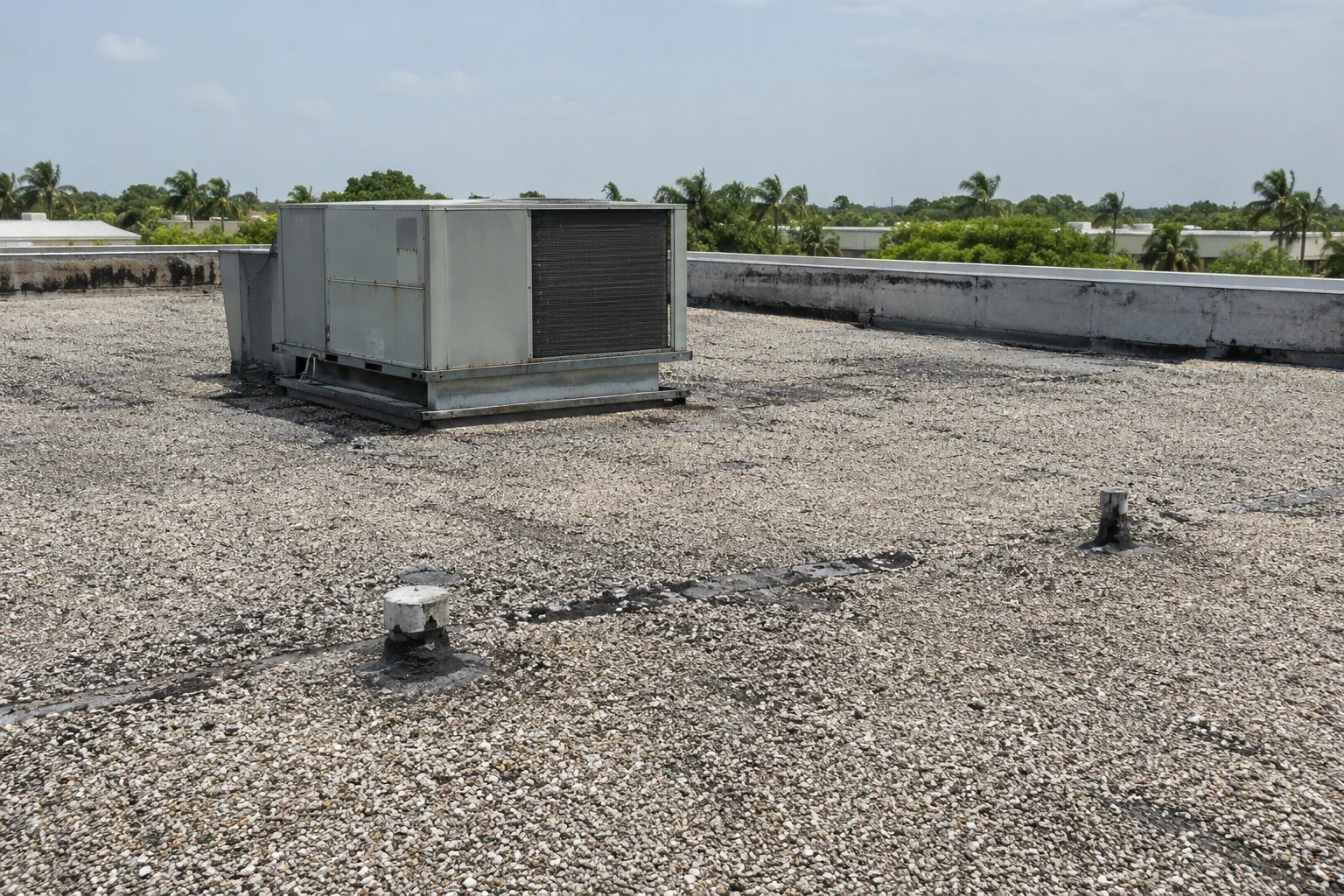
Built-up roofing earns its place through layers: plies of reinforcing fabric set in bitumen, finished with a surface suited to the assembly. That layered construction can serve a large commercial roof for years, but age, water, repairs, and added equipment change what the layers can support. We inspect the field, edges, penetrations, and drainage as one roof system, then document where the surface remains serviceable and where the evidence points to deeper review. In Bryan and College Station, research, health-science, office, manufacturing, retail, and hospitality properties bring different access and operating needs to the roof visit.
A useful assessment explains how the roof is built before pricing work. We identify visible surfacing and ply conditions, flag concealed questions, and separate localized repair from replacement planning. Start with a commercial roof inspection when leak history or asset records do not describe the current assembly.
Find the Layers Before Setting the Scope
A built-up roof may have several membranes, insulation layers, and surfacing installed at different times. Old invoices and plan notes help, but a core sample or other approved test may be needed to confirm the stack. We record what is visible at roof edges and penetrations, compare it with maintenance records, and mark test locations for owner review. A repair estimate based on an assumed number of layers can miss tear-off, disposal, or attachment work that changes the project. A modified-bitumen comparison can preserve the assembly map for future budgeting.
Blisters, ridges, splits, exposed fabric, and loose surfacing each tell a different story. We look for pattern and location: a few blisters may be isolated, while recurring splits near seams or ponding areas can point to broader movement or moisture. The survey records the condition without treating every surface mark as proof of failure. Where the top layer hides the condition below, we explain what additional test could confirm it and why the result matters to the recommended scope.
Read Aggregate and Coating as Part of the Assembly
Gravel surfacing can protect bitumen from direct exposure, but displaced aggregate can leave a vulnerable area or collect at an outlet. Smooth surfaced roofs rely on a different cap layer and maintenance approach. We note exposed bitumen, loose embedded rock, worn flood coat, and places where foot traffic has changed the finish. Those observations are useful when paired with leak history and drainage, because a roof's surface alone does not show whether water has reached insulation or deck.
Repair materials need to suit the existing asphalt or coal-tar system and the surface condition. A patch cannot bond reliably to loose, damp, or heavily contaminated material without preparing the substrate. We identify where cleaning, drying, priming, or removal is required, then set a reasonable boundary around each repair area. If the owner is considering a different finish, a silicone coating review should follow an assembly and adhesion assessment rather than a visual guess.
Follow Ponding Back to Its Cause
Built-up roofs often reveal trouble where water remains after surrounding areas drain. We trace slope toward drains and scuppers, note sediment lines and recurring ponding, and inspect nearby seams and flashing transitions. A blocked outlet may call for maintenance; a low area may reflect insulation settlement or deck movement. The work plan distinguishes those conditions so a cleaning item does not conceal a slope or structural question. A drain and scupper assessment can document outlet condition and overflow paths.
At walls, curbs, and pipe penetrations, we check the flashing height, corner reinforcement, termination, and tie-in to the field plies. If a leak appears far from its entry point, a roof map helps the manager compare interior reports with likely water paths. We also record any equipment access route that crosses the built-up surface. For occupied properties, clear walk paths and temporary protection help crews inspect without spreading aggregate or damaging a sound area.
Plan Field Work Around Heat and Storm History
The July climate record for College Station places its mean high at 95.4°F. A dark built-up surface can become a demanding work area, so the crew plans bitumen handling and repair timing from the conditions on site. The historical average helps frame seasonal scheduling, while the day's temperature, shade, wind, and repair method set the safe working window. A climate statistic cannot establish the condition of a particular roof.
The National Weather Service recorded 1 to 2.75 inch hail across Bryan and College Station in April 2021, and a 2023 severe storm brought an 85 mph gust to College Station. Those events make dated photographs and current edge, flashing, and surfacing checks useful when an owner reviews a roof file. We document what is present now and keep regional weather history separate from a property-specific damage conclusion. A storm damage review can organize a current survey after an event.
Compare Repair, Recover, and Removal
A limited repair may be reasonable when the field is dry and attached beyond a defined defect. Recover needs evidence that the existing system can support another assembly, including moisture findings, attachment, total layer count, edge height, and drainage. Widespread wet insulation, poor attachment, repeated distress, or uncertain deck condition can make removal the more responsible baseline. We identify the assumptions that could change quantities once work exposes concealed layers and keep alternates tied to the same inspection map.
The city adopted its 2024 International Building Code and 2024 International Energy Conservation Code for projects starting January 1, 2026. Commercial and multifamily energy designs also need a 2024 IECC COMcheck report. The project team should confirm permit timing and assembly design before the capital estimate is treated as final. A recover feasibility review can define the tests and transitions that affect an overlay. When removal is indicated, a replacement scope should address insulation, edge metal, drains, curbs, access, and protection below as separate quantities.
Keep Access and Dry-In in the Work Plan
Built-up tear-off and hot work may affect tenants, staff, deliveries, and operations below. We plan which section opens, how material reaches the roof, where debris moves, and how the crew protects interior contents before work begins. Each shift should end with a defined dry-in condition and a clear handoff if weather or site access changes the sequence. A occupied-building plan can align roof sections with working hours and interior protection needs.
FM 2818, also called Harvey Mitchell Parkway, runs roughly 20 miles between its north and south SH 6 connections and serves both commercial and residential areas. A property near that route may have access windows, loading rules, or parking limits that shape material staging; its manager confirms the site-specific rules. College Station's Midtown Business Park is planned across 252 developable acres for office, light-industrial, manufacturing, commercial, corporate, and retail use. Those broad land uses reinforce why roof plans should account for different loading and operating patterns, without assuming that any one property shares the same conditions. The College Station service area page covers local project coordination.
Commercial Roofing Questions
How do you confirm how many built-up roof layers are present?
We review records and exposed edges first, then recommend an approved core or other test when concealed layers could change the repair, recover, or removal scope. Each test location is recorded on the roof map.
Can aggregate be replaced without replacing the whole roof?
Sometimes. The surface must be assessed with the underlying plies, moisture, attachment, and drainage. We identify localized repair areas and explain when the evidence supports a wider replacement review.
Does hail history prove that a built-up roof is damaged?
No. Regional storm records provide context for a current field survey. We document observable conditions and recommend further testing only when the result could change the work plan.
What makes a recover option feasible?
The existing roof generally needs to be dry, attached, compatible, and able to accommodate the proposed transitions and drainage. Layer count, edge height, and code review also affect the decision.
What should the owner provide before the inspection?
Roof plans, prior repairs, leak dates, access rules, and any known test results help us connect field observations with the asset record. We can label findings by roof section for follow-up.
Review the Built-Up Roof Assembly
Share available roof plans, leak history, repair records, access limits, and capital timing. We can map the visible conditions, identify needed tests, and prepare repair or replacement limits for review.
Related Roofing Work
Request a Roof Assessment
Tell us about the building, the roof and what you are seeing. We look at leaks, storm and wind damage, aging membranes and planned replacements on commercial properties across College Station, Bryan and Brazos County.