Commercial Roof Drain and Scupper Repair in College Station, TX
Commercial Roof Drain and Scupper Repair
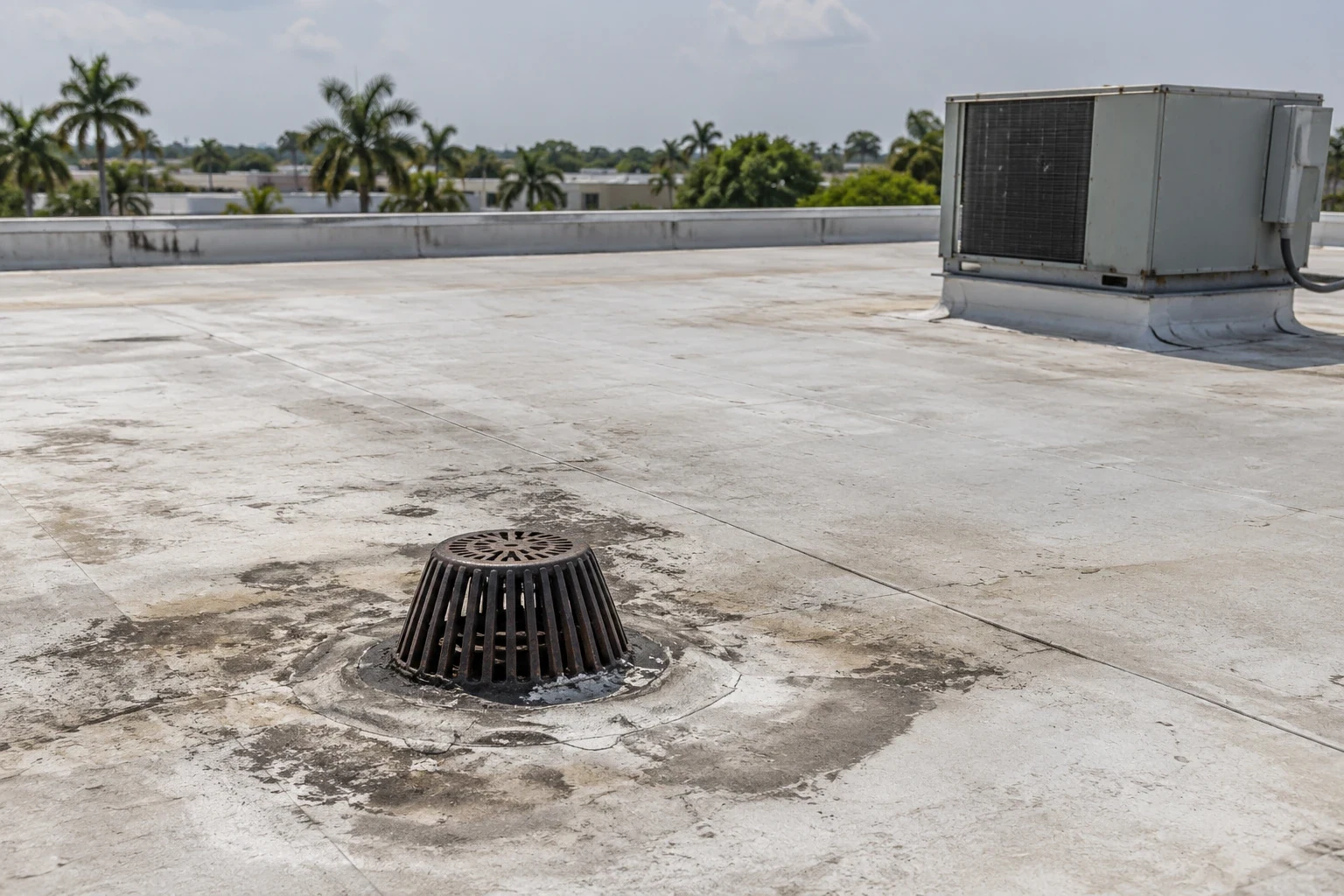
Water standing at a drain, scupper, or low roof area in College Station, TX can point to debris, a damaged outlet, a changed roof slope, or a detail that no longer sheds water. We trace the route from the roof field to the discharge point, inspect connections and nearby seams, and record whether cleaning or repair is supported by the condition. That distinction helps an asset manager avoid treating every pool as the same defect. The recommended work identifies the outlet or roof area, the obstruction or failure observed, and the follow-up needed if water still cannot move through the assembly.
Trace the route to an outlet
We start at the low point and follow the visible slope toward a drain bowl, scupper, gutter, or edge outlet. The review checks for leaves, packaging, sediment, and other debris that can block flow, but it also looks at the outlet connection, clamping area, flashing, and roof material around the opening. A clear bowl does not confirm that the full route is open. We note where water slows, where it spreads, and whether a raised patch, equipment curb, or seam changes the path.
If the condition returns after cleaning, the record should show what was removed and what remains unresolved. We inspect for loose flashing, corrosion, cracked sealant, open seams, displaced components, or a low area that retains water. When concealed wet insulation or a damaged drain body is possible, we identify a test or opening that can confirm the condition. A hands-on inspection can extend the review to adjacent roof sections when several outlets or low points are involved.
Repair the connection, not only the bowl
A drain repair depends on the roof assembly and the condition at the connection. We examine the membrane or built-up surface around the bowl, the clamping ring, flashing, and the outlet below where access permits. A separation at the membrane edge needs a compatible repair that restores the water barrier. A damaged pipe connection or obstructed leader may require coordination with the responsible trade. We document the boundary so the roof scope does not imply that concealed plumbing has been repaired when it was not part of the work.
At a scupper, water crosses the roof edge through an opening that must remain clear and properly integrated with the roof membrane and wall flashing. We look for separation, deformation, blockage, or a discharge point that sends water back toward the building. A perimeter review can identify related gutter or edge conditions when the outlet joins other roof-edge components. The closeout records what was corrected and whether the outlet can carry water to the intended discharge path.
Separate ponding from roof geometry
Persistent water after an outlet is cleared can indicate a low area, deflected deck, or slope change that cleaning will not correct. We compare the observed pool with the roof plan, nearby drains, and the surrounding surface. A localized depression may call for a more focused evaluation, while a broader drainage pattern may need tapered insulation or another designed correction. We do not promise that a coating or patch will remove ponding without changing the slope. The recommendation explains what roof condition limits flow and what additional design or testing would establish the right fix.
Heat adds a seasonal reason to review exposed outlets. College Station’s normal July mean daily high is 95.4°F; daily averages begin near 94°F and reach 97°F close to month-end. That sustained heat belongs in the roof maintenance record, particularly when surface wear or equipment exposure is being reviewed, but it does not establish a drainage defect at a specific building. If water has reached an occupied area, a leak trace can connect the interior report with the roof's slope and outlet conditions. Any repair boundary follows the field evidence.
Plan access around active properties
Drain maintenance can involve moving debris, opening a strainer, or working beside rooftop equipment and occupied areas. We confirm roof access, fall-protection points, tenant or production hours, and any route that needs to remain clear. If material must be removed from an outlet, the property contact can identify where it may be staged and how runoff will be managed during the work. A multi-section roof may need each drain labeled by area so follow-up observations are assigned to the right building contact.
The FM 2818/Harvey Mitchell Parkway route runs roughly 20 miles between its SH 6 junctions, linking commercial and residential areas across the two-city region. For a property near that corridor, service-vehicle staging or a loading entrance may affect how the crew reaches the roof. We coordinate that path with site operations rather than assuming a parking or delivery area is free. The Bryan and College Station core also includes retail, research, healthcare, manufacturing, and rail-served industrial property, so a drainage plan may need to account for different occupied uses below the same roof. The access notes remain with the service record.
Leave a repeatable service record
A useful drain record identifies the outlet, roof section, debris or defect found, work performed, and any condition that remains open. Photographs should show the bowl or scupper in relation to the surrounding roof, not only a close-up that cannot be located later. We note whether water moved after service and whether a return check or a larger slope review is recommended. If an outlet has required repeated attention, the maintenance log can compare it with prior visits and indicate when a capital correction may be more appropriate than recurring cleaning.
Across College Station and Bryan, a manager can keep outlet notes alongside the roof's seam, flashing, and leak history. A maintenance program can carry recurring drainage tasks into the operating calendar, while a storm condition review can inspect an outlet after wind or hail when field evidence warrants it. We can document findings in a condition report so the next facilities review starts with the outlet location, observed change, and approved follow-up. Where the same outlet appears in multiple work orders, we compare dates, photographs, and the roof sections affected before recommending a larger correction. That record can show whether recurring blockage, a failed connection, or a low area is driving the maintenance load. We keep cleaning, repair, and design questions in separate line items so approvals match the work.
Commercial Roofing Questions
Why does water remain after a roof drain is cleaned?
The outlet may be open while the roof slope, drain connection, or nearby surface still restricts flow. We trace the route and record whether a repair, test, or slope evaluation is needed.
Can a scupper be repaired without replacing the roof?
A localized correction may be appropriate when the surrounding roof material is sound and the opening can be tied into a compatible detail. We inspect the membrane, wall flashing, and discharge path before setting the boundary.
Does ponding always mean the roof is failing?
Not by itself. We compare the location, duration, outlet condition, and surrounding assembly, then separate routine cleaning from a slope or repair issue that needs further review.
What access information should we provide?
Share roof access procedures, occupied hours, equipment restrictions, and the locations where water collects. That helps us plan the route and coordinate any work near tenants or production.
What should the drain service closeout include?
The note should identify the outlet, material, debris or defect found, work performed, and any remaining drainage concern. Photographs and a follow-up date help the next visit compare the same area.
Review roof drainage conditions
Send roof plans, outlet locations, recent leak notes, access rules, and occupied hours. We can trace the water path, document the connection, and define cleaning, repair, or slope follow-up.
Related Roofing Work
Request a Roof Assessment
Tell us about the building, the roof and what you are seeing. We look at leaks, storm and wind damage, aging membranes and planned replacements on commercial properties across College Station, Bryan and Brazos County.