
TPO Roofing in College Station, TX
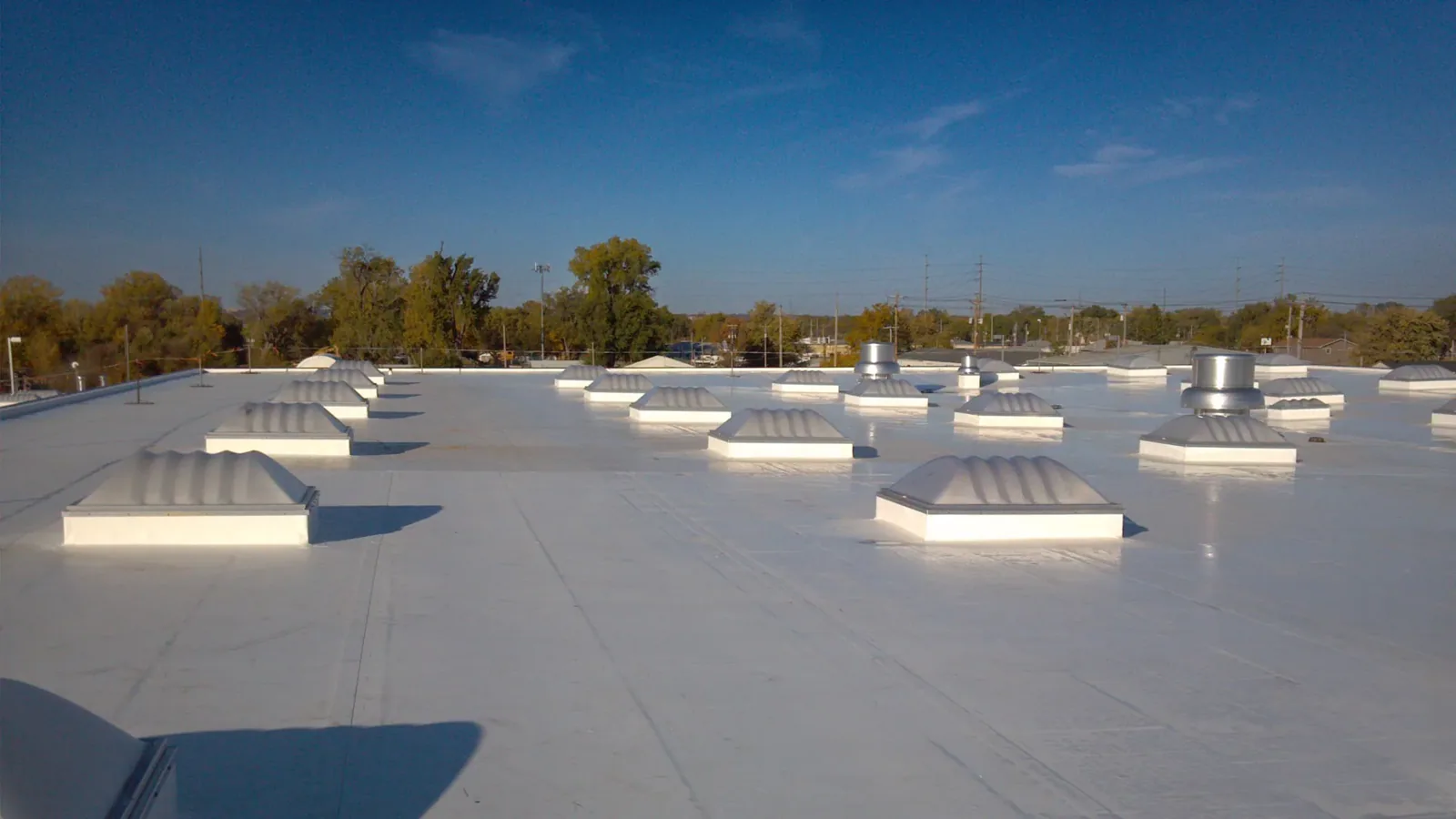
TPO Roofing
TPO roofs on research and light-industrial buildings in College Station, TX need a condition review that connects seams and details with the work below. We inspect welds, penetrations, edges, drains, and prior patches, then mark what can be repaired, tested, or included in a capital scope. The city's commercial stock spans technology, research, office, and light-industrial users alongside retail and hospitality, so equipment access and operating hours often shape the visit. A dated roof map gives the asset manager a practical way to compare the assembly with leak history and plan the next inspection window.
College Station's July average high of 95.4°F is useful when planning seam work and equipment access, although the crew follows the roof's actual surface temperature and daily conditions. Hail and wind records add separate questions about impact and attachment; they do not determine a building's condition. A field inspection can establish that baseline before repair or replacement is priced.
Read the Weld Before Chasing the Leak
A TPO seam is a welded connection, and a weak or contaminated weld can open under movement, repeated wetting, or poor installation conditions. We examine laps with a probe where appropriate, look for fishmouths and edge separation, and record whether a defect is isolated or repeated along a run. Repairs require compatible membrane and a clean surface; a patch placed over dirt or a loose edge can hide the symptom without restoring the bond. The report marks each seam location so the next crew can find the same detail.
Heat changes how work should be staged, especially when membrane rolls or equipment sit in direct sun. We check the roof surface and ambient conditions before welding, prepare manageable repair areas, and keep the active edge protected while the surface cools or weather shifts. If welds vary across a roof, we compare their pattern with repair records and exposed details before recommending broad replacement. A PVC membrane comparison may help when the building's process or maintenance needs call for a different single-ply system.
Separate Heat Exposure from Assembly Condition
Hot summer roof surfaces can narrow the practical window for seam work and equipment access. We check current surface temperature and site conditions before setting the day's work plan. We look for shrinkage at terminations, surface changes, brittle details, and stress near curbs, then compare those observations with the roof's age and repair history when available. We do not infer membrane failure from temperature alone; the field condition determines whether a repair candidate exists.
Where service access crosses a TPO field, a maintenance team can create repeated foot traffic and puncture risk. We note the path, inspect existing walk pads and transitions, and identify areas where added protection may keep routine service from damaging the membrane. If the building relies on rooftop units or research equipment, we coordinate access without assuming a shutdown is available. An equipment-access review can clarify the curb and support work included in the roof plan.
Use Hail and Wind Records as Inspection Context
The April 2021 storm across Bryan and College Station produced hail from one to 2.75 inches, while a June 2023 severe thunderstorm brought an 85 mph gust to College Station. Those documented events make impact marks, displaced edge metal, punctures, and attachment worth checking during a current survey. A regional report is a reason to review dated photographs and repair records, not proof of damage at a specific roof. We describe what we observe by section and keep event history separate from the condition finding.
On TPO, a hail review considers visible membrane cuts or indentations, the condition of cover board where accessible, and nearby seams or flashings. Wind review focuses on perimeter details, securement, corners, and transitions where uplift forces can concentrate. If the surface view leaves moisture extent uncertain, we can define a test area before the owner commits to a broad scope. A storm review can document current conditions and organize the next decision for the asset record.
Trace Water to the Outlet and the Detail
Water entry can begin at a seam, curb, drain bowl, scupper, or wall transition, and it may travel before showing inside. We trace the drainage path, note ponding and debris, and inspect how the membrane is secured at each outlet. A roof plan helps distinguish a recurring drain issue from a defect beside the drain. We also check that overflow paths remain clear and that equipment or later additions have not changed the path water takes across the field.
Drain repairs and membrane repairs should be priced as related but distinct work when the evidence supports both. The report can list cleaning or maintenance separately from a failed flashing detail and show which action needs a follow-up visit. If the assembly stays dry and attached beyond one opening, a focused repair may preserve a larger replacement budget. A drainage review records outlet conditions, and TPO repair work can address a defined seam or flashing failure.
Compare Repair, Recover, and Replacement Limits
A sound TPO field with a small number of open details may remain a repair candidate. Recover requires confirmation that existing layers are dry, attached, compatible, and suitable for the proposed assembly. Widespread moisture, weak attachment, repeated seam failure, or damaged deck can move the decision toward removal. We use test findings to set a boundary for each option and state which concealed condition could change quantities after work begins.
The city adopted new building and energy editions at the start of 2026: both codes are the 2024 versions. Commercial and multifamily design teams use 2024 IECC COMcheck reports to document the energy portion of the submittal. We record permit timing and the design review needed before treating code-related assumptions as settled. The estimate separates membrane, insulation, edge attachment, curbs, drains, access, and interior protection. A KEE roof assembly may warrant a system-specific comparison when chemical exposure or service requirements change the selection. The capital file should preserve the inspection map, tested areas, and reasons for the chosen sequence.
Schedule the Roof Around Live Work
A research or manufacturing building may not be able to release every roof zone at once. We coordinate hatches, equipment access, lift placement, material staging, and the hours when noise or temporary protection affects work below. Each shift has a defined area to open and a dry-in point before the crew moves on. If a delivery or equipment shutdown changes the sequence, the field contact receives the section affected and the next review point.
The FM 2818 corridor extends about 20 miles between its SH 6 junctions, and its land uses include commercial and residential destinations. For a TPO project nearby, the facility contact can confirm truck access, parking limits, and acceptable delivery times; we record those property-specific terms in the work plan. The occupied-building sequence can set daily handoffs, while a College Station roof review can begin with plans, leak logs, access procedures, and capital timing.
Commercial Roofing Questions
What should the TPO seam inspection record?
We map open or weak welds, patch edges, terminations, and nearby penetrations, then distinguish isolated findings from a repeated pattern. That helps the owner decide whether a repair, added testing, or wider review belongs in the next work order.
Does the 2021 hail event mean our membrane needs replacement?
No. It makes dated inspection and repair records useful, while the current roof survey determines whether this property has impact or moisture concerns. We document visible conditions and recommend a test only when its result could change the scope.
How does summer heat change TPO repair timing?
Hot surfaces affect handling and welding conditions. We select a work window from the actual roof temperature, weather, access, and the time available to leave each section protected and watertight.
Can a TPO roof be recovered instead of removed?
Recover depends on dry, attached existing layers, compatible details, and code requirements. We identify test locations and review edges, curbs, and drains before including an overlay as a priced option.
Which records should accompany the roof assessment?
Roof plans, past seam repairs, leak dates, equipment access rules, and any post-storm photographs help connect the field survey to the asset record. We can label findings by roof zone so the next inspection compares like areas.
Review the TPO Assembly in the Field
Share the roof plan, seam repair history, leak records, occupied hours, equipment-access needs, and capital timing. We can map conditions and prepare repair or replacement limits for review.
Related Roofing Work
Request a Roof Assessment
Tell us about the building, the roof and what you are seeing. We look at leaks, storm and wind damage, aging membranes and planned replacements on commercial properties across College Station, Bryan and Brazos County.