
Rooftop Equipment Curbs and Supports in College Station, TX
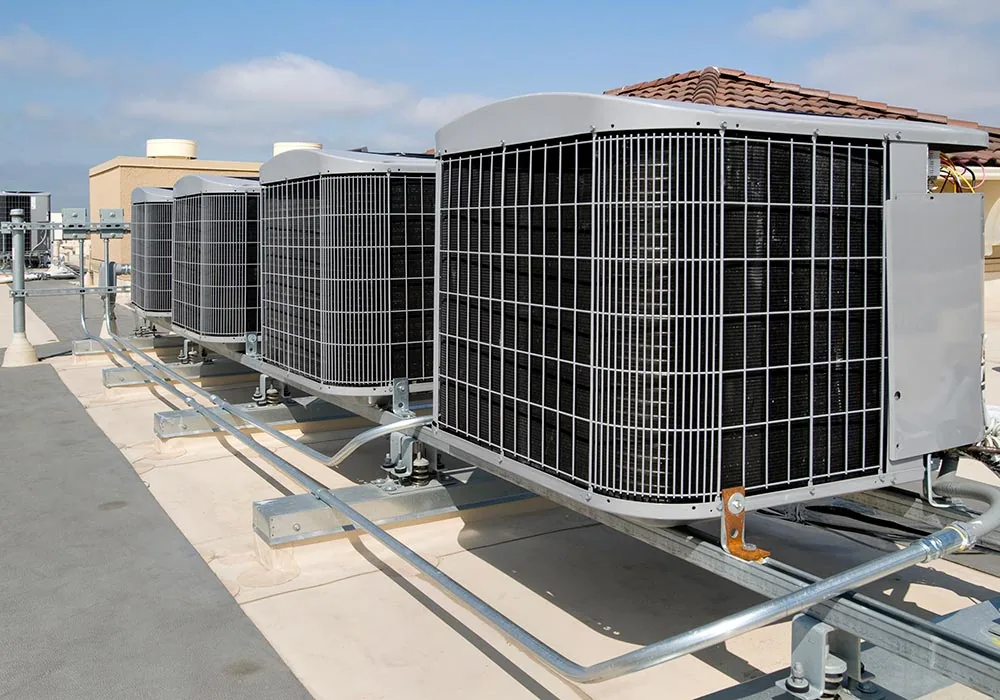
Rooftop Equipment Curbs and Supports
On a College Station roof, an equipment curb can carry more responsibility than its footprint suggests. It supports a unit, frames a roof opening, and joins the membrane to a raised edge that must stay watertight through heat, wind, service visits, and vibration. We inspect the curb, nearby flashing, fasteners, and the condition of the roof field before deciding whether work belongs at the penetration or in a wider area. The same review applies to pipe supports and service lines. For buildings in College Station and Bryan, the scope identifies each interface, the equipment that needs access, and the operating limits below it.

Trace the opening to its roof detail
A leak beside a rooftop unit can begin at the curb corner, split flashing, loose counterflashing, or a seam farther upslope. Water may follow insulation or deck before appearing indoors, so we compare the report with the roof surface and likely water path. We note whether the curb shifts, rocks, or has a gap at its base. Service visits may also disturb nearby membrane.
Each penetration gets its own location and condition. We photograph curb sides, corners, the top edge, attachment, and nearby seams, then record membrane type and prior patches. A roof inspection can map several units or pipe runs. If the opening is uncertain, a leak investigation follows the reported water path and checks adjacent transitions.
Separate support work from waterproofing
A roof membrane controls water; it is not a substitute for a stable equipment frame. If a curb rocks or a pipe rests on a sharp edge, adding sealant will not correct the load path. We document the condition and identify when a mechanical, structural, or equipment trade needs to confirm the support before roofing closes the detail. The scope can then show what is removed, how the surface is prepared, and how flashing joins the supported assembly.
Pipe supports need membrane clearance and a stable bearing surface. We check concentrated contact, rust, missing pads, loose straps, and supports that block drainage or trap debris. A relocation should preserve service access without pushing water toward a seam or drain. A drainage review can catch conflicts between equipment routes and the water path.
Account for heat and wind at exposed details
College Station's normal July mean daily high is 95.4°F. Repeated heating can stress exposed sealants and flashing, while equipment adds shade, vibration, and maintenance traffic. We assess the full detail, including material compatibility, preparation, and nearby membrane, so a later inspection can identify what changed.
The area also recorded an 85 mph gust during a severe thunderstorm in June 2023. At a curb or pipe penetration, that history makes perimeter attachment and lifted edges relevant inspection points. We check corners, metal cleats, fasteners, and membrane terminations around the opening. Bryan and College Station properties include research, office, retail, hospitality, manufacturing, and rail-served industrial uses, with different equipment schedules and interior activities.
Across the Bryan and College Station service area, a curb may sit above a loading path, customer entrance, or shared parking. We confirm roof access, safe lifting points, and the space below the repair before staging parts. If equipment will be moved, the schedule identifies who releases it and when the area can reopen to normal use.
Build a repair that can be inspected
Repair materials must suit the assembly. On thermoplastic membrane, we prepare the surface and weld compatible flashing into sound material. EPDM, modified bitumen, metal, and coated roofs need different preparation. A patch should not end on loose or contaminated material; deterioration beyond the curb may require removal to the limit of sound membrane.
A curb repair includes corners, vertical flashing, the upper termination, and counterflashing that sheds water over the membrane. An open seam or corroded metal at the unit base needs its own correction. A metal-detail review can identify related edge conditions. A TPO assembly may fit some roofs, depending on deck, attachment, drainage, and adjacent materials. We also check how a new patch meets older repairs, since overlapping edges can hold debris or redirect runoff toward a vulnerable seam.
After repair, we record photographs, method, and any issue outside the work boundary. If a curb is replaced during a larger project, a replacement plan can sequence equipment removal, temporary protection, and final flashing.
Set access before equipment work begins
Roof access can involve a facilities escort, equipment technician, and roofing crew in the same area. We identify who releases a unit, which service clearance must stay open, and where parts can be staged without blocking a hatch or walkway. Work near research, health-science, manufacturing, or retail space may need an agreed window. The schedule should name the equipment, roof section, and interior area affected.
For planned work, the contact can share unit schedules, leak reports, photographs, roof plans, and lifting restrictions. An active opening can be dispatched for response any time, with site entry coordinated through the building contact. A condition record can include photographs, repair boundaries, support observations, and follow-up in a roof condition report. Similar units across Bryan and College Station may sit on different assemblies, so findings stay tied to each roof.
When the curb work sits inside a larger replacement, access planning has to account for both equipment handling and the open roof boundary. We mark the sequence for disconnecting the unit, protecting the opening, rebuilding the assembly, and restoring the flashing. That handoff belongs in a replacement plan so the roofing and equipment trades can work from the same limits. After the detail closes, we can verify the repaired perimeter and photograph its corners before service access returns to the equipment technician.
Commercial Roofing Questions
What belongs in a rooftop unit curb repair?
The scope should identify the curb sides and corners, flashing, top termination, adjacent membrane, and any support movement. We also record whether the unit needs to be lifted or disconnected and who handles that work. The detail is complete when the water-control transition and the curb's visible support condition have both been addressed or assigned for follow-up.
Can you seal around a pipe without replacing its support?
A stable support can often remain while its flashing is repaired, but a pipe that rubs, sinks, or bears directly on the membrane needs a support correction before the roof detail is closed. We document the contact points and coordinate any mechanical or structural work that affects the pipe route. That keeps a new flashing from taking the same movement load.
Does College Station heat affect curb materials?
Summer heat puts repeated exposure on flashing, sealants, and roof surfaces beside equipment. We check compatibility and condition across the full transition, including shaded areas where moisture or debris can remain. Repair choice also follows the membrane type and whether the substrate is sound.
How do you plan work when a unit serves an occupied space?
We confirm equipment release, roof access, service clearances, the interior area below, and the hours available for the repair. A contact can share shutdown limits and technician schedules before material is staged. The work plan then names the roof area and transition that can be opened and closed during that window.
What should we keep after the curb work is finished?
Keep dated photographs, the repair location, material used, support observations, and any outstanding equipment or structural item. We can place those records with the roof's condition history so the next service visit starts with the actual curb detail. If water returns, the notes also show where the repaired boundary ended.
Review the roof penetrations
Share the roof plan, equipment list, leak history, and access limits. We can document curb and pipe conditions, coordinate the work boundary, and prepare a repair sequence that fits building operations.
Related Roofing Work
Request a Roof Assessment
Tell us about the building, the roof and what you are seeing. We look at leaks, storm and wind damage, aging membranes and planned replacements on commercial properties across College Station, Bryan and Brazos County.