Commercial Roof Replacement in College Station, TX
Commercial Roof Replacement
A College Station distribution, research, or manufacturing property has to keep its operating calendar while a roof decision moves forward. Roof replacement is a capital choice, so we compare the existing assembly, leak history, drain performance, deck observations, and access limits before setting a sequence. That record helps distinguish a system that can remain in service with repairs from one whose recurring failures make a larger scope more practical. We also identify which roof areas can be released first and what temporary protection is needed at each tie-in. For an occupied property near College Station, the plan has to account for tenants, deliveries, equipment access, and the hours when work can proceed.
Read the assembly before choosing scope
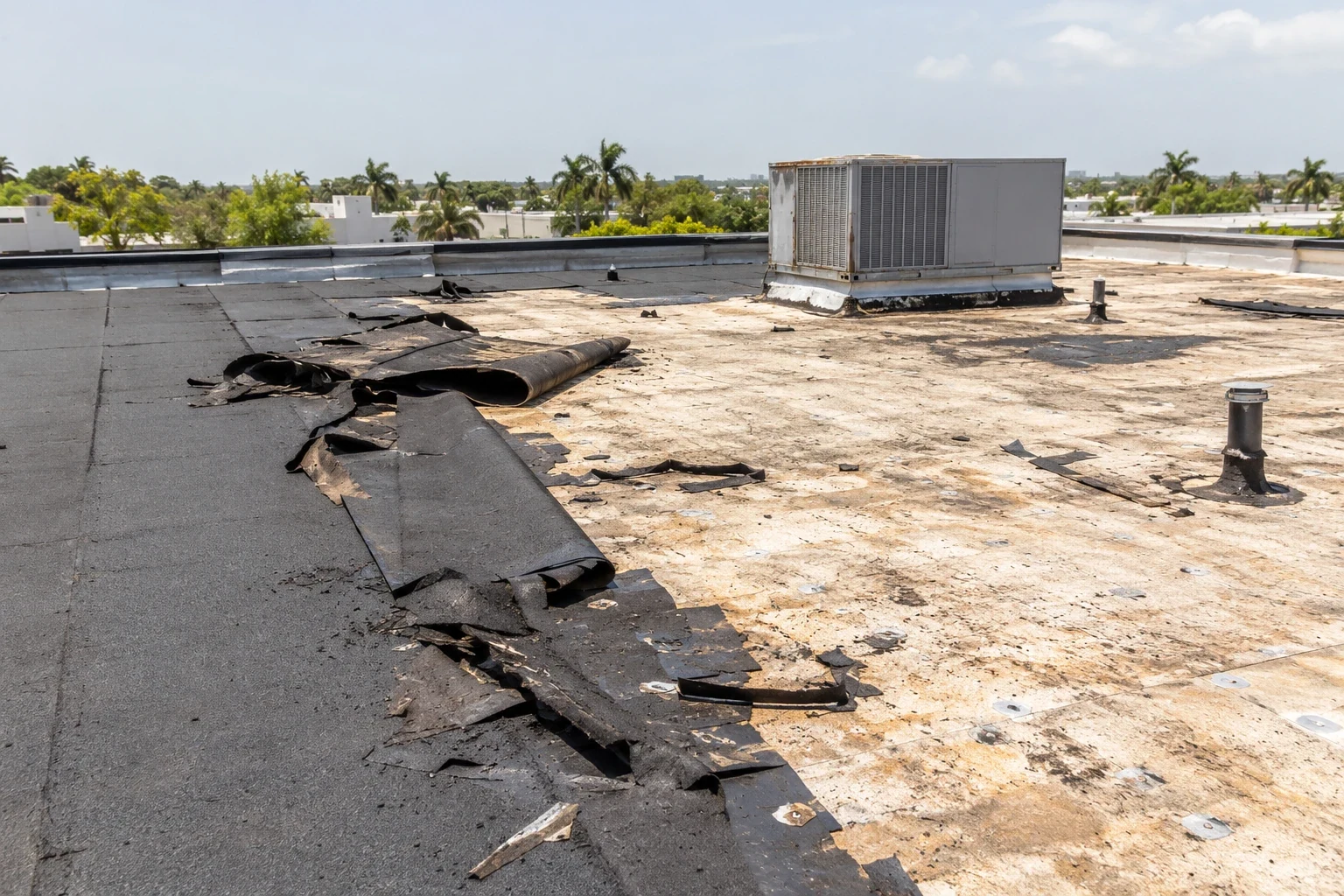
Older repairs, soft insulation, open laps, failed flashing, and trapped moisture can point toward different remedies even when each appears as a ceiling stain indoors. We map those conditions to the roof assembly rather than treating every symptom as a reason to remove the entire system. A sound field membrane with isolated perimeter or penetration problems may remain a repair candidate. Widespread wet insulation, recurring seam separation, or a deck that needs attention can make a full tear-off more supportable. We document what is visible, mark areas requiring further investigation, and explain how each finding changes the scope.
Replacement planning turns those findings into work limits. We separate roof fields by assembly, elevation, addition, or drainage zone, then note the transitions that will be exposed as removal advances. Curbs, drains, edge conditions, and abandoned penetrations each need a detail that fits the new system. When records conflict with field observations, we identify the uncertainty before pricing the affected area. This gives the owner a scope tied to the actual roof instead of an allowance that hides where questions remain.
Set the removal and replacement sequence
A replacement scope begins with what the existing roof can reveal about the deck, insulation, and attachment. Tear-off exposes concealed layers for review and allows damaged materials to be addressed before the new assembly is closed in. A replacement may use a mechanically attached or adhered TPO roof system, another membrane, modified bitumen, or metal where the building and design call for it. We compare drainage, deck compatibility, perimeter details, equipment conditions, and the intended maintenance approach before recommending the assembly.
College Station summer normals reach a monthly mean high of 95.4°F in July, with average daily highs rising across the month. That heat makes sequencing and material handling a practical part of the work plan. We identify the areas opened each shift, the temporary protection needed if weather interrupts installation, and the route for moving material without blocking service access. A recover option may be considered only when the existing layers, moisture findings, and applicable code allow it; it does not bypass a condition review. The decision should leave the next owner or facilities manager with a clear description of what remains below the new surface.
Keep the building in service
Occupied-building replacement takes coordination at the roof hatch, around HVAC equipment, and at doors or loading areas below the work zone. We use the operating calendar to identify noisy periods, access windows, tenant notices, delivery peaks, and any spaces that need added protection. A phased sequence can keep unaffected roof areas closed while work advances in planned sections. When a facility cannot release a whole roof at once, the order of those sections affects temporary tie-ins, staging, and how quickly each area can return to normal access.
Along the FM 2818 and Harvey Mitchell Parkway spine, commercial and residential uses connect Bryan and College Station. That makes equipment movement, parking, and access routing worth settling before materials arrive. We record the designated staging area and the path that keeps service vehicles clear. If a building houses research instruments, production lines, or temperature-sensitive operations, we discuss which roof penetrations and interior zones need priority protection. Those details belong in the replacement sequence because a weather opening over an active space carries a different interruption risk than one over an unoccupied area.
Price the work by its actual drivers
Replacement cost and duration follow the conditions uncovered, not just the roof footprint. Tear-off depth, deck repair, insulation changes, edge-metal replacement, drain corrections, curb adjustments, and the distance from staging to work areas can shift a scope. A roof with several additions or changes in elevation may require more transitions and temporary tie-ins than a simple uninterrupted field. We separate visible work from allowances for concealed conditions and show which findings could change the final quantity or sequence.
Bryan and College Station include rail-served industrial property within a broader mix of manufacturing, research, office, and service uses. On a freight-oriented building, keeping truck paths and loading schedules open can influence where tear-off debris and replacement materials move. We coordinate the work zone with facility contacts and note any access window that affects production. For a capital request, the report can connect observed failures, repair history, the proposed assembly, and phased work assumptions so the reviewer can follow the reason for replacement without treating a storm date as proof of damage at the property.
Leave a usable condition record
Before the scope is finalized, we reconcile roof observations with maintenance records, prior leak locations, drawings when available, and the condition of each assembly. The recommendation follows evidence at the property: recurring separation, broad moisture, compromised deck, or details that cannot be maintained reliably may support replacement, while isolated defects may not. A condition report with photographs gives the capital team a place to track repairs, moisture findings, and replacement priorities.
Once the assembly and sequence are agreed, we document temporary protection, work limits, access responsibilities, and the points where concealed conditions must be reviewed before covering. The closeout record identifies completed areas and the maintenance items that remain. A manager can then compare future findings against a known baseline rather than reconstructing decisions from scattered emails. If the roof is not ready for complete replacement, a targeted repair and inspection interval can remain part of the plan, with a later capital review tied to recorded changes in condition.
Commercial Roofing Questions
What findings make a full tear-off more sensible than another repair?
Widespread moisture, recurring failures across several details, or deck concerns can support removal because the new assembly needs a sound base. We compare those findings with the repair history and remaining serviceable areas, then document why the scope reaches the proposed boundary. Isolated flashing or seam problems may still fit a repair plan.
Can replacement proceed while a distribution building stays open?
A phased sequence can keep some areas in service while roof sections are opened, protected, and completed. The workable order depends on loading periods, equipment access, interior protection, and weather exposure at temporary tie-ins. We map those constraints with the facility team before setting the daily work area.
How does the 2021 hail event affect a replacement decision?
It is a reason to review dated inspection records and look for documented impact at the property. The regional storm record alone does not establish roof damage at a particular building. We separate observed conditions from event history and use the inspection results to decide whether repair, further investigation, or replacement belongs in the capital plan.
What can change the replacement scope after tear-off starts?
Concealed deck deterioration, wet insulation, or older layers that differ from the available records can require a field decision. We identify review points before installation covers those areas and document any scope change with its location and reason. That gives the asset record a clear explanation of added work and its effect on sequencing.
Which records help prepare a capital request?
Prior leak logs, roof plans, maintenance notes, storm documentation, and current photographs help connect the proposed work to the building’s condition history. We can organize the field findings, assembly recommendation, access assumptions, and phasing notes into a useful review package. Share occupied hours and equipment-access needs so the sequence reflects the operating calendar.
Review the replacement sequence
Share the roof records, occupied hours, equipment-access needs, and capital timing. We can compare the existing assembly with field conditions and prepare a phased replacement scope for review.
Related Roofing Work
Request a Roof Assessment
Tell us about the building, the roof and what you are seeing. We look at leaks, storm and wind damage, aging membranes and planned replacements on commercial properties across College Station, Bryan and Brazos County.