
KEE Roofing in College Station, TX
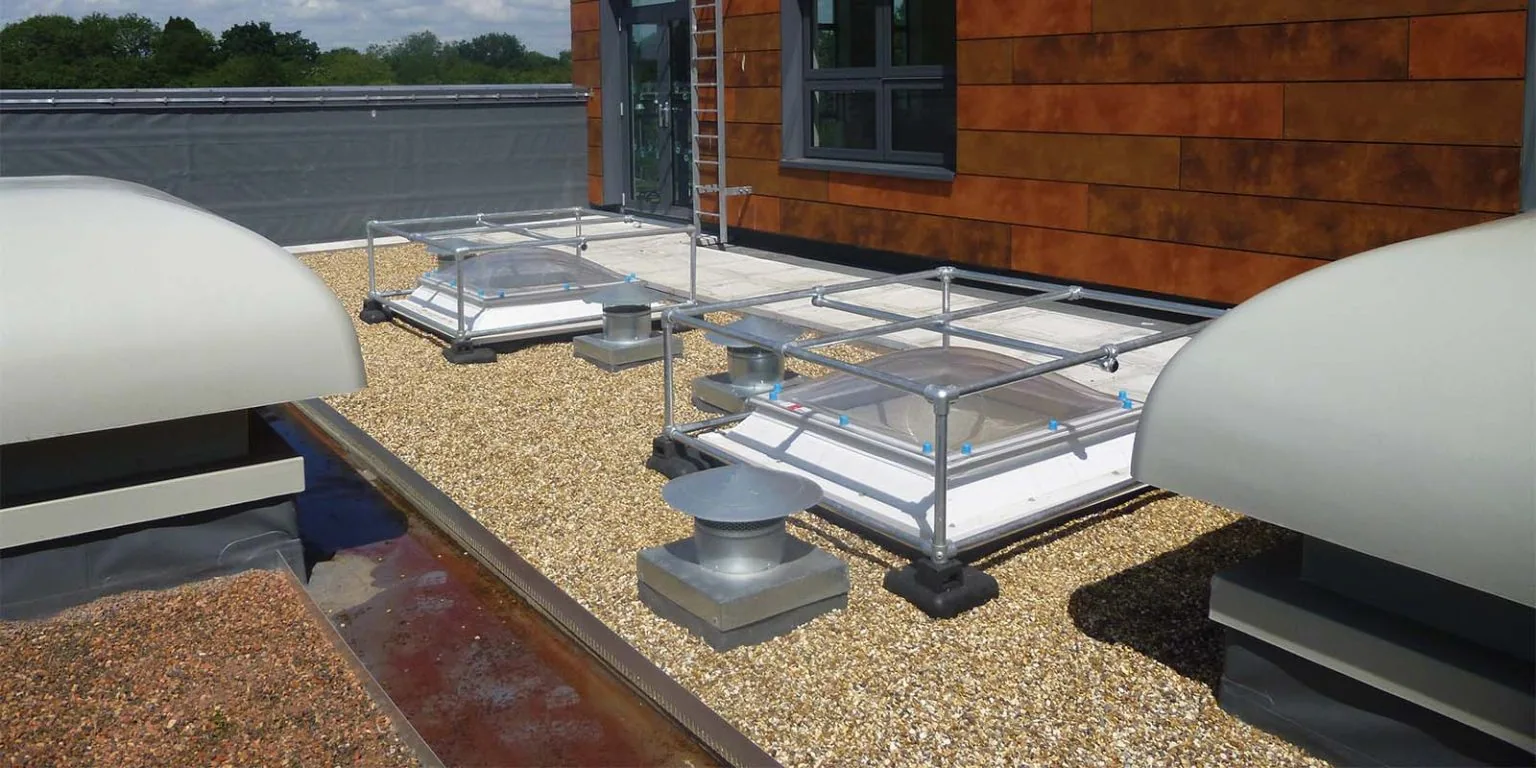
KEE Roofing
KEE roofing is a PVC-alloy membrane choice for asset managers who need the system's documented exposure limits matched to the building's process and maintenance record. In College Station, TX, life-science, animal-health, energy, and research sectors give facilities teams varied rooftop equipment and service needs. We review the product identification, welds, penetrations, curb details, and prior repairs before weighing continued maintenance against a larger capital move. We reconcile product documents before setting a specification.
Bryan and College Station have both hail and wind observations in their weather records. A 2021 event prompted hail reports in the area, while a College Station storm in 2023 included a measured 85 mph gust. These events guide review of edges and impact marks but do not establish a roof's condition. A system condition review establishes that baseline.
Confirm the Membrane Before Comparing Options
KEE is a ketone ethylene ester alloy used in PVC-based single-ply membranes. Existing roofs may have different formulations, thicknesses, attachment methods, or accessory details, so the asset file should identify the actual installed product before maintenance is assigned. We compare records with field seams, flashing, patches, and exposed edges, and note any area where a test or submittal is needed. Product data can then be matched to the exposure the roof actually sees.
Across research, office, retail, and industrial properties, a system review still starts with the installed assembly. Equipment access and continuity matter when a facility considers membrane work, while roof condition remains site-specific.
Inspect Welds at Curbs and Changes of Plane
Heat-welded KEE seams need continuous fusion across field laps, patches, and flashing transitions. We check for contamination, cold or inconsistent welds, lifted edges, fishmouths, and cracking where the sheet turns at a curb or parapet. The report separates one repair area from a repeated seam pattern and identifies any test that could clarify the attachment below. A repair should use compatible membrane and preparation, with the finished edge inspected before the area is returned to normal service.
Mechanical equipment, conduits, supports, and later additions can bring mixed materials together on one roof. We inspect the transition and note whether access or equipment shutdown affects the repair window. If an existing patch overlaps older material, we record what can be identified and request product documentation when compatibility is uncertain. A curb and support review can define the equipment detail, while a TPO system comparison can frame a separate replacement option.
Track Surface Changes Against Exposure
Surface staining, residue, abrasion, or softening should be recorded by roof area and compared with the process nearby. We ask the facility contact what is discharged, how often equipment is cleaned, and whether a recent process change altered the exposure. The membrane's color or a single mark is not enough to identify a chemical cause. We can flag a test or product-data review when it would change repair material, cleaning procedure, or the planned maintenance interval.
Summer temperatures in College Station keep sun and surface heat part of the maintenance calendar. We inspect seams, terminations, and walk routes during a controlled access window. If foot traffic connects service platforms to rooftop units, we note whether protection is intact and whether the path crosses repeated repairs. The record can then support a practical follow-up interval based on observed condition and the building's use.
Compare Storm Records with Current Evidence
Two dated weather events offer different inspection context: the April 2021 account documents hail around the Bryan and College Station area, and the June 2023 report records a severe gust in College Station. We use event dates to locate inspection photographs, service calls, and repair notes, then compare them with today's seam, edge, and flashing condition. If no contemporaneous record exists, the survey still describes current evidence without assigning a cause to an old mark.
Wind review includes perimeter attachment, corners, coping, and transitions where a membrane edge could lift. Hail review notes visible punctures, surface impressions, and damage around equipment or debris impact areas. A moisture survey or test cut may be useful if the owner needs to know whether the condition extends into insulation. The storm condition assessment can separate dated event documentation from present repair findings and preserve both in the asset record.
Check Drainage and Protect the Repair Boundary
Water standing near a seam, curb, or drain can complicate maintenance and make a small repair harder to evaluate. We trace the drainage path, note ponding, inspect strainers and overflow routes, and record how the membrane terminates at the outlet. If an outlet needs cleaning while a seam needs repair, the proposal can separate both actions and show which one is urgent. This keeps a maintenance item from being mistaken for a membrane failure.
Where moisture is suspected beneath the sheet, testing should answer a defined question such as whether insulation is wet or the repair limit must expand. We mark sample points on the roof plan and explain how the result could change a recover or replacement quantity. A drainage inspection can record outlet condition, and moisture mapping can help select locations for follow-up testing.
Price a Repair Candidate Against Renewal
KEE repair may fit localized seam or flashing damage when the surrounding sheet, attachment, and substrate remain serviceable. Recover requires evidence that existing layers are dry, secure, and compatible with the new assembly. Replacement can be more supportable when failures repeat across sections or testing finds broad moisture or deck concerns. The marked plan compares options and identifies which result could change scope.
College Station's 2024 adopted building and energy codes took effect January 1, 2026, and commercial or multifamily energy designs require 2024 IECC COMcheck reports. We record permit timing and the design team's review needs before confirming assumptions. The estimate identifies membrane, insulation, edge attachment, equipment access, drainage, and interior protection as separate drivers. A replacement evaluation can set the larger work boundary, while the recover option can be checked against the same test findings.
Fit the Inspection Window to Facility Work
A phased KEE repair can affect equipment service, deliveries, or research activity if access is not coordinated first. We confirm occupied hours, hatches, escort rules, rooftop shutdown limits, and the location that can be staged. Each active area gets a closure point and a contact who can approve continued work if hidden conditions appear. The operating calendar also helps select a suitable time for welding and for returning the roof to service.
The FM 2818 and Harvey Mitchell Parkway corridor serves commercial and residential destinations across the urban area. Property-specific staging and truck access still need confirmation before materials arrive. We record those constraints with the repair sequence, so the capital team can see what may extend the duration. A defined occupied-building sequence can structure handoffs, and a College Station KEE review can start with submittals, condition history, access needs, and capital timing.
Where assembly compatibility needs review, an EPDM roofing system has different seam and repair considerations from KEE.
Commercial Roofing Questions
How should a facility identify an existing KEE membrane?
We compare available product records with visible seams, flashings, and repair materials. If the exact formulation remains uncertain, we record that gap and identify the submittal or test needed before specifying a compatible repair.
What does a weld inspection look for?
We examine lap fusion, patch edges, contamination, and transitions at curbs and walls. Findings are mapped by section so the owner can distinguish a local defect from repeated separation that may need a broader review.
Should a hail report trigger a KEE replacement?
A regional report is useful for locating dated service records, but the present assembly must be inspected. We document visible impact, seams, edges, and any moisture evidence before comparing repair or replacement.
Can a KEE roof be recovered?
The decision depends on moisture, attachment, compatibility, edge details, and code review. We define test locations and use the results to compare overlay quantities with removal on the same roof map.
What should be included in the asset record?
Keep product identification, roof plans, seam repairs, event photographs, drain notes, access procedures, and maintenance history together. We can label field observations by area and identify unresolved questions for the next inspection window.
Review the KEE Assembly and Its Service History
Share product records, roof plans, seam and patch history, process exposure details, occupied hours, equipment-access needs, and capital timing. We can inspect the assembly and define next steps.
Related Roofing Work
Request a Roof Assessment
Tell us about the building, the roof and what you are seeing. We look at leaks, storm and wind damage, aging membranes and planned replacements on commercial properties across College Station, Bryan and Brazos County.