Infrared Roof Moisture Survey in College Station, TX
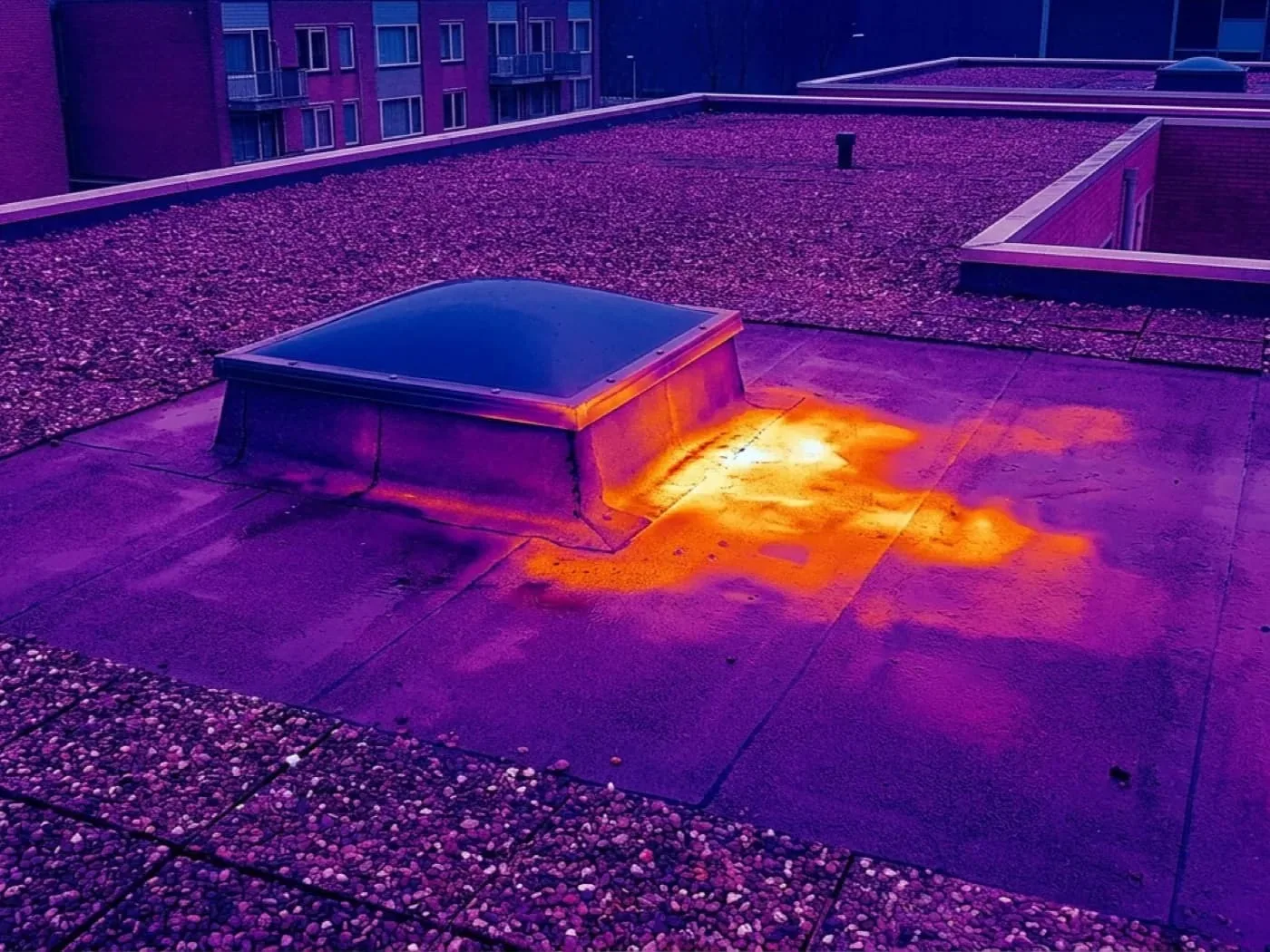
Infrared Roof Moisture Survey
Facilities teams managing research, health-science, and industrial buildings in College Station, TX may need to know whether moisture extends beyond a visible leak or roof patch. An infrared survey records temperature patterns that can help locate areas for closer testing, while selective core cuts can confirm what is present within the assembly. The result supports repair boundaries, recover eligibility, or a capital request without opening every roof area. We plan the survey around roof access, surface conditions, occupied hours, and the particular decision the asset manager needs to make. The interpretation is strongest when the roof plan, leak history, and field samples are considered together.
Map the question before scanning
We start with the roof plan if available, reported leak locations, prior repairs, and the concern driving the survey. An owner may need to understand moisture near a recurring leak, check an area before a recover, or define a repair boundary before a replacement budget is prepared. Those are different questions, so the survey route should reflect the roof sections, assembly changes, and areas where opening the roof would affect building operations.
We note the membrane or roof surface where it can be identified, along with equipment, penetrations, drains, edges, and previous patch areas. Rooftop units can complicate access and create shadows or surface patterns that need to be separated from a moisture interpretation. We confirm whether the roof is dry enough, the surface has suitable temperature contrast, and the scan can be completed under conditions that make the readings useful. If those conditions are absent, a targeted core cut or a rescheduled scan may offer better evidence than a full survey made at the wrong time.
Combine image patterns with field checks
Infrared imaging shows differences in surface temperature that can indicate where wet materials retain heat differently from surrounding areas. The pattern is a lead for investigation, not a direct view through the roof. We map areas with unusual readings, compare them with drains, patches, curbs, and leak history, and select locations for closer verification. A core cut can expose the layers at a specific point and help determine whether insulation is wet, dry, compressed, or otherwise different from the assumed assembly.
Selective openings matter because an isolated wet area can call for a localized repair, while connected moisture may change the scope. We record where each sample was taken, the materials encountered, and how the opening was restored. If conditions vary between roof additions or elevations, we keep the observations separated so one sample is not treated as representative of the whole property. The report describes what infrared mapping suggested and what the field check confirmed, giving the manager a usable basis for next steps.
Use moisture boundaries to compare options
Moisture boundaries can change whether a roof is a repair candidate, eligible for a recover, or better suited to removal and replacement. We combine scan patterns, core-cut findings, visible conditions, and the known assembly before outlining options. A small area may allow removal of wet insulation and a compatible patch. Broad moisture, weakened deck, or recurrent leaks across several sections can point toward a larger scope. We explain the distinction and identify what information remains necessary before a final design or permit review.
For a planned recover, moisture findings help determine whether materials can remain or must be removed. A replacement evaluation can use the same map to define likely tear-off boundaries and identify areas requiring deck review. If the concern began with an active interior leak, a leak repair assessment may still be needed to locate the entry point. Infrared results inform those decisions; they do not substitute for the roof detail inspection that confirms a repair method.
Put local event records in context
Before scanning, we align the roof plan with reported leaks, prior repairs, and the decision the survey should support. The route should include representative roof zones while giving added attention to areas where a change in moisture boundary could affect a recover or replacement scope. We identify sample locations in advance where practical, so a core cut can test a mapped pattern rather than becoming an unrelated opening. If readings and field observations disagree, we record the discrepancy and explain what additional check could resolve it.
College Station's July climate normals show average daily highs rising through the month to 97°F by its end. Temperature conditions influence whether an infrared scan will produce useful contrast, so we plan the capture window around both the roof surface and the question under review. Along FM 2818 and Harvey Mitchell Parkway, survey staging may also need to fit deliveries, tenant activity, and equipment access. We record the route, scan conditions, and any limits that shaped the work so a later inspection can understand how the map was produced.
Keep the moisture map usable
The deliverable should let a facilities manager connect each mapped area with the roof plan and next action. We label scan images by building and roof section, note the capture conditions, and identify core-cut locations with photographs and material observations. The report can mark areas for repair, additional testing, monitoring, or capital review. It also notes where a pattern could not be verified so the team can plan the next opening or field visit instead of treating an unconfirmed interpretation as a measured boundary.
A roof condition report can carry the survey results into the asset record with repair history, leak locations, and recommended follow-up. If the map supports localized work, a repair visit can address confirmed openings and restore core-cut areas. Where moisture changes the assembly decision, the record can support an owner review with occupied hours, equipment-access requirements, and capital timing. Retaining the map with the roof plan helps future crews locate restored sample points and distinguish a new leak from an earlier wet-area boundary. That gives the next inspection a clear reference for comparing moisture, repairs, and roof performance.
Commercial Roofing Questions
Does infrared imaging show water directly beneath the membrane?
It maps surface temperature differences that can point to areas needing closer investigation. A core cut or another field check confirms the materials at a selected location. We label the scan interpretation separately from what the opening reveals.
Why would you make a core cut after scanning?
A core cut lets us inspect a specific roof layer and determine whether insulation is wet or otherwise different from expectations. The sample helps confirm a scan pattern and the potential repair boundary. We photograph the opening and restore it as part of the survey work.
Can the survey determine whether we can recover the roof?
It can supply moisture information relevant to that decision. We also review layer count, attachment, deck condition, drainage, and applicable code before recommending an overlay. The findings explain which areas may remain and which need removal or further review.
Do recent storms mean a moisture survey is necessary?
A nearby event alone does not establish a need or prove damage at one property. Leak history, visible roof condition, and the owner’s decision determine whether additional moisture mapping would be useful. We can review those records and propose a targeted survey where it answers a specific question.
What conditions help an infrared scan?
The surface and weather need to provide temperature contrast that makes patterns interpretable. Roof assembly, recent rain, shading, and rooftop equipment can affect readings. We review those conditions before the visit and identify any area that should instead be checked with a core cut or later scan.
Define a moisture survey
Share the roof plan, leak history, prior repairs, occupied hours, access requirements, and the decision the survey should support. We can map possible moisture, verify selected areas, and organize findings for repair or capital review.
Related Roofing Work
Request a Roof Assessment
Tell us about the building, the roof and what you are seeing. We look at leaks, storm and wind damage, aging membranes and planned replacements on commercial properties across College Station, Bryan and Brazos County.