
Commercial Roof Due Diligence Surveys in College Station, TX
Commercial Roof Due Diligence Surveys
A roof review during an acquisition or refinance must answer a practical question: what condition is visible now, what work may be needed, and which gaps could affect the decision? In College Station, TX, commercial property ranges across office, retail, research, hospitality, manufacturing, and industrial uses. We survey accessible roof areas, review available records, and organize findings for the buyer, lender, owner, or property manager. The work gives the transaction team a property-specific basis for follow-up without treating a brief field visit as a full design or concealed-condition investigation.
Set the review boundary before access
Before the visit, we confirm the property list, roof access contact, available plans, reported leaks, prior repairs, and transaction timing. If the assignment covers several buildings or additions, each roof area needs a clear identifier. We agree on what can be reached safely and record areas that cannot be inspected. The scope may include surface observations, visible flashing and edge details, drainage, rooftop equipment, and available interior reports. A defined boundary helps the reader understand what the survey does and where further investigation may be needed.
For a transaction involving property in Bryan and College Station, separate site contacts and operating hours can shape the field sequence. Bryan’s industrial base includes several broad employment areas, including a rail-served park exceeding 1,000 acres and another industrial park of more than 300 acres. College Station’s targeted growth sectors include life sciences, energy technologies, and professional services. A transaction request should therefore list each property and its own records instead of relying on a market-level summary. We can pair the field review with a photo-supported condition report and a roof-area inventory that keeps the observations attributable to the right property.
Record what the roof shows today
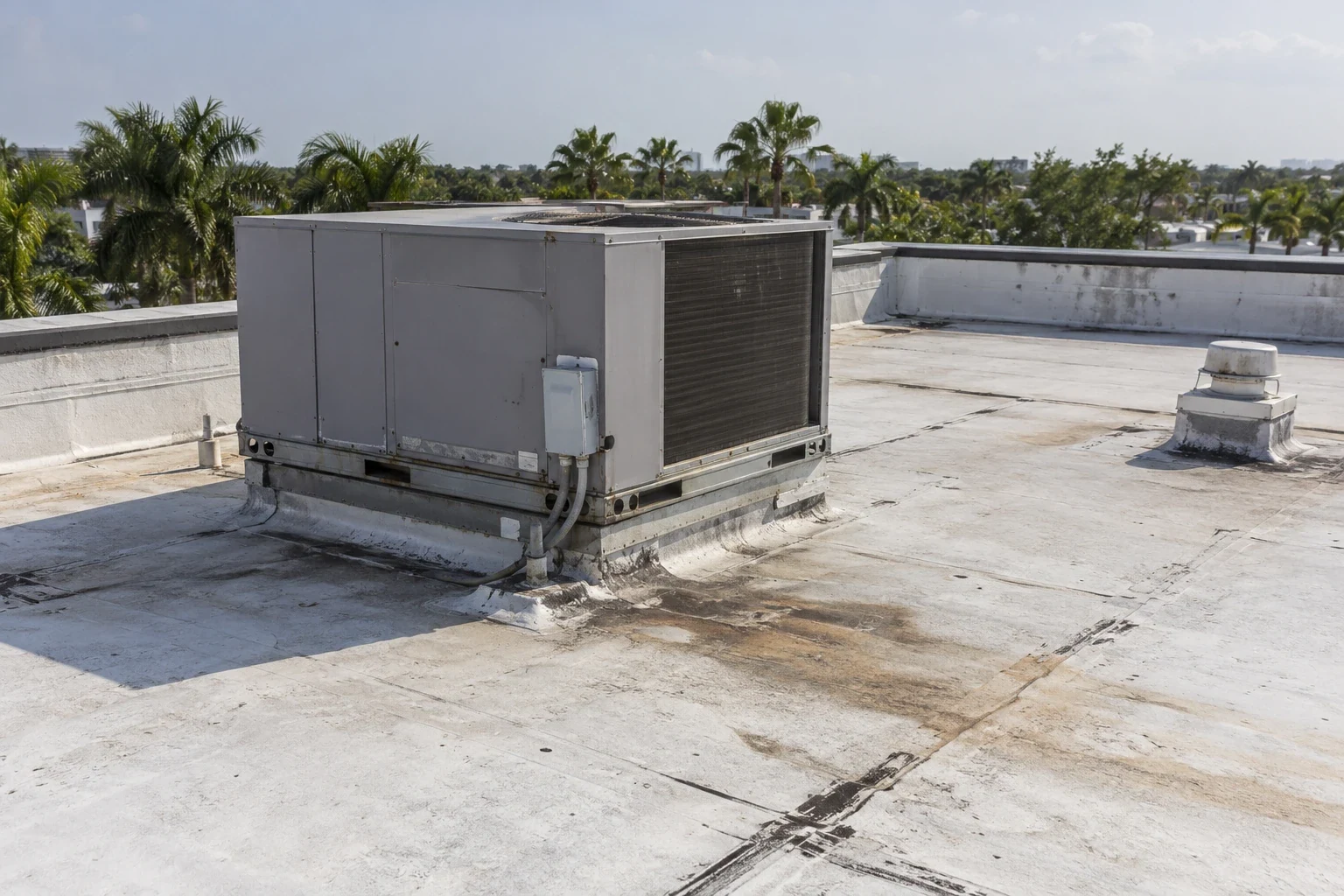
We note the assembly where it can be identified, visible wear, patching, seam and flashing condition, edge attachment, penetrations, drains, and changes in roof level. Each finding gets a location, photograph when appropriate, and a short statement of its significance. We distinguish routine maintenance from a repair candidate and from an issue that warrants testing or access to another area. If a reported leak has no matching visible condition, we record the report and the limits of what the roof review established.
The July mean daily high in College Station is 95.4°F, with the normal daily high reaching 97°F near month end. That reading can shape an access window for the survey, while the report itself stays with the roof details and conditions seen at the property. We do not infer hidden moisture from surface appearance. If moisture is a transaction concern, an infrared survey may add evidence when the assembly and weather conditions make that method appropriate. The report states whether such follow-up was included or remains outside the agreed scope.
Compare field findings with the file
Available roof plans, prior inspection reports, service tickets, leak logs, warranties, and replacement documents can explain how an assembly changed over time. We compare those materials with current observations and flag inconsistencies, missing area labels, or repairs that cannot be located from the supplied information. A record that says a detail was repaired is not the same as a field confirmation of its present condition. The survey can identify what deserves a closer look before closing or before a lender finalizes its review.
In Bryan, commercial development includes research, healthcare, industrial, and rail-ready property, while College Station includes technology, research, office, and light industrial uses. The transaction team may therefore have different operational constraints at neighboring properties. We note owner-provided schedules and access rules, but do not assume a roof’s use from a district or employer nearby. Where a roof appears to need work, a repair scope review can separate near-term action from a larger replacement planning item.
Translate conditions into diligence questions
A transaction report should help the reader decide what to clarify, not hide uncertainty in a broad condition label. We identify active openings, recurring repair areas, drainage concerns, apparent moisture indicators, and components that need closer access. For each item, we can state the likely next step and the information that would affect scope. A significant unknown may call for a second visit, targeted testing, or review of project records before the parties agree on a reserve or a post-closing maintenance plan.
Regional storm history can guide the questions a team asks, but it cannot substitute for inspection. An April 8, 2021 severe storm brought hail between 1 and 2.75 inches to Bryan and College Station. If dated inspection notes or repair records from that event are available, we can compare them with the present roof observations. The report keeps the event record separate from evidence at the property. This distinction lets a buyer evaluate documented condition rather than assign damage based on a storm occurring in the region.
Give the deal team a usable summary
We can summarize roof areas reviewed, significant findings, recommended follow-up, access limits, and records still needed. If the assignment includes several buildings, the summary distinguishes them and keeps each roof’s findings attached to its own identifier. A decision-maker can then see which issue needs immediate attention, which belongs in a near-term operating budget, and which requires further scope development. Where a repair or replacement cost is requested, the estimate should state its work boundary and assumptions rather than imply a complete project price from a visual review alone.
FM 2818 is a major route serving commercial and residential land uses across the urban area. It can help organize a multi-property visit between College Station and Bryan, while access and staging remain property-specific. We can connect the survey findings with capital timing and include the record in a portfolio roofing program after closing. Each recommendation can retain its inspection date, supporting photograph, and open question so later work begins with a clear transaction baseline.
Prepare the site team for the survey
Provide roof plans, key contacts, access requirements, prior scopes, repair history, and any known interior symptoms before the visit. We can agree on review limits and the timing needed to reach each roof area. Afterward, the report will identify observations and proposed follow-up in a format the transaction and facilities teams can use. If the deal schedule changes, the field sequence can be adjusted with the property contact.
Share the closing or refinance milestones, occupied hours, equipment-access needs, and available condition records. We can coordinate a survey across College Station or Bryan and document the roof questions that matter to the decision.
Commercial Roofing Questions
What does a due diligence roof survey cover?
The agreed review can document accessible roof areas, visible assembly and details, drainage, reported concerns, and available records. We list access limits and identify conditions that need testing or added investigation.
Can a visual survey estimate remaining roof life?
A visual survey can describe current visible condition and known history, but a precise service-life conclusion may require more information about the assembly, installation, maintenance, and concealed layers. We state the basis and limits of any planning observation.
What should a buyer provide before the roof visit?
Roof plans, repair history, prior reports, leak logs, warranty documents, access contacts, and transaction timing help focus the review. We also need any operating or safety rules that affect roof access.
Can you review multiple properties before one closing?
Yes. We can schedule a coordinated field window for buildings in Bryan and College Station while retaining separate roof-area identifiers, findings, and access notes for each property.
Will a regional storm report prove a roof was damaged?
No. The report can provide regional context, while property-specific dated observations and records establish what was found at the building. We keep those evidence types separate in the survey.
Plan a transaction roof survey
Send the property list, roof records, access contacts, transaction milestones, and operating constraints. We can define the survey boundary and prepare findings for your review team.
Related Roofing Work
Request a Roof Assessment
Tell us about the building, the roof and what you are seeing. We look at leaks, storm and wind damage, aging membranes and planned replacements on commercial properties across College Station, Bryan and Brazos County.