
Sika Sarnafil Roofing in College Station, TX
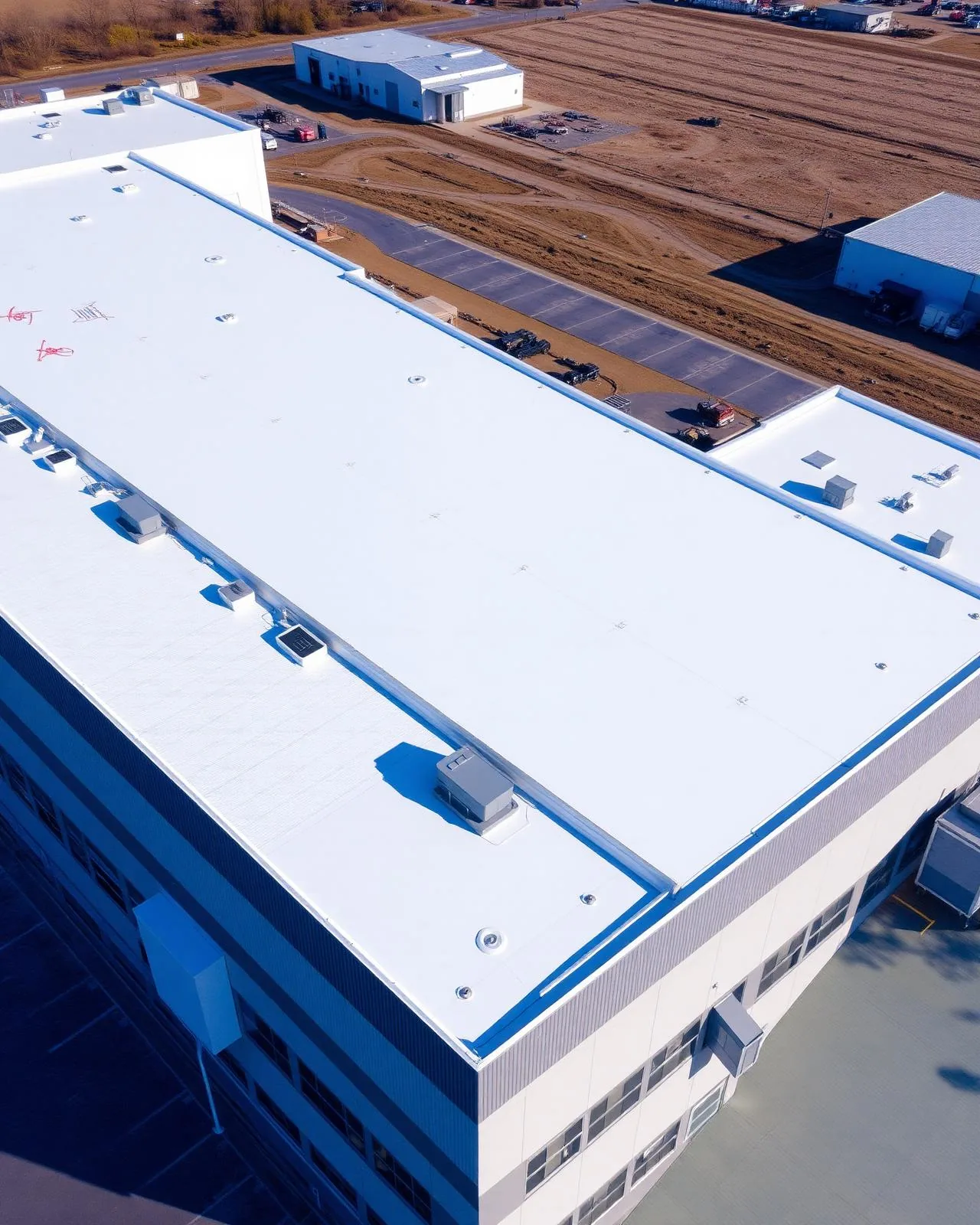
Sika Sarnafil Roofing
Sika Sarnafil roofing starts with a PVC membrane, but the roof decision includes more than the sheet. We check the substrate, insulation, attachment, field seams, edge conditions, flashing, drains, and the routes used to service equipment. In College Station, TX, those observations belong in an asset record with the operating schedule and repair history. The review can identify a local detail repair, a need for testing, or a larger scope while keeping the recommendation tied to conditions at the property.
The College Station weather log records an 85 mph gust from a destructive thunderstorm on June 3, 2023. Wolf Pen Creek is a broad district with office, hotel, restaurant, retail, service, conference, and mixed-use possibilities, while the Midtown District combines housing, office, and retail with planned commercial growth. If your property is in either district, share its access rules, roof plan, and work hours so the inspection can focus on the building’s actual configuration. A Wolf Pen Creek roof assessment should describe the specific assembly and building use under review.

Confirm the Sarnafil membrane family
Sika Sarnafil offers PVC membranes for adhered and mechanically attached roof configurations. The G and S families differ in reinforcement and the applications described by the manufacturer. We verify the selected membrane, approved substrate, insulation, cover board, fastening or adhesive method, perimeter treatment, and flashing materials before placing the scope into a bid.
For an adhered design, we examine the substrate and bonding requirements across the roof, including areas with older coatings, repair material, or surface contamination. For a mechanically attached design, the deck, fastening pattern, and perimeter zones need to align with the project documents. We also identify where the specification calls for special plates or fastening details. A PVC roofing review should show how each component supports the membrane rather than treating the top sheet as the entire system.
Inspect the welded seams and corners
PVC sheets rely on hot-air welded seams and flashings. We look for contamination, uneven welds, open edges, fishmouths, wrinkles, and cuts around equipment or roof traffic. Where the existing roof permits, a probe can help locate a weak edge; we use test methods appropriate to the membrane condition and the manufacturer’s repair guidance.
Corners and vertical transitions are frequent places for change in geometry. We check curb corners, parapets, wall flashings, drains, expansion joints, pitch pockets, and edge metal for secure termination and compatible materials. A patch over a corner may not address a loose base flashing or a moving curb. We identify what needs removal, preparation, welding, or replacement, and note whether the repair can be reached without disturbing adjacent equipment.
Manufacturing and technical work in the Bryan and College Station region can make continuity below the roof a priority. The record should show where an opening sits relative to sensitive rooms, equipment, and access pathways. We coordinate work boundaries with the site contact and mark which trade owns any pipe, curb, conduit, or support changes. The roof crew restores the waterproofing detail only after the related work is ready for a durable tie-in.
Keep storm history separate from the finding
The 2023 gust record provides a date to compare with photographs and work orders, not a conclusion about the roof. We document present evidence such as lifted edge metal, displaced membrane, loose terminations, impact marks, or interior leakage and identify the zone where it appears. If the property has no pre-event photographs, we note that limitation rather than treating the event report as a damage record for the building.
College Station’s July mean high is 95.4°F, a climate factor to consider when planning roof access and heat-sensitive work. On the day of installation, we still check actual surface and air conditions and follow the product requirements for welding, adhesive use, and flashing. Shade, wind, stored material, and roof traffic can affect staging. We select manageable work areas and protect unfinished edges before moving to another zone.
Drainage deserves review after a storm and during routine service. We inspect strainers, bowls, scuppers, sumps, and visible flow paths, noting debris or standing water separately from membrane defects. If a drain connection is damaged, the scope must account for both the outlet and its flashing. A drainage inspection can clarify whether cleaning, detail repair, or additional investigation belongs in the work order.
Set the boundary for a recover
A Sika Sarnafil membrane may be part of a new roof or a recover, but the existing assembly must support the proposed construction. We review moisture, attachment, deck capacity, insulation condition, surface compatibility, roof height, drains, and curb elevations. Test cuts can confirm concealed layers and moisture where a visual survey cannot. If the deck is unstable or the existing roof is wet, covering it can leave a building problem in place beneath the new membrane.
When the system can be recovered, the scope should explain preparation, separation layers if required, fastening or adhesive, flashing transitions, and terminations. We identify how the new height changes drain rings, door thresholds, roof hatches, or equipment curbs. The owner can then compare the overlay with tear-off using an explicit set of assumptions. A roof recover review helps organize those conditions before installation is priced.
For a tear-off, we plan debris movement, protection under the active roof zone, and a daily dry-in point. We sequence new insulation and membrane so water cannot reach open areas during an interruption. The proposal notes areas where replacement of wet insulation or deck is possible and explains the approval process before concealed conditions are removed. That gives the facility representative a clear way to manage changes during construction.
Preserve the details for future service
After the roof is in service, record the membrane type, attachment method, insulation, deck, flashing details, drain layout, and approved repairs. Keep photographs with the roof plan and the product data used for the project. This makes future leak calls easier to route because the next technician can see which zone was installed, where a prior repair ends, and what testing was completed.
Regular service should check seams, flashings, rooftop paths, drain openings, and equipment changes. The timing depends on roof condition, exposure, access, and maintenance history. We can document a field inspection and prepare a maintenance sequence that follows the property’s access windows. If coatings, metal work, or another single-ply system is proposed later, the record helps compare that work with the existing PVC assembly.
A bid comparison can include a GAF membrane alternative or a Versico system, provided both scopes use the same roof areas and project requirements. We compare preparation, insulation, attachment, edge details, penetrations, drains, and interior protection. The owner can then decide on a complete assembly rather than selecting a membrane from a product summary alone.
Commercial Roofing Questions
What is the difference between Sarnafil G and S membranes?
The manufacturer describes different reinforcement and application approaches for the G and S families. We review the chosen product with the project documents, substrate, attachment, and flashing details to confirm how it is intended to be used on the roof in question.
Can you locate a weak weld on an existing roof?
We inspect seams visually and use an appropriate probe where the membrane and conditions allow. The report notes open edges, contaminated areas, or changes in weld quality. Testing may be needed to confirm whether a visible concern extends beyond the immediate repair area.
Does the 2023 wind report show that my roof needs replacement?
No. It identifies a regional event and a date for reviewing records. We inspect the property, photograph current conditions, and describe any displaced or open detail. Replacement depends on the assembly and observed extent, not on the event report alone.
What needs to be checked before a Sarnafil recover?
We evaluate moisture, existing attachment, substrate, deck, roof height, drains, curb elevations, and compatibility with the proposed assembly. Test cuts can answer questions about concealed layers. The findings show whether an overlay or removal has a sound basis.
How do you plan a PVC installation during hot weather?
We follow the selected product’s installation requirements and check actual roof and air conditions. The crew stages material, limits open areas, welds manageable sections, and secures each work boundary before moving on. The daily plan includes a protected dry-in point.
Review a Sarnafil roof assembly
Send the roof plan, specification, moisture results, repair history, and operating schedule. We can inspect seams and transitions, map access limits, and prepare repair or replacement options tied to the conditions in place.
Related Roofing Work
Request a Roof Assessment
Tell us about the building, the roof and what you are seeing. We look at leaks, storm and wind damage, aging membranes and planned replacements on commercial properties across College Station, Bryan and Brazos County.