Senior Living Roofing in College Station, TX
Senior Living Roofing
Roof work at a senior living community should be planned with the people responsible for the building's daily routines. Residents, staff, service providers, and visitors may use different entrances and shared spaces, so access and communication need to be clear before a crew arrives. We review the roof assembly, reported conditions, drainage, and repair history, then coordinate a sequence with your facilities contact. For properties in College Station and Bryan, the right scope depends on the specific roof and operating schedule. The assessment documents what is visible, what remains uncertain, and what the next inspection or repair should address.
Plan around resident routines and shared spaces
Before inspection, we ask when staff can provide roof access, which routes need to stay clear, and whether certain areas require advance notice or protection. Your building contact can identify service entrances, occupied wings, common rooms, and the person who receives field updates. That information helps us place staging and roof access without assuming the community follows a single daily schedule.
If a resident or staff member reports water, we record the room, date, and observed symptom, then compare that information with roof details above and nearby. Separate reports should remain separate until the roof-side evidence shows a connection. A roof asset record can keep photographs, repair notes, and follow-up observations available for future maintenance planning.
Review the building layout and roof transitions
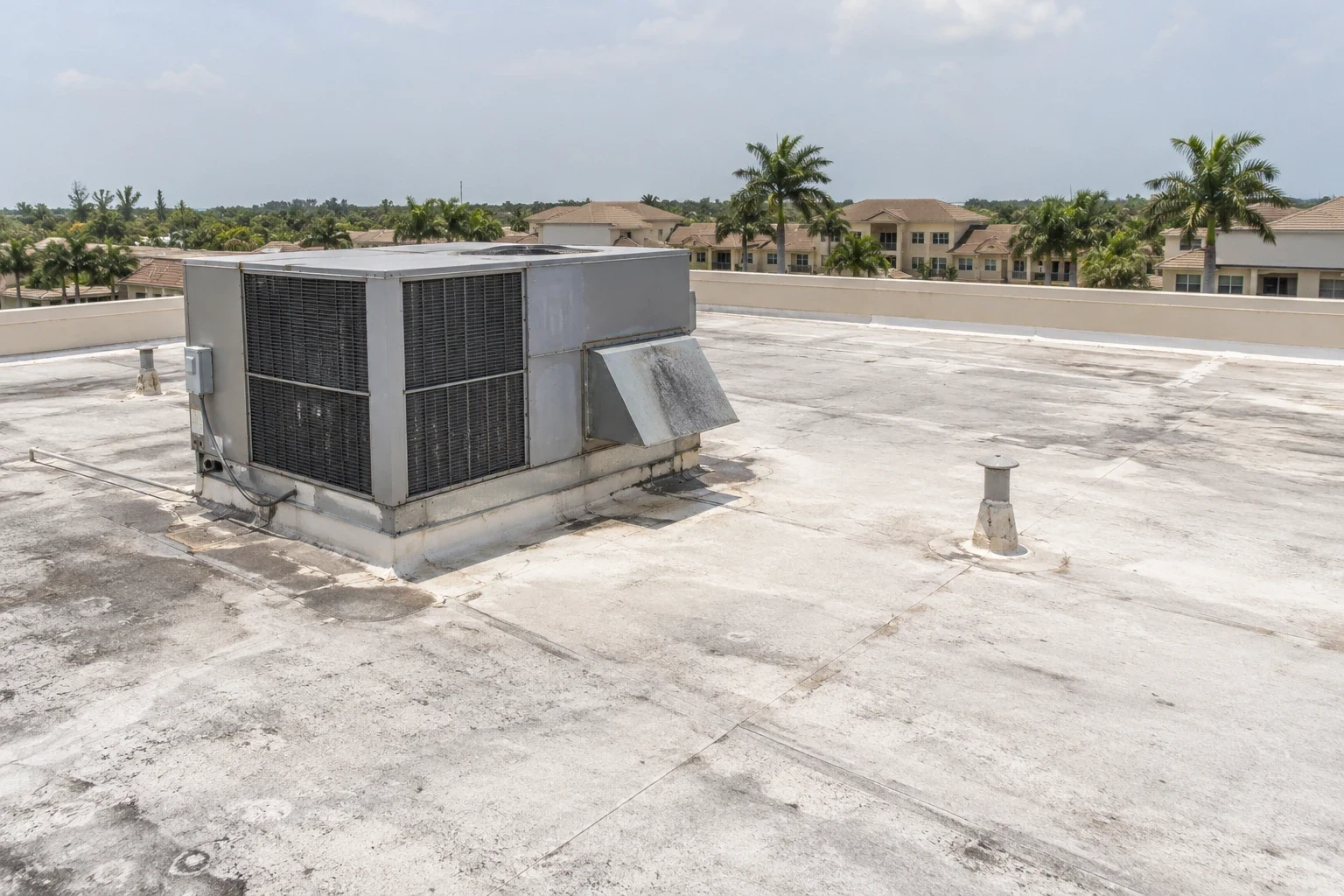
Senior living buildings can include residential wings, dining or activity areas, offices, and mechanical spaces. Additions may leave different roof heights or assemblies connected by transitions that deserve their own inspection notes. We examine accessible seams, flashing, curbs, penetrations, perimeter metal, and drainage, recording the locations that need repair or another look.
When an interior symptom appears below a transition, the exact roof opening may be offset from the room. We compare roof geometry, reported dates, and visible details before describing a likely path. Where several roof zones are involved, the summary distinguishes them instead of grouping the whole property under one general condition. This helps staff coordinate a later visit with the right access contact and building area.
Keep drainage observations tied to specific areas
Drains and scuppers can be affected by debris, damaged connections, or changes in the roof surface around them. We record what is visible and note whether reported water is near an inlet, a curb, or a transition. If ponding has been reported, we identify the location and available drainage path rather than assuming that one drain explains the condition.
A focused drain and scupper review can clarify what the inspection can confirm from the surface and where additional access may be useful. We also identify areas that could not be reached safely. Those limits belong in the record so a future maintenance decision can account for what was and was not observed.
Use weather history to guide a careful review
The College Station severe thunderstorm on June 3, 2023 included an 85 mph gust. If the community reports a storm concern, arrange a roof review around resident-care routines and record the wing, date, and visible conditions. July heat is another scheduling factor: 1991 to 2020 normals show a 95.4°F monthly mean daily high, bracketed by 94°F at the month’s start and 97°F at its close. We can coordinate a suitable access period with your facilities contact.
Choose a repair path that fits the roof
For a senior living property, repair planning should connect each proposed action to a defined roof area and the rooms or shared spaces it protects. We review the assembly, prior work, drainage paths, and any available moisture observations, then explain whether the affected detail can be addressed locally or whether evidence spans a larger area. A TPO roof assembly has specific membrane and flashing transitions; the conditions documented at a nearby medical office or hospital building do not substitute for inspecting this property. The written options identify access limits and resident coordination needs, giving the operator a practical basis for weighing a repair window against broader capital planning.
Coordinate mobilization and occupant communication
Before mobilization, we confirm staging locations, equipment routes, roof access, work hours, and the contact authorized to make field decisions. Your facilities lead can identify notice requirements and areas where crews should avoid interfering with normal movement. For phased work, we define each zone, temporary conditions, and the point at which a section can be reviewed and closed out.
If the crew finds concealed moisture or an unexpected roof layer, we document the condition and review next steps before broadening the scope. This keeps work connected to field evidence and gives management a clear point for communication. A daily update can state which roof areas were accessed, what work proceeded, and which decision or follow-up remains open.
For an occupied community, the work sequence should name the contact who can approve a temporary change and the route residents and staff will continue to use. We can schedule noisy tasks for a manager-approved window, protect interior finishes below the active area, and confirm that barriers and materials are removed before the building returns to its usual routine.
We can also note who receives the daily update and how staff will report a new interior symptom while work is underway. A simple handoff keeps the manager informed without requiring residents to interpret technical roof notes.
Coordinate service across College Station and Bryan
The College Station and Bryan business base includes health science and research, retail, hospitality, manufacturing, and industrial uses served by rail. College Station's planned business park covers 252 developable acres for office, corporate, light industrial, manufacturing, and retail use. For a senior living community, share resident schedules, approved entry points, and roof-access procedures with the facilities contact before scheduling.
FM 2818 links the northern and southern SH 6 connections across roughly 20 miles. When coordinating a visit in College Station or Bryan, confirm the community's visitor access and crew route with staff. Keep resident schedules, approved entry, and repair history in the individual property's maintenance record.
A closeout file can identify areas examined, photos captured, completed work, and questions left open. That gives staff who manage resident services and building maintenance a clear basis for the next review. Identify the contact who will receive open-item updates and when the next inspection should be considered.
Commercial Roofing Questions
How should a senior living team prepare for a roof visit?
Share the roof plan, access procedures, resident or staff areas needing notice, work-hour limits, and the contact responsible for field decisions. We confirm staging and access with your facilities lead before the visit.
Can repairs be planned around resident routines?
We coordinate access, staging, work zones, and communication with the building contact. The sequence can account for occupied areas and the community's schedule, based on the roof conditions and site procedures.
How do you trace a leak reported in a resident room?
We note the room, the date, and whether the symptom returned after earlier work. Then we inspect related roof details that are accessible and record what supports a repair. If the path stays unresolved, we outline the additional access needed.
Do you inspect after severe weather?
We can review accessible roof surfaces, edges, penetrations, and accessories after a reported event. Regional weather provides context, while the property's observed conditions and repair history guide the recommendation.
What should the closeout include?
The closeout can identify reviewed areas, photographs, completed repairs, open conditions, and access limits. Those notes help staff plan follow-up and connect later reports with the current condition history.
Coordinate a senior living roof review
Share roof plans, repair history, access rules, and the community's preferred work windows. We can coordinate with your facilities contact in College Station or Bryan and document a practical next step.
Related Roofing Work
Request a Roof Assessment
Tell us about the building, the roof and what you are seeing. We look at leaks, storm and wind damage, aging membranes and planned replacements on commercial properties across College Station, Bryan and Brazos County.