
Commercial Ponding Water Roof Repair in College Station, TX
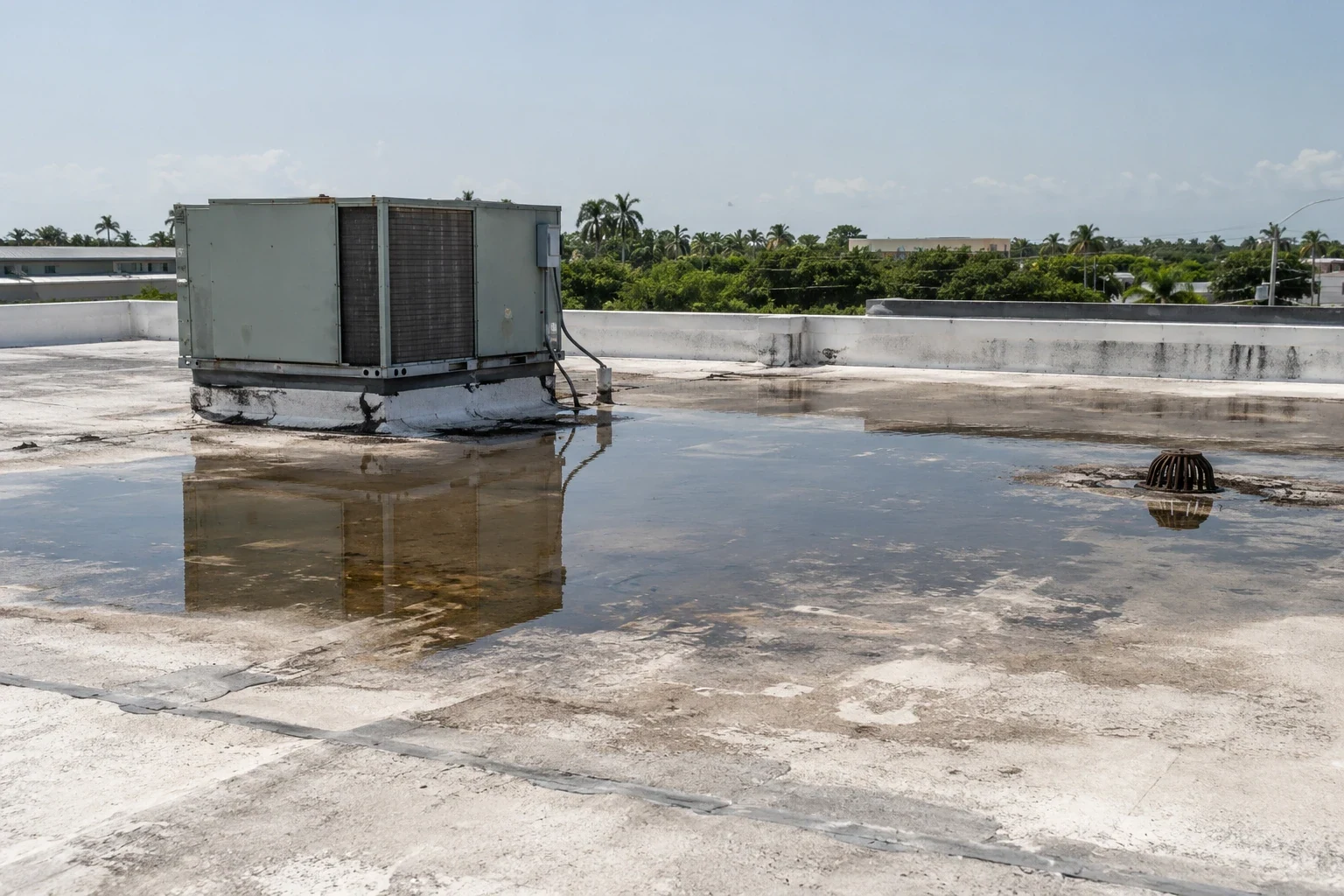
Commercial Ponding Water Roof Repair
Standing water on a low-slope roof can point to a blocked outlet, a low area, a damaged drain detail, or a change in the roof assembly. The repair decision depends on where water collects, how long it remains, and what the layers below show. We map ponding, trace the path toward drains and scuppers, and inspect nearby seams, flashing, and equipment supports before recommending a fix. College Station and Bryan include research, office, manufacturing, retail, hospitality, and industrial properties where roof access and interior use can shape the inspection window.
A photograph after rain is useful, but it does not show why water stayed or whether insulation is wet. A commercial roof inspection can document the roof plan and define what needs to be tested.
Start at the Drain and Follow the Flow
We check each drain bowl, strainer, sump, scupper, and overflow path for debris, loose flashing, blocked openings, or signs of repeated backup. The survey notes whether water reaches the outlet and whether the surrounding membrane remains attached. A drain that needs cleaning is recorded as maintenance; a failed flange or split flashing is a repair. Keeping those items separate helps an owner see whether ponding can be addressed without changing the whole roof slope.
Water can follow a seam or transition before reaching the drain, especially where later equipment or repairs changed the flow path. We trace staining, sediment, and debris lines back across the field and compare them with interior leak notes. A drain and scupper assessment can document outlet condition and overflow routing. If the suspect opening is around a wall, pipe, or curb, a flashing repair review can identify the detail work separately.
Separate a Low Spot from a Drainage Failure
Some ponding follows a blocked outlet; other areas reflect settled insulation, deck movement, or a roof plane that never directed water efficiently. We mark the boundaries and depth where safely measurable, then note the surrounding slope and nearby roof features. A water line alone does not prove that the deck has moved. If structural movement or an uncertain assembly is suspected, we identify the engineer or opening needed rather than pricing a surface patch as a cure for a concealed problem.
Existing layers can hide the reason for the depression. A core or approved test cut may show insulation condition and layer count; targeted moisture testing can help define a wet area before it is included in a removal scope. A moisture survey can identify candidate zones, with confirmation methods selected for the roof system. If the test boundary is limited, the report states that limit so a result from one location is not treated as a roof-wide finding.
Inspect the Wet Zone for Detail Damage
Water that remains against a seam, patch, curb, or parapet can expose weak details over time. We check welds, laps, terminations, pitch pockets, and prior repairs around the ponding area. On a membrane roof, we look for lifted edges or open seams; on built-up roofs, the review notes surfacing loss and split plies. Metal transitions may need a separate detail because panel movement and water retention create a different repair question. A seam failure assessment can define a split or open connection that needs repair.
If the wet area sits near equipment, we also consider foot traffic, service routes, and support details. A path to a rooftop unit can concentrate wear and introduce loose material into the drainage system. The report maps the route and identifies where a walkway or future service procedure could keep repairs from recurring. Any active leak is connected to the survey map only after the exterior finding supports that relationship.
Choose a Correction That Addresses the Cause
Cleaning or outlet maintenance may be enough when the roof surface and drain assembly are otherwise sound. A failed drain flange, split seam, or loose flashing calls for compatible repair at the detail. A low area may require a tapered insulation correction or a larger assembly change, depending on the roof layers and drainage design. We list each option with the evidence needed to support it and note whether the proposal assumes a dry substrate.
Recover feasibility depends on attachment, moisture, layer count, drainage capacity, and height at edges and equipment. If the current system is wet or repeatedly fails, removal may be more supportable than covering the visible low spot. A recover feasibility review can identify tests and transitions that affect an overlay; a commercial roof repair can address a defined leak or drain detail. We compare prices using the same roof map so repair and replacement quantities do not start from different assumptions.
Fit the Work Around the Building
Water management matters for facilities with active rooms, equipment, inventory, and public access below the roof. We confirm which areas need interior protection, whether equipment can be shut down, and when a drain or roof section can be isolated. The work plan sets a dry-in point at each shift and identifies the person who can approve a change if concealed moisture appears. A occupied-building work plan can align the repair with staff access and tenant schedules. In College Station, the drain and surrounding low area set the inspection boundary; the property contact helps choose a time when that roof zone can be reached safely.
For a standing-water review, the property contact can note how soon the area was photographed after rainfall and whether the drain was clear at that time. Mark the low area from more than one point and include a view toward the nearest outlet. Those details help compare the roof map with the observed water path.
Record the Water Path for Future Maintenance
After work, the asset file should show which outlets were cleaned or repaired, where the membrane or flashing was opened, and what test results were obtained. A dated photograph of a dry roof does not confirm future drainage, so the closeout can include a follow-up inspection after the next suitable rainfall. The owner can compare that observation with the original map and see whether water moved differently or another correction is needed.
When a drainage correction is considered, the scope should show outlet elevations, slope transitions, and any insulation change proposed to redirect water. Confirm that added material will not obstruct doors, equipment clearances, or scuppers. The owner can ask the design team to review the proposed drainage path before work, then compare post-work observations under an approved inspection method.
After a documented rain event, compare the reported ponding location with roof drawings, drain elevations, scuppers, and any later equipment or curb work. Mark where water was observed and how long the condition remained, if known. The Diligence Notes can distinguish a temporary obstruction from a recurring low area, then identify whether an approved test or design review is needed before changing slope.
Commercial Roofing Questions
Does ponding always mean the roof needs replacement?
No. Debris, a blocked drain, one failed detail, or a low area may be repairable. We inspect the drainage path and test the assembly when concealed moisture could change the scope.
How do you tell if the insulation beneath ponding is wet?
We select test locations based on the roof map and observed conditions. Moisture survey results may need confirmation through an approved opening or core, and the report states the tested area.
Can a drain cleaning stop an active roof leak?
It may help when blockage is the cause, but a failed flange or flashing needs separate repair. We identify maintenance and roof-system repairs as distinct work items.
Can tapered insulation correct a ponding area?
It can be part of a correction when the existing assembly, drain locations, edge heights, and structure support the design. The project team should confirm the proposed slope and outlet details.
What should I provide before the assessment?
Roof plans, drain locations, leak records, post-rain photographs, prior repair notes, and access restrictions help connect the field observations with the building history.
Trace and Document the Ponding Area
Share the roof plan, drain locations, leak history, photos after rainfall, and access rules. We can map water paths, identify needed tests, and define repair and drainage options.
Related Roofing Work
Request a Roof Assessment
Tell us about the building, the roof and what you are seeing. We look at leaks, storm and wind damage, aging membranes and planned replacements on commercial properties across College Station, Bryan and Brazos County.