
Commercial Roof Flashing Failure Repair in College Station, TX
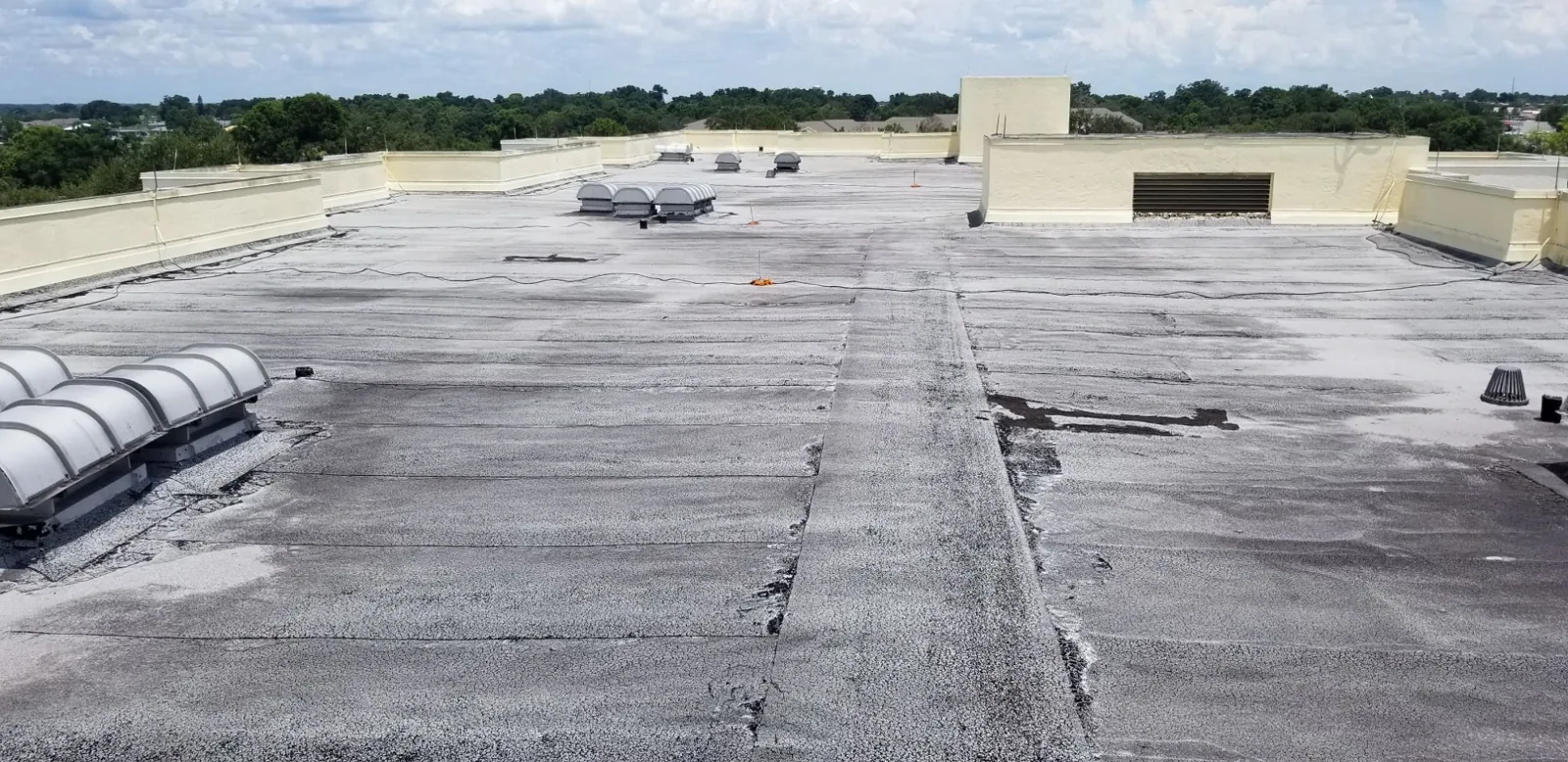
Commercial Roof Flashing Failure Repair
Flashing connects a roof field to walls, curbs, drains, pipes, and edges. When a joint opens, water can enter behind the visible surface and travel before appearing indoors. We inspect the transition, record the material and termination, and trace its relationship to nearby seams, drainage, and prior repairs. The repair scope distinguishes a failed flashing detail from a membrane or wall condition that needs separate work. In College Station, commercial properties range from research and office space to manufacturing, retail, hospitality, and light industrial buildings, each with different access and operating constraints.
A roof map helps connect a reported leak to a specific exterior detail without assuming the interior stain marks the entry point. A commercial roof inspection can establish the field condition and organize the evidence before work begins.

Locate the Detail That Has Opened
We inspect wall terminations, counterflashing, coping, curbs, pipe boots, pitch pockets, drain bowls, scuppers, skylight perimeters, and changes in roof height. The survey notes whether metal is loose, sealant has split, a membrane has pulled away, or fasteners no longer secure the transition. It also records how the flashing laps with the roof field and whether water can collect at its uphill side. A repair should begin with the detail that failed, not simply cover the nearest stain or mark.
Where the leak is intermittent, we compare the opening with wind direction, water flow, roof geometry, and maintenance records. If a test is needed, the report identifies the test location and the question it will answer. A moisture survey can help identify candidate areas, while a drainage review can separate an outlet problem from flashing failure near the bowl.
Match Flashing Material to the Roof System
Different roof systems move and receive repairs differently. A membrane transition may need compatible sheet material, primer, weld, or reinforced liquid detail. A metal roof may need a formed closure or attachment that allows panel movement. Built-up and modified-bitumen systems can require several plies turned into the transition, with surfacing restored after the flashing is complete. We identify the system where records and field conditions allow and mark unknown layers rather than writing a generic sealant repair.
Temperature, substrate condition, and existing materials affect whether a new flashing layer can bond. We look for dirt, old caulk, loose coating, moisture, corrosion, and movement at the joint. The scope states the preparation and tie-in method so the repair does not rely on new sealant over an unstable surface. A system-specific review can help when the transition involves a modified-bitumen or standing-seam assembly.
Check the Building Interface and Trade Handoffs
At a parapet or wall, the roof flashing must connect to a stable surface and terminate in a way that sheds water. We note gaps at counterflashing, open reglets, movement cracks, loose coping, and locations where masonry or cladding work may be needed before the roof can be sealed. At a curb, the inspection considers corner reinforcement, curb height, equipment support, and the path runoff takes around the unit. The crew plan identifies work that belongs to a roofer and work requiring a wall, mechanical, or electrical contractor.
New penetrations, conduit, and equipment changes can disturb an otherwise sound transition. We record the penetration and ask whether future service is planned, then define who restores the detail after that work. A curb and support assessment can set those handoffs. If the flashing opens at a membrane seam, the seam-failure review addresses the adjoining field connection.
Consider Event History Without Assuming Cause
National Weather Service records document hail across Bryan and College Station during the April 2021 severe storm, with reports reaching 2.75 inches. A later storm brought an 85 mph gust to College Station in June 2023. Those records help owners decide whether to review photographs and repair history at exposed edges or penetrations, but the event alone cannot establish why a particular flashing joint opened. We describe the present condition and any signs of recent movement or impact separately.
When an active leak follows a storm, the field review still checks attachment, water path, and surrounding details before assigning a cause. If evidence remains concealed, we identify a test or limited opening and state what finding would change the repair scope. A wind-damage review can record displaced edges and other conditions that may connect to flashing movement.
Define a Repair That Can Be Verified
A useful flashing repair describes the opening, preparation, replacement material, tie-in length, fasteners, and finish. We identify whether the repair reaches sound substrate and whether adjacent insulation or deck should be checked. If water has traveled beneath the field, temporary dry-in and interior protection may be needed while the assembly is opened. Each step should be documented by roof zone so the owner can verify what was completed and where. The record can identify the existing substrate, the extent of removal, the new termination height, and any adjacent material left in place. Photos taken before and after preparation give the facility team a reference if the repair is later disturbed by equipment service or wall work.
One failed joint may be repairable while repeated openings or widespread corrosion indicate a larger issue. We present localized repair, broader detail renewal, and replacement as separate options when evidence supports more than one path. A commercial roof repair scope can cover an isolated detail. If moisture, attachment, or deck condition makes a larger project more reasonable, a replacement evaluation can price the additional work.
Protect Operations During Flashing Work
Flashing repairs often require work near entrances, equipment, or occupied rooms. We confirm access hours, lift location, interior protection, and whether equipment must be shut down. The sequence states which detail will be opened, how the area will remain watertight during the shift, and who approves an expanded repair if concealed damage appears. A live-building work plan can coordinate notice and area release with staff or tenants. For flashing work in College Station, the entry route and inspection window follow the elevation and joint that need attention, with the building contact confirming access.
At an occupied College Station property, confirm which elevation has been released, whether a lift can approach the wall, and if an interior route or protection is required. Mark the wall, curb, parapet, or termination on the roof plan before connecting Diligence Notes to a repair scope. The property contact can also identify nearby equipment or active trade work that limits access to the detail.
At closeout, photograph the repaired transition from a distance and at the detail scale, then record the materials used and adjacent conditions. Note whether the new flashing ties into compatible existing work and identify any concealed edge that could not be opened. This gives the owner a clear boundary for later inspections and avoids treating a local detail repair as evidence that every wall or curb is performing the same way.
Commercial Roofing Questions
Can a roof flashing leak be fixed with new sealant?
Sometimes sealant is part of a compatible repair, but it cannot restore loose metal, failed attachment, wet substrate, or an open membrane tie-in by itself. We identify the detail and needed preparation first.
How do you locate a flashing leak when the stain is far away?
We map the interior report and inspect plausible exterior paths, including wall transitions, curbs, seams, and drainage. The entry point is identified only when field evidence supports it.
Do roofers repair flashing at a wall or parapet?
Roof work can address the roof-side transition, but loose coping, masonry, cladding, or an open reglet may need another trade. The scope identifies those responsibilities before work starts.
What if a curb flashing is disturbed during equipment service?
The equipment contractor and roofer should coordinate the repair and confirm who restores the waterproofing detail. We document the curb condition and access route for future service.
What records should follow a flashing repair?
Keep dated photos, the roof-zone location, repair materials, preparation steps, and any unresolved moisture or substrate question with the roof plan.
Inspect a Failed Roof Transition
Share the roof plan, interior leak locations, detail photos, repair records, and access requirements. We can identify the flashing condition and define a repair with clear limits.
Related Roofing Work
Request a Roof Assessment
Tell us about the building, the roof and what you are seeing. We look at leaks, storm and wind damage, aging membranes and planned replacements on commercial properties across College Station, Bryan and Brazos County.