Commercial Roofing for Public Agencies in College Station, TX
Public Agencies
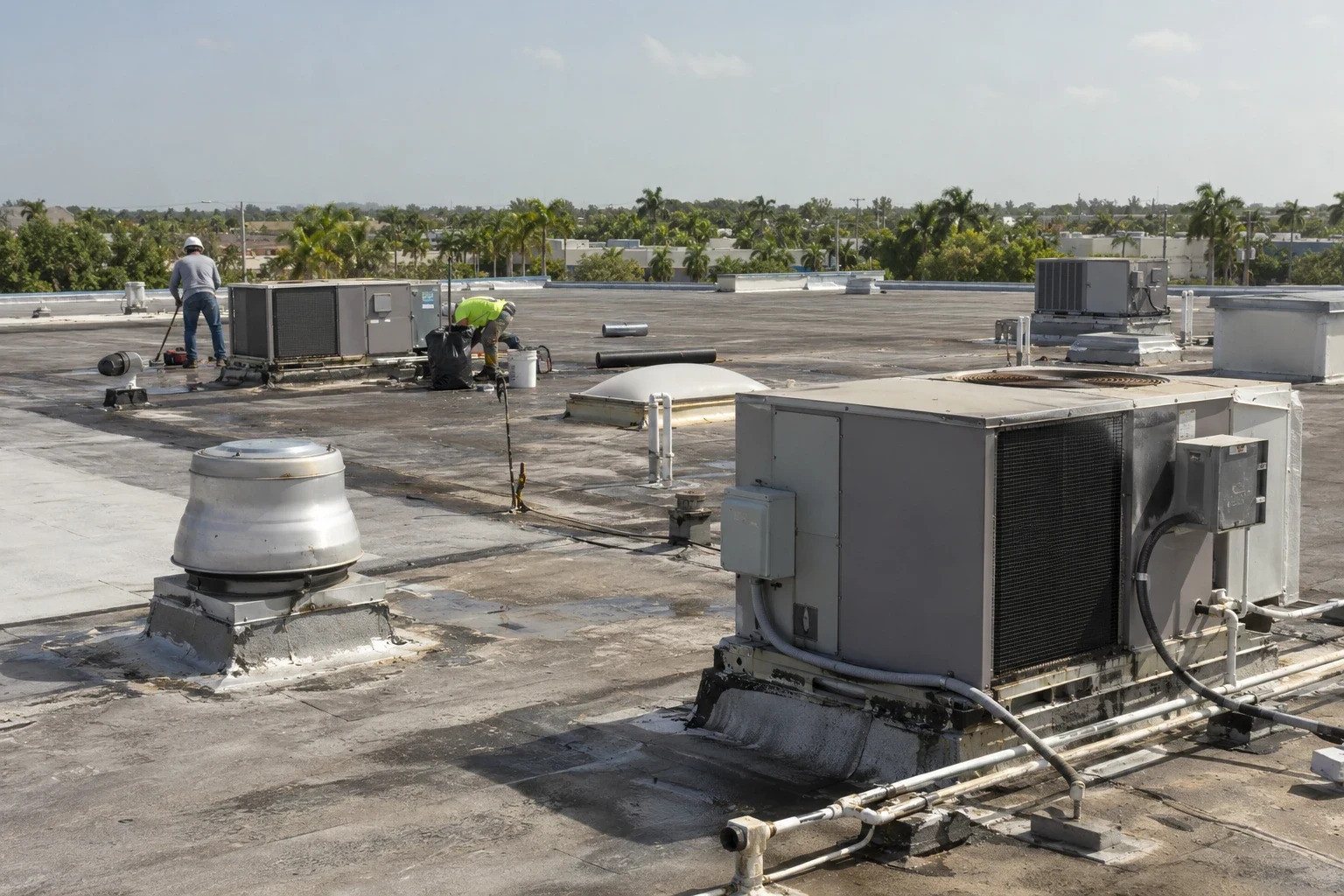
Public facilities teams have to protect buildings while moving work through access rules, approvals, budget timing, and records that may be reviewed later. For agencies in College Station, TX, we inspect accessible roof areas and document the condition in terms that support maintenance, procurement, and capital decisions. The field review covers seams, flashings, drains, penetrations, equipment curbs, and roof edges, with photographs organized by area. That gives a facilities manager a clear record of the issue, the recommended scope, and any access or testing limits.
Before the visit, share site contacts, security requirements, work-hour limits, prior inspection reports, and any active water reports. We identify who can authorize roof access and who will review a proposed change if concealed conditions appear. District and agency facilities staff may coordinate similar records through our school facilities roofing process, while each property retains its own site-specific findings.
Make observations reviewable
A useful condition record states what the crew could see and where it was observed. We map photographs to a roof plan or a plain location description, identify the detail involved, and note whether the condition is active, repaired, or still under review. If access to a roof area was unavailable, the report says so and explains what that prevents us from concluding. This keeps an estimate tied to observed scope instead of asking procurement staff to infer what a broad recommendation includes.
For an agency that receives repeated leak reports, the report can compare dates, affected rooms, and nearby roof details. We distinguish a likely repair from a question that needs moisture testing or additional access. A photographic condition report can support maintenance tracking and approval review, while a scheduled inspection can verify what has changed since the prior record. The file should make the next decision easier to trace. Name the report recipient and follow-up owner before each field review.
Define scope before requesting work
Procurement needs a scope with enough detail for bidders or reviewers to understand the work boundary. We identify roof areas, materials where they can be confirmed, temporary protection, staging assumptions, disposal, access, and any work that is excluded. A repair scope should say what detail is addressed and what adjacent condition remains. A replacement or restoration scope should explain existing layers, drainage, insulation, attachment, and any testing needed before a final system is selected. That level of detail helps reviewers compare proposals on the same basis.
For projects that change insulation or energy performance, College Station applies the 2024 International Energy Conservation Code alongside its 2024 building code, adopted effective January 1, 2026. Commercial and multifamily energy designs also require a COMcheck report under that code. When a roof project involves insulation or energy design, the agency should coordinate the roof scope with its design and code review team. We can document roof conditions and proposed assembly information relevant to the work. A capital planning record can connect current findings with an agency’s funding and approval schedule.
For projects that affect more than one facility, a shared specification can set consistent requirements while still listing each roof’s area, details, and access assumptions separately. We review project notes with the agency contact before estimating so a typical detail does not obscure a roof-specific condition. When the scope changes after opening a roof area, we document the new finding and obtain direction before proceeding with additional work. The record can include the review date and approving contact so the agency retains a clear decision trail.
Coordinate visits across public buildings
Government, education, and healthcare account for a significant share of the region’s largest employers, alongside research, office, retail, hospitality, and industrial activity. Public facilities can serve different functions and follow different access procedures. Before scheduling a portfolio review, list each building’s roof assembly, site contact, access rules, and maintenance history so the work sequence fits that property.
FM 2818, or Harvey Mitchell Parkway, connects commercial and residential land uses through the shared urban area. Facilities teams can use travel time to organize visits on both sides of the corridor, then confirm a separate access window and operating contact at each site. For a property in Bryan, we confirm the local contact and building procedures before arrival. Agencies managing clinical facilities can use a healthcare facility plan to coordinate patient routes, equipment access, and any work restrictions.
Plan around public access and operations
Public buildings may host staff, visitors, scheduled services, records, or equipment that cannot be blocked without notice. We coordinate roof access, lift location, pedestrian control, interior protection, delivery timing, and the person who can approve field decisions. If the work crosses an entrance or public route, the plan states how that route will remain available or when it will be temporarily redirected. Crews also need a weather securement plan for open work areas and a clear path for reporting schedule changes.
Where repairs are phased, we define work boundaries and transition points so the facility can confirm which areas are complete and which remain restricted. A phased occupied-building project can protect continued service when work takes place over active offices or public areas. For a defined opening, targeted roof repair may resolve the immediate condition while a larger scope moves through approval. Our emergency service is available all hours, every day, including holidays.
Preserve the roof history
At closeout, we record the work completed, areas photographed, materials installed, and conditions that remain open. The agency can file those details with procurement documents, roof plans, maintenance requests, and inspection history. If an invoice or change request needs review, the location-based photographs and scope notes help show what was addressed. A future manager can compare current conditions with prior work instead of relying on a short note that says only that a roof was repaired.
Severe hail and wind have affected the Bryan and College Station region, so public facilities can keep a post-storm inspection procedure ready for reported exposure. The presence of a weather event does not determine a building’s condition. We prioritize active water, visible movement, and operational concerns, then document the inspected area and follow-up. A wind-related roof review can be attached to the property record with recommended repair or additional investigation. That gives facilities and procurement staff a clear route from observation to authorized work.
Commercial Roofing Questions
Can you prepare a scope for public procurement?
We can document the affected areas, work boundary, access assumptions, temporary protection, and any exclusions or testing needs so reviewers can compare the proposed work clearly.
What if the roof cannot be accessed during the first visit?
The report identifies the area not reached and explains how that limit affects the conclusion. We can coordinate another access window or describe the testing needed to answer the open question.
How do you support a capital request?
We organize photographs, observed conditions, repair history available to us, and recommended scope. The agency can use that record with its own funding and approval process.
Can the building remain open during roof repairs?
Often, if access, protection, and work boundaries are planned with the facility contact. We coordinate around public routes and identify any short-term restriction before work starts.
How should a public facility respond after severe weather?
Document reported areas, prioritize active water and visible changes, and arrange a safe inspection. We record what was observed and what repair or additional review remains.
Prepare a reviewable roof scope
Send roof plans, prior reports, access procedures, procurement timing, and operating hours. We will document conditions and define the next work decision for your facilities team.
Related Roofing Work
Request a Roof Assessment
Tell us about the building, the roof and what you are seeing. We look at leaks, storm and wind damage, aging membranes and planned replacements on commercial properties across College Station, Bryan and Brazos County.