
Metal Roof Retrofit in College Station, TX
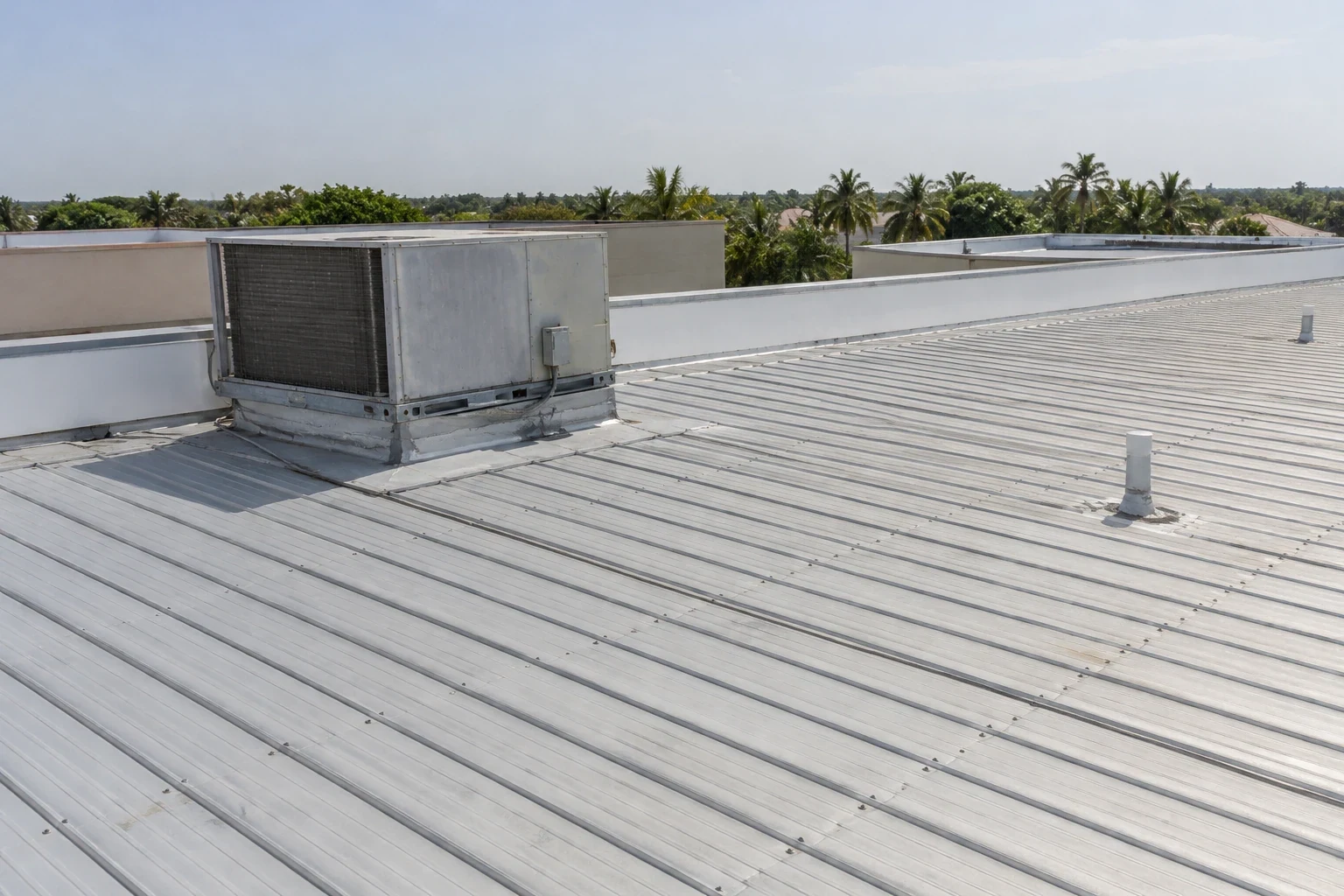
Metal Roof Retrofit
An exposed-fastener metal roof may look simple from the ground, but its leak paths often involve several connected parts: panel laps, fasteners, washers, closures, ridge and eave details, and penetrations. We inspect the system by roof plane, record the pattern of deterioration, and determine whether a targeted repair or a broader retrofit deserves evaluation. College Station's commercial property mix includes manufacturing, light industrial, office, retail, research, and hospitality uses, each with its own access, loading, and interior protection needs.
A retrofit can extend service life when the existing panels and structure remain suitable, but a coating cannot correct every attachment or moisture problem. We verify the substrate and roof condition before suggesting a restoration path. A commercial roof inspection provides the field record for that decision.
Map Fastener and Washer Deterioration
Fasteners loosen through movement, vibration, corrosion, or repeated thermal cycling. A hardened or split washer can stop sealing against the panel even when the screw appears present. We sample and map fastener patterns, note backed-out or missing hardware, and check whether the problem repeats along a seam, ridge, or perimeter. Replacing isolated screws can be useful, but a roof with widespread deterioration may need a larger attachment plan and a closer look at the supporting structure.
Fastener replacement should use a compatible type and embedment for the panel and substrate. Oversized screws may be needed where existing holes have enlarged, while damaged purlins or thin substrate can require a different repair. We record locations where the screw does not tighten normally instead of filling the opening and assuming it will hold. The map can also distinguish corrosion around a washer from movement that has enlarged the hole, since each condition may need a different fastener or panel repair. Where several repairs have accumulated, we compare the locations with leak history before recommending a wider treatment. A metal roof repair scope can define panel, fastener, and support work as distinct items.
Trace Water at Laps, Ridge, and Penetrations
Side laps and end laps can admit water where sealant has failed or panels have shifted. We inspect overlap direction, closure condition, sealant continuity, and signs of capillary entry, paying attention to roof slope and wind exposure. At ridges, eaves, valleys, and transitions, the survey notes whether trim laps shed water correctly and whether closures remain seated. A recurring stain inside may sit far from the opening, so the roof map records both the observed interior location and likely exterior paths.
Pipe boots, equipment curbs, conduit supports, and later additions interrupt the panel field. Their flashings need a detail that allows for panel movement and does not depend on a brittle bead alone. We identify the trade responsible for each penetration, list access constraints, and note any temporary sealant that should not be treated as a permanent assembly. A roof equipment interface review can clarify curb and support work before the retrofit is priced.
Test Whether the Roof Is Ready for Restoration
A coating system needs a stable base. Loose panels, active leaks, widespread rust, failed fasteners, and wet insulation must be addressed before coating can serve as the weathering surface. We identify areas that need cleaning, rust treatment, fastening, seam reinforcement, or replacement, and recommend adhesion tests when the existing finish or residue could affect bonding. The report distinguishes preparation from coating coverage so a proposal does not hide repair work inside a single area rate.
Silicone and acrylic coatings differ in how they handle standing water and weathering, and the right choice depends on slope, exposure, substrate, and maintenance expectations. A silicone roof coating review or acrylic coating comparison should follow moisture and adhesion checks. We also confirm that drains, gutters, and overflow routes remain functional so the new surface does not mask a drainage problem.
Plan Around Heat, Hail, and Wind Exposure
A July mean high of 95.4°F appears in College Station's 1991-2020 climate record. On metal, surface temperature can differ from the air and may affect sealants or coating work. We use current measurements and the product's application limits to decide whether work can proceed; a long-term average only helps the manager plan the season and protect crew access.
Hail between 1 and 2.75 inches was documented across Bryan and College Station during the April 2021 storm; a June 2023 severe thunderstorm produced an 85 mph gust in College Station. After an event, we review panel dents, loose edges, fasteners, and penetrations, then compare them with prior photos and repair records. Regional history does not prove that a particular roof was damaged. A post-storm roof review records the current evidence and any remaining uncertainty.
Choose Between Repair, Retrofit, and Replacement
Localized leaks with secure panels and sound supports may support a repair. A retrofit can be appropriate when the existing metal remains structurally suitable, attachment can be corrected, and the assembly can accept the specified restoration. Extensive corrosion, weak supports, concealed moisture, or repeated failure may shift the recommendation to removal or replacement. We state what was observed, what was tested, and which hidden condition could change the conclusion once the work begins.
The College Station code update took effect on January 1, 2026: permits now reference the 2024 International Building Code and 2024 IECC. A 2024 IECC COMcheck report is also part of commercial and multifamily energy design. The design and permit team should confirm project requirements before cost assumptions are finalized. When panel replacement is preferred, a standing seam system review can compare a concealed-clip assembly with the existing exposed-fastener roof. A replacement estimate should include insulation, edge conditions, drainage, access, and interior protection.
Sequence a Retrofit Around Building Use
Retrofit work still affects rooftop access, parking, loading, and operations below. We set a work zone, confirm where equipment or materials can be staged, and define the dry-in condition for each shift. If occupants need roof access for maintenance, the sequence identifies protected paths and notice requirements. A live-building reroof plan can coordinate the installation with staff and tenant schedules.
FM 2818, also known as Harvey Mitchell Parkway, spans about 20 miles between SH 6 at its north and south ends and serves commercial and residential uses. A property near the route may have specific delivery and traffic constraints; the manager confirms those conditions during planning. Midtown Business Park in College Station is planned for office, commercial, light-industrial, manufacturing, and retail buildings on 252 developable acres. These varied uses make it useful to address staging and access early. The College Station service area covers coordination for local projects.
Commercial Roofing Questions
Can an exposed-fastener roof be coated without replacing its screws?
Only after fasteners, washers, panels, seams, and substrate are evaluated. Loose or deteriorated attachment needs correction before a coating is considered as the roof's weathering layer.
How do you decide if a metal roof retrofit is feasible?
We review panel condition, attachment, corrosion, moisture, drainage, and adhesion. Testing is recommended when its result could change the restoration or replacement scope.
Will a coating stop every metal roof leak?
No. Open details, failed fasteners, damaged panels, and wet insulation need the right repair first. The assessment identifies preparation and repair work separately from coating application.
What records help after a hail or wind event?
Dated roof photos, prior repair logs, leak reports, and current inspection findings help distinguish new observations from existing wear. Event history alone does not establish property damage.
What should be included in a retrofit estimate?
Fastener correction, panel or seam repairs, rust preparation, adhesion testing, drainage, edge work, access, and protection below should be considered alongside the coating system.
Assess Metal Roof Retrofit Feasibility
Provide roof plans, panel or fastener details, leak history, prior repairs, access conditions, and the target service life. We can map the condition and define repair, retrofit, or replacement options.
Related Roofing Work
Request a Roof Assessment
Tell us about the building, the roof and what you are seeing. We look at leaks, storm and wind damage, aging membranes and planned replacements on commercial properties across College Station, Bryan and Brazos County.