
Standing Seam Metal Roofing in College Station, TX
Standing Seam Metal Roofing
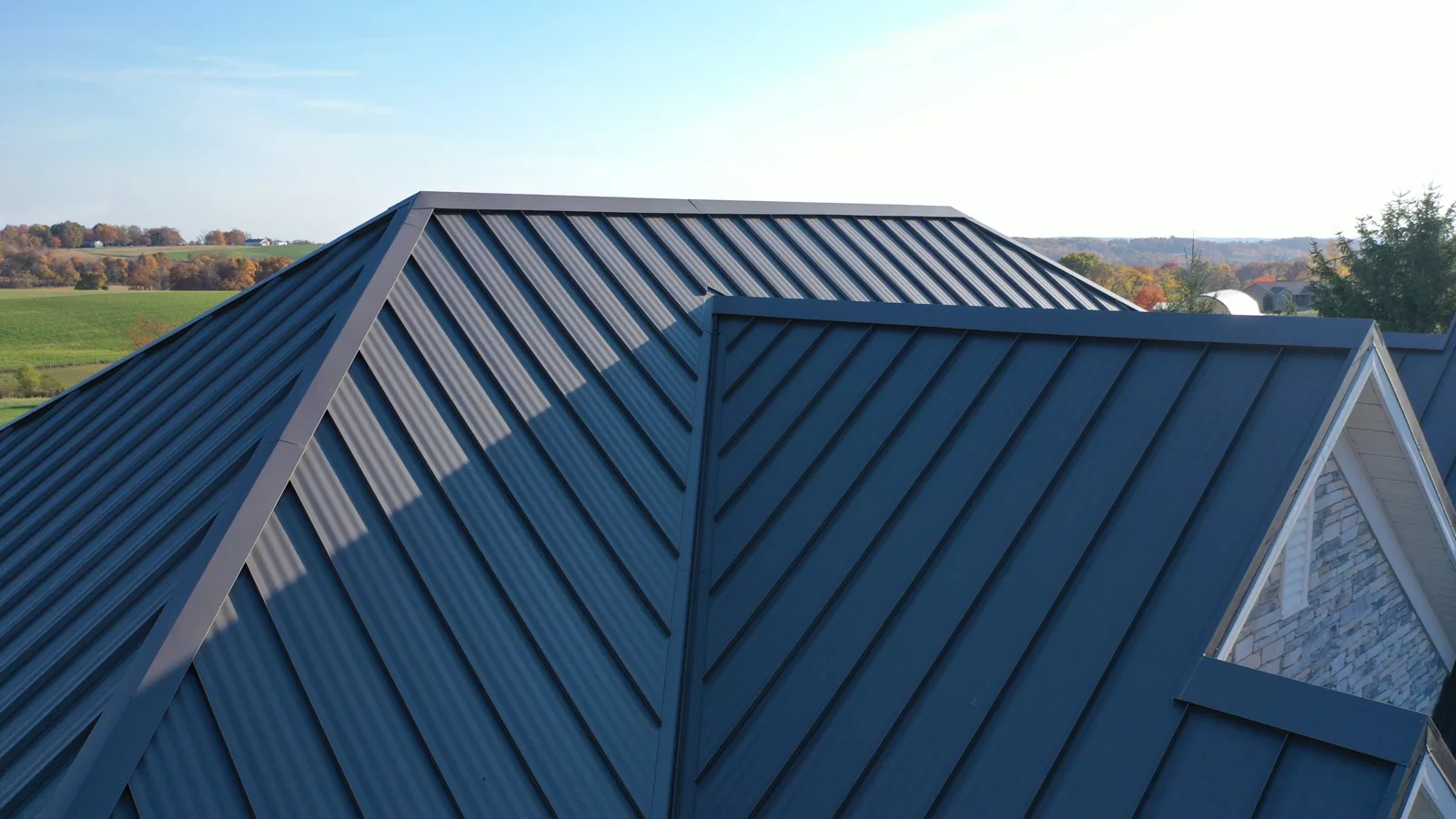
Standing seam metal roofs depend on more than the visible panel. The seam profile, clip spacing, substrate, flashing transitions, and movement allowance all affect how the assembly sheds water and handles expansion. We inspect the roof as a connected system, map conditions by slope, and separate a panel issue from a detail or support problem. College Station and Bryan include office, research, manufacturing, retail, hospitality, and rail-served industrial property, so access and operating limits belong in the survey plan from the beginning.
A roof review can help an owner decide whether a seam repair, panel replacement, or broader capital project is supported by the field evidence. We note access conditions, previous repairs, and areas that need closer testing. A commercial roof inspection establishes that baseline before replacement options are compared.
Understand the Panel and Clip Assembly
Standing seam panels connect at raised seams while clips secure them to a supporting substrate. Some clips permit movement as metal heats and cools; fixed points, clip layout, and panel length influence where stress can gather. We record seam shape, visible disengagement, panel distortion, and fastener or clip evidence where accessible. If a drawing or product record is available, we compare the installed configuration with it rather than assuming every panel uses the same attachment.
Oil canning is a visible waviness that may reflect panel geometry, substrate flatness, forming, or movement. Its appearance alone does not establish a leak or structural issue. We map the location, check seams and terminations nearby, and note whether the waviness changed after prior work. A metal roof retrofit review can help compare a repair path with a broader restoration when the existing system uses exposed fasteners or mixed assemblies.
Check Seams Without Forcing the Panel
We examine seam engagement, panel ends, ridge transitions, eaves, valleys, and changes in plane. A seam that has opened or loosened needs a method suited to its profile; forcing it closed without understanding attachment can transfer stress elsewhere. Where sealant has been added, we note its condition and whether it appears to be a temporary treatment or part of a designed detail. The inspection record identifies the affected run and the repair boundary so crews can return to the same panel.
Thermal movement can work against rigid attachments or short patches. We look for distortion near fixed points, elongated holes, recurring sealant splits, and panel buckling patterns, then compare them with the roof geometry and repair history. If concealed clips or substrate condition remain unknown, we explain what limited opening or manufacturer review could resolve that question. A metal roof repair scope should call out the panel profile, access, and compatible materials instead of pricing an unspecified seam treatment.
Treat Penetrations and Edges as Separate Details
Curbs, pipes, skylights, and rooftop equipment interrupt a panel's drainage path. We inspect their up-slope and side flashings, closures, sealant joints, and attachment points, especially where metal movement meets a rigid curb. Poorly fitted closures can admit wind-driven water even when the panel field looks intact. The report records each penetration and notes where work by a mechanical or electrical trade must be coordinated with roof repairs. A curb and equipment interface review can define those handoffs.
At perimeter edges, we check securement, trim laps, gutters, and transitions into adjacent roofing. Wind exposure at corners and eaves differs from the middle of a slope, so any observed loose metal is located precisely. We also trace runoff to downspouts or roof drains and note where splash or overflow could affect the wall below. If a leak appears indoors, the location is logged separately from the likely entry point until the field review connects them.
Use Local Weather Records to Guide the Survey
The 1991-2020 climate record lists a 95.4°F July mean high for College Station. Metal absorbs heat, so we consider time of day when arranging a close inspection of panel movement or scheduling repairs. The crew still relies on the current forecast, surface readings, and safe access conditions; a climate average does not diagnose a seam or panel.
The April 8, 2021 storm account describes hail reports around Bryan and College Station, with upper observations at 2.75 inches. A later severe-weather summary lists a College Station gust of 85 mph in June 2023. After a reported event, we look for denting, displaced trim, loose seams, and impact marks, then compare the findings with dated photos and repair history. Regional event records do not establish building-specific damage. A storm inspection can document present conditions and the limits of what is visible.
Set a Defensible Repair or Replacement Boundary
A repair can be appropriate when panel attachment is sound and the issue is limited to a seam, flashing, or isolated panel. Repeated seam distress, widespread corrosion, failing clips, damaged substrate, or persistent moisture may call for a larger replacement review. We state which observations support the recommendation and identify hidden conditions that could change quantities after opening the roof. Separate alternates make it easier to compare localized repair with full panel replacement on the same assumptions.
Since January 1, 2026, College Station has applied the 2024 International Building Code and energy code to new permit work. Commercial and multifamily energy designs need a 2024 IECC COMcheck report as part of their design review. The project team should confirm remaining permit requirements before final pricing. When a low-slope roof adjoins the metal system, a TPO system comparison may help coordinate a transition across roof areas. We also account for insulation, edge metal, drainage, access, and interior protection in the scope.
Coordinate Work Across an Operating Property
Metal panels arrive in lengths and bundles that require planned loading and staging. We confirm lift access, laydown space, delivery windows, noise limits, and areas that must stay open to staff or customers. The schedule defines where panels are removed, when the building is protected, and how the crew closes the day's work before leaving. A occupied-building sequence can set communication points for tenants and facility staff.
FM 2818, or Harvey Mitchell Parkway, connects destinations across Bryan and College Station along a roughly 20-mile route between SH 6 intersections. For a site near this corridor, loading routes and traffic timing may shape delivery planning; property management confirms its own access rules. College Station's Midtown Business Park is planned for commercial, office, light industrial, manufacturing, and retail use across 252 developable acres. That mix makes clear access planning useful across different property types. We coordinate work across the College Station service area.
Commercial Roofing Questions
Can standing seam panels be repaired without replacing the entire roof?
Often, if the issue is limited and the remaining seams, clips, substrate, and flashings are sound. We map the defect and check adjacent details before setting a repair boundary.
Does visible waviness mean the metal roof is failing?
No. Oil canning can relate to panel geometry or the substrate and does not by itself prove a leak. We inspect the seams, attachment, and nearby details to understand the condition.
What should be checked after hail or strong wind?
The survey can review seams, edge metal, penetrations, panel marks, and previous repairs. Regional weather history is context; the property-specific field findings guide the recommendation.
How do rooftop units affect a standing seam roof?
Curbs and service paths interrupt the panel system and need coordinated flashing and access details. We identify roof work and trade handoffs separately in the scope.
What information helps price a replacement?
Panel profile, roof plans, leak and repair records, access rules, insulation details, and any available attachment drawings help define the system and likely work sequence.
Review the Standing Seam Assembly
Share panel or project records, leak and repair history, access conditions, and capital timing. We can map seams and details, identify testing needs, and prepare repair or replacement limits.
Related Roofing Work
Request a Roof Assessment
Tell us about the building, the roof and what you are seeing. We look at leaks, storm and wind damage, aging membranes and planned replacements on commercial properties across College Station, Bryan and Brazos County.