
Commercial Roofing in Reveille Business Park, Bryan, TX
Reveille Business Park
Commercial roofs in Reveille Business Park need a work plan that can account for a changing mix of properties as the area develops. Bryan’s master plan for the business park covers multiple phases and both non-residential and residential lots, so an owner may be coordinating roof work alongside other property activity. We begin with the roof assembly, access conditions, and the operating calendar for the building in front of us. The district plan gives useful context, while the inspection establishes the actual repair boundary and next step.
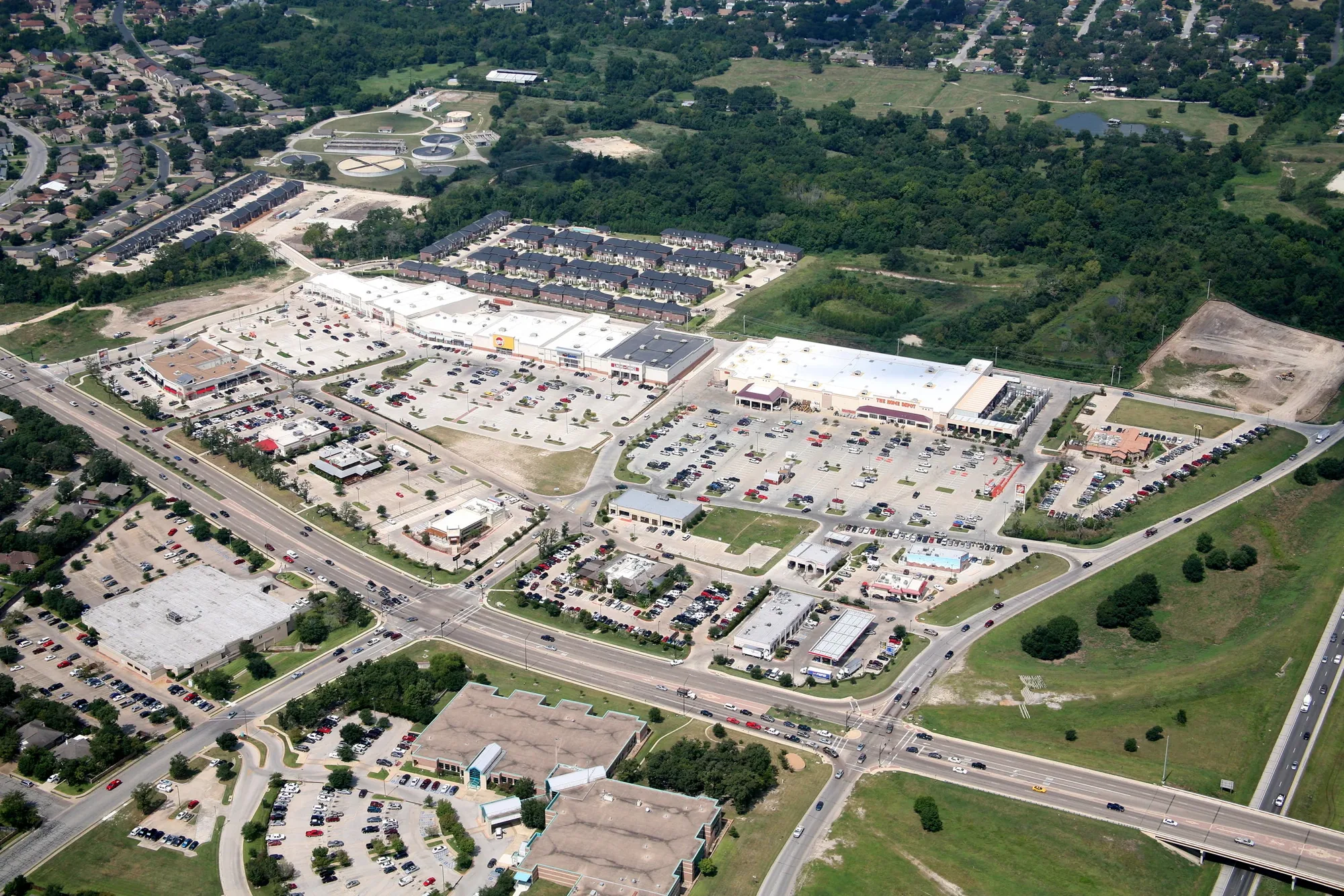
The park is planned north of SH 30 between Winding Creek and Hardy Weedon Road. That location can help a property team organize site access and construction logistics, but it does not tell us what roof system is installed on any particular building. We ask for roof plans, prior invoices, leak locations, tenant schedules, and any active exterior work. A commercial roof inspection can document visible conditions and set a baseline for maintenance or capital planning.
Plan around phased property activity
A multi-phase development can place existing operations near construction activity, even when a roof project concerns only one building. Before mobilization, we confirm the work area, access route, delivery window, staging location, and any point where occupants or other trades need uninterrupted passage. A written sequence identifies which roof section is being opened, where materials move, and how temporary protection is maintained if weather interrupts the day. That gives the property contact a practical view of the work boundary instead of a vague start date.
Where a building remains occupied, scheduling should reflect its daily use. We coordinate loud tasks, lift placement, roof access, and interior protection with the person who controls the operating calendar. A limited repair may fit one short window; replacement or removal can require several phases and more trade coordination. An occupied-building reroof sequence can break the work into manageable areas, while a capital plan can connect condition findings with timing and funding decisions.
Record each roof as its own asset
A useful first walk follows the roof from field seams to perimeter details. We check laps, patches, penetrations, curbs, wall transitions, drains, scuppers, edge metal, and rooftop supports, then compare those observations with leak reports and repair history. Photos include enough surrounding surface to find each detail again. If the property has more than one roof section, we label them separately, so a later contractor or facility manager can tell whether a reported condition is new, recurring, or already corrected.
Reveille’s planned mix of residential and non-residential lots makes property-level records especially practical for owners coordinating several buildings. The plan does not establish occupancy or roof types, so we verify each site contact, operating hours, and assembly before proposing work. A photo-supported condition report can keep observations, recommendations, and open questions together. When the ownership group also manages properties elsewhere in Bryan, a separate Bryan roof review can use a consistent reporting format without combining one building’s findings with another’s.
At penetrations and equipment curbs, we look for separated flashing, unsupported lines, sealant failures, and movement at the curb interface. At drains, we note restrictions, damaged strainers, low areas, and signs that water has remained after rain. Each observation needs a location and an action: repair, monitor, test, or investigate further. A stain inside can guide the search, but it does not by itself establish where the roof opened. We compare the interior report with the details above it before setting the repair boundary.
Use regional weather as inspection context
In July, the average daily maximum in College Station is 95.4°F; normal highs begin at 94°F and reach 97°F late in the month. That market-level heat context matters when planning roof access and considering repeated exposure at seams, flashings, and rooftop equipment. It does not substitute for field evidence. We assess the actual membrane condition, attachment, drainage, and repair history on the Bryan property before deciding whether the next step is maintenance or corrective work.
The Bryan and College Station area also has a documented hail history. After a reported storm, we inspect the property named by the owner, photograph visible marks, and look at penetrations, edge details, and equipment transitions where movement or impact may matter. A storm-related roof assessment can separate observed conditions from questions that need moisture testing or a closer review. If the assembly remains serviceable around a small affected detail, a defined repair scope may address it without expanding the project beyond the evidence.
Heat and storm context also help with scheduling. Exposed roof work may need a different inspection window than interior coordination or material delivery, and weather can interrupt an open section. We identify temporary protection, end-of-day tie-in details, and who can authorize a pause or change in the sequence. A maintenance visit can record drainage and flashing condition before an issue reaches an occupied area. The point is a usable roof record and a practical response, not a prediction about what any building has experienced.
Compare repair with broader renewal
A repair is a good candidate when the affected area is limited and the surrounding assembly can still perform. Recurring leaks, widespread wet insulation, loose attachment, or several deteriorated transitions can point toward a broader scope. We tie each recommendation to an observation and explain what information could change the decision. If moisture testing or a controlled opening is needed, the report states why and how the result will affect the work boundary.
Cost and timing depend on more than the visible patch. Access, roof height, staging, tear-off depth, insulation replacement, deck repairs, drain corrections, equipment disconnection, and protection below can all change labor and sequence. We list confirmed work separately from allowances for concealed conditions. A commercial roof replacement scope can define removal, assembly, flashing, drainage, and phasing when the evidence supports a capital project.
Carry the roof history forward
Closeout should identify the areas reviewed, photos taken, repairs completed, and items left open. We note access limits, concealed conditions, and the follow-up trigger for any deferred work. If a repair is planned for a later phase, the record can name the responsible contact and the condition that should prompt an earlier return. That keeps the reason for the decision attached to the roof rather than buried in an old email or a short invoice description.
For properties in the broader Bryan and College Station area, a separate College Station property review can follow the same evidence-based format while retaining its own plans and operating constraints. Reveille Business Park’s phase context may help with coordination, but each roof still gets its own assembly notes and repair decisions. Share plans, access details, occupied hours, leak history, and the project calendar. We can inspect the roof, document the findings, and return a sequence that your team can use.
Commercial Roofing Questions
Does the business park plan show what roof system a building has?
No. It describes the planned area and property mix, while a roof walk confirms the assembly, condition, and access limits for the specific building. We record those details before recommending repair or renewal.
Can roof work proceed while other phases are active?
We coordinate access, deliveries, staging, and occupied routes with the property contact. The sequence can identify roof sections and temporary protection so nearby activity has a clear work boundary.
What should be ready before the first inspection?
Roof plans, leak locations, prior repair invoices, operating hours, and access instructions help focus the visit. A marked aerial is useful when the property includes several roof sections.
How do you decide whether a repair is enough?
A bounded defect with serviceable surrounding materials may support a local repair. Repeated leaks, broad moisture, or failing attachment can change the scope, and we explain what evidence supports each option.
Does summer heat affect the work window?
College Station’s climate normals provide regional context for summer roof access. We set the actual inspection window with the Bryan property contact and base the recommendation on the roof’s observed condition.
Schedule a Reveille roof review
Share roof plans, repair history, access requirements, occupied hours, and the development calendar. We can inspect the property and return a documented repair or capital sequence.
Related Roofing Work
Request a Roof Assessment
Tell us about the building, the roof and what you are seeing. We look at leaks, storm and wind damage, aging membranes and planned replacements on commercial properties across College Station, Bryan and Brazos County.