
Commercial Roof Coating Restoration in College Station, TX
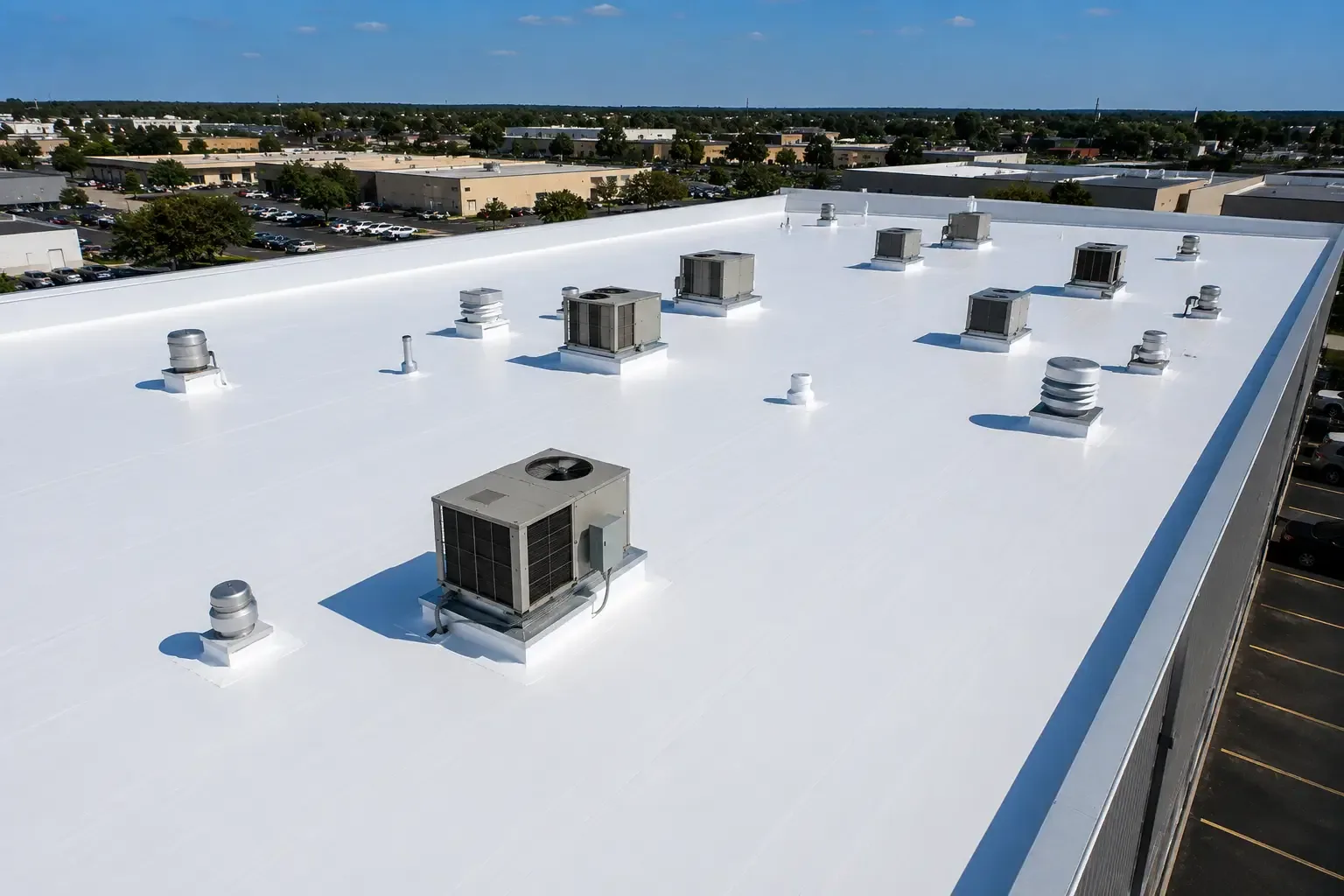
Commercial Roof Coating Restoration
A coating is a renewal option only when the roof beneath it can support the system. On an office, research, or industrial property in College Station, TX, we first inspect the existing membrane or surfaced roof, its seams, flashing, drainage, and visible moisture conditions. The review separates areas that can be prepared from areas needing repair, removal, or testing. We then explain what a coating can address, where it will not correct a failed detail, and how access or cure time fits the operating schedule. That gives an asset manager a defensible comparison between restoration and a broader roof project, tied to the assembly actually on the building.
Check whether the base can support renewal
We look for a substrate that is sound enough to receive a new coating layer. Blisters, loose surfacing, open laps, failed patches, extensive wet insulation, and damaged flashing can change the work from restoration to repair or partial replacement. A small defect may be corrected before coating, while widespread deterioration or trapped moisture may make covering the surface an unsuitable response. We document the location and extent of each condition, then identify whether a test opening or moisture survey would clarify what is concealed.
Roof history matters as much as a visual pass. The assembly, prior coatings, repairs, leak records, and equipment additions help explain whether the proposed system is compatible with what remains. Where the existing material is uncertain, we verify it before selecting preparation or primer. We also check the slope and drainage path, because a coating does not create positive drainage where the roof geometry holds water. The written scope should identify these limits instead of presenting a coating as a uniform answer for every roof area.
Prepare the surface before application
Coating performance begins with preparation. We identify loose material, contaminants, deteriorated patches, and areas where water collects, then define the cleaning and repair steps needed before application. The existing surface has to be dry and stable enough for the selected system to bond. Details at curbs, walls, penetrations, drains, and transitions may require separate flashing work rather than a broad field pass. We explain which repairs are included, which remain outside the scope, and what condition would require a change before coating starts.
System choice depends on the substrate and site conditions. A silicone coating and an acrylic coating have different characteristics, so we match the material to the existing assembly and exposure rather than naming a product before inspection. Sample areas or adhesion checks can help confirm compatibility where records are incomplete. If the base is an EPDM membrane, the surface and seams need specific review before a coating is selected. The project record names the preparation steps and the boundaries of the restored area so another facilities contact can understand what was treated. It also notes any locations where the substrate differed from the expected assembly and whether those areas received a separate repair. That distinction helps a later field review compare like conditions and avoid attributing a change to the coating when the underlying repair scope also changed.
Treat seams and penetrations as separate work
Field coating does not replace detail repair. We inspect membrane laps, termination bars, pitch pockets, pipe boots, skylight curbs, expansion joints, and wall transitions for movement or separation. At a drain, we consider how the coating meets the bowl and whether debris or a low area affects flow. At the perimeter, we review edge metal and attachment where wind can act on a lifted component. Each detail needs a compatible treatment that preserves the intended water path. A perimeter review or a focused drainage correction may be part of the scope when those conditions are present.
College Station’s July climate normals show an average daily high of 95°F for the month, with the monthly mean high at 95.4°F. Sustained heat is relevant to surface preparation, application windows, and rooftop equipment exposure, but it does not establish the condition of a specific roof. We verify the substrate and weather conditions at the work area rather than inferring suitability from a regional average. A moisture survey can add information where the visible surface does not show the full extent of a concern. The recommendation follows that evidence and the assembly details.
Fit cure and access to site use
Application creates a temporary operating constraint. We coordinate roof access, staging, equipment clearances, odor or ventilation considerations, and any areas below that need protection. The property contact can identify occupied hours, rooftop service routes, and restricted equipment zones before the crew arrives. Weather and surface conditions also affect when work can proceed and when the area can accept foot traffic or equipment service. We set the sequence by roof section, describe which routes remain open, and identify any return visit that is part of the approved work.
The Bryan and College Station core includes research, health-science, retail, manufacturing, hospitality, and rail-served industrial properties. A coating project over a research or production area may need to protect equipment access and maintain a clear roof route, while a retail property may prioritize customer-facing operations below. Along FM 2818, which connects destinations through the urban area, the property team may also need to coordinate staging with a loading or service entrance. We work through those constraints with the site contact and place the agreed schedule in the project record.
Set limits in the work record
Closeout notes identify the roof areas coated, preparation completed, repairs made, and details left outside the work. Photographs show transitions and repaired conditions that could matter during the next inspection window. We also record any access limitation, test result, or weather condition that affected the application. If an area did not meet the agreed preparation standard, the record explains what changed and whether further work is recommended. That gives the asset manager a traceable baseline for maintenance instead of a surface description with no repair history.
In Bryan, the commercial inventory includes retail, manufacturing, and developable properties, while College Station adds research and office buildings to the regional mix. A multi-property manager can compare the coating record with each roof's assembly and repair history without assuming one site's result transfers to another. We can organize findings in a condition report or discuss whether a larger replacement evaluation belongs in the capital cycle. The next decision remains tied to the condition beneath the coating and the way that building operates.
Commercial Roofing Questions
How do you decide whether a roof can be coated?
We inspect the substrate, seams, flashing, drainage, prior repairs, and signs of moisture. If the assembly is uncertain or concealed conditions could change the recommendation, we identify a test or survey before setting the final scope.
Will coating stop ponding water?
A coating follows the existing roof shape and does not correct a low area by itself. We assess the slope and outlet path, then separate drainage work from the coating scope when water cannot reach a drain or edge outlet.
Can failed seams be coated over?
A separated seam or flashing detail needs compatible repair and preparation before the field coating proceeds. We document the condition and repair boundary so a broad application does not conceal an unresolved opening.
How should we plan around the application?
We coordinate roof access, equipment routes, occupied hours, staging, ventilation needs, and any protection required below the work. Weather and cure conditions affect when sections can accept traffic or service activity.
What belongs in the project closeout?
The record should identify treated areas, preparation, repairs, exclusions, photographs, and any test findings or access limits. We note follow-up items so maintenance staff can compare later observations with the restored surface.
Review a coating candidate
Send roof plans, prior coating and repair records, leak history, occupied hours, and equipment-access needs. We can inspect the substrate, define preparation, and compare restoration with other capital options.
Related Roofing Work
Request a Roof Assessment
Tell us about the building, the roof and what you are seeing. We look at leaks, storm and wind damage, aging membranes and planned replacements on commercial properties across College Station, Bryan and Brazos County.