Holcim Elevate Roofing in College Station, TX
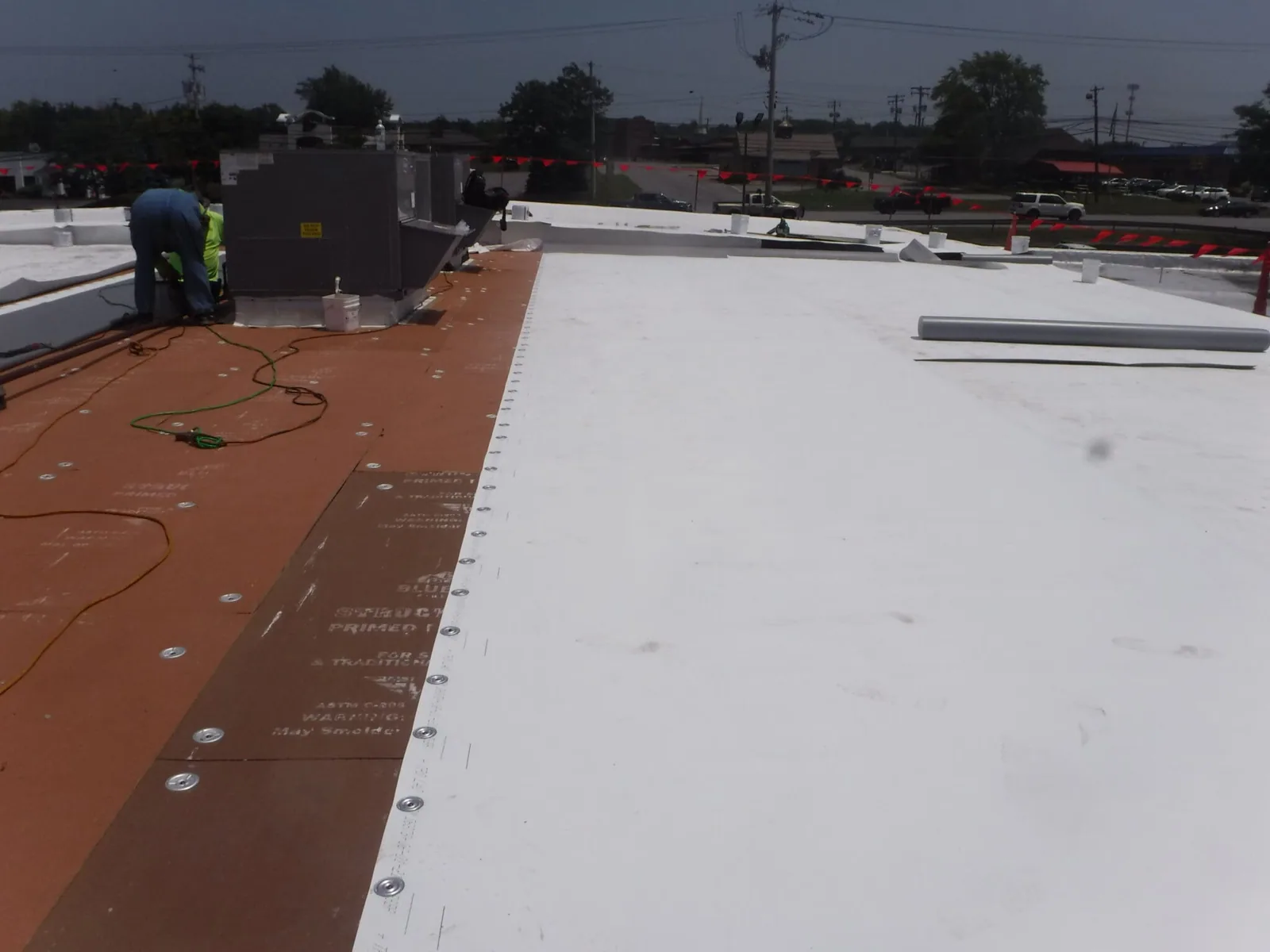
Holcim Elevate Roofing
Holcim Elevate product names can appear on several roof assemblies, so we begin by identifying what the building has before discussing new work. On a College Station, TX property, we inspect the membrane, seams or laps, flashings, edges, drains, rooftop equipment, and any accessible insulation or deck areas. The field record ties observations to a roof plan and notes what remains concealed. This is useful for owners comparing a repair with a replacement scope, especially where a single property has additions from different construction periods.
Bryan’s industrial base includes the Brazos County Industrial Park, Texas Triangle Park, and Bryan Business Park. Downtown Bryan also has an established mixed-use business environment. We use these place facts to understand the range of property uses across the area, then ask each owner about loading, equipment, tenants, and roof access. We can review a Bryan commercial roof with a Holcim Elevate EPDM, TPO, PVC, asphaltic, or metal system where the installed assembly supports that identification.
Identify the Holcim Elevate system on the roof
Holcim Elevate provides commercial roofing families that include EPDM, TPO, PVC, asphaltic materials, insulation, and roof accessories. RubberGard EPDM and UltraPly TPO are among its named membrane lines. Knowing the product family helps locate relevant details, but it does not settle the condition or the full assembly. We confirm sheet type, attachment, insulation, cover board, flashing, perimeter, and repair materials wherever records or physical features allow.
If the roof has EPDM, seams and field details use different joining methods from a thermoplastic roof. For TPO or PVC, weld quality, membrane condition, and flashing compatibility need close review. An EPDM assembly assessment or TPO system review considers the installed product and the roof beneath it.
Some projects can use a recover layer, while others require removal. Before estimating a Holcim Elevate overlay, we check moisture, adhesion, deck condition, membrane compatibility, drainage heights, and added weight. A recover over trapped moisture or unstable layers may conceal a condition rather than resolve it. Test cuts or a defined sample area can show whether the existing roof remains a suitable substrate, and the report states the implications of either result.
Map differences across roof zones
Large commercial roofs rarely behave as a single uniform field. An older addition can have different insulation, attachment, slope, or edge details from the original building. A newer rooftop unit may sit over a modified curb, and prior service work may have changed the membrane around it. We divide the roof into identifiable zones, record each assembly where known, and note changes in condition. That map lets a facilities manager approve a repair in one area without confusing it with a replacement decision elsewhere.
Texas Triangle Park is a rail-served industrial property in northeast Bryan, while the Brazos County Industrial Park lies west of FM 2818 south of SH 21. Freight and production properties can have varied access patterns, roof penetrations, and equipment schedules. We do not infer an individual building’s operations from its location. The property contact identifies active lines, sensitive interior areas, deliveries, and roof zones that cannot be opened together; our sequence then accommodates the confirmed needs.
At a parapet, curb, or expansion joint, the membrane must turn into a detail that stays secure through movement and weather exposure. We inspect corners, terminations, counterflashing, penetrations, and changes in elevation. Where metal has moved or a previous patch has split, the scope should identify whether the metal, membrane, or substrate is part of the repair. A condition report can map those findings to photographs and distinguish urgent work from maintenance or monitoring.
Use storm records to guide the inspection
A 2019 National Weather Service assessment rated a storm east of Bryan EF-2 and logged damage to four commercial buildings and warehouses. The report helps facilities teams identify a date for checking old work orders and roof photographs. It does not prove that a particular building received damage. We document current conditions at the property, including open seams, displaced edges, damaged flashings, punctures, debris impact, and interior leak reports that can be tied to a roof zone.
Storm follow-up should be orderly. We record the date of the inspection, weather conditions during the visit, roof areas reached, and details that require testing. If a roof has a documented repair from an earlier event, we compare that area with the repair record and look for a recurring issue. The owner receives distinct observations and recommendations instead of a broad statement that the whole property needs replacement because a regional storm occurred.
Heat and sun also affect when work can proceed. We check daily conditions and the product instructions before handling, adhering, welding, or coating materials. Completed areas need protection from later trade traffic, and exposed zones need a planned dry-in. For a metal roof conversion, an Holcim Elevate retrofit evaluation should address the existing panels, structural attachment, drainage, and system details before membrane work begins.
Set clear repair and replacement limits
A repair proposal should show the defect, the surrounding material, and the point where the patch can terminate. We identify the membrane and accessory materials where confirmed, prepare the substrate as required, and state which adjacent condition might affect the repair. If a suspected leak comes from a curb, drain, wall, or equipment transition, we inspect that detail rather than treating the interior stain as the roof opening.
For replacement, the owner needs a complete scope covering removal, insulation, cover board, attachment, membrane, edges, penetrations, drains, rooftop equipment, protection below, debris handling, and closeout records. We show where moisture testing may change the removal area and how that decision will be documented. A replacement plan should also establish access, delivery windows, daily dry-in, and the contact who can approve a change in field conditions.
Existing roofs may qualify for a coating or restoration only after the surface and underlying assembly have been evaluated. A coating does not replace missing attachment, repair wet insulation, or resolve a failed deck. We document preparation, reinforcement, drains, and flashing so the owner understands what the restoration includes. If another system is being considered, compare a Sika Sarnafil option with a Carlisle SynTec assembly using the same project criteria rather than comparing brand descriptions.
Keep service history connected to the system
After installation, the asset record should identify the membrane, insulation, cover board, attachment, flashings, drains, and any limited-access areas. Keep dated photographs with the final roof plan, approved submittals, repair notes, and equipment changes. This makes later inspection more useful because the reviewer can distinguish an original detail from a repair or a later trade installation.
Routine maintenance should include drains, scuppers, rooftop pathways, exposed terminations, and penetrations that receive repeated service traffic. We identify debris or damage and record whether an item needs cleaning, a repair visit, or a separate trade. A scheduled roof maintenance visit can track these recurring items and preserve work history before the next major capital review.
Commercial Roofing Questions
How do you confirm which Holcim Elevate system is installed?
We review product labels, roof records, details, repair materials, and accessible membrane characteristics. When those clues do not establish the exact assembly, the report records that limit and identifies the information or test needed to verify it.
Can a Holcim Elevate EPDM roof be repaired with a patch?
A localized patch may work when the membrane, substrate, and surrounding seams are sound and compatible repair materials are available. We inspect the full detail and define the patch boundary. Widespread moisture or repeated seam failure can change the recommendation.
Does the 2019 tornado report tell us our roof was damaged?
It documents damage to four commercial buildings and warehouses east of Bryan. We use the event date to organize property records, then inspect the roof itself. Our findings describe current observed conditions and any area that requires further testing.
What information changes a recover decision?
Moisture, attachment, deck condition, surface compatibility, roof height, drainage, and added load all matter. We test uncertain areas and explain whether the results support a recover or point toward removal of existing layers.
Can roof work proceed while our building stays open?
We plan by zone and confirm access, protection below, equipment restrictions, deliveries, and work hours with the building contact. Each phase needs a defined dry-in point. The sequence can change when field testing identifies concealed damage.
Document the Holcim Elevate roof in place
Share the roof plan, product data, maintenance history, equipment schedule, and access limits. We can inspect the assembly, record its details, and organize repair or replacement choices around verified conditions.
Related Roofing Work
Request a Roof Assessment
Tell us about the building, the roof and what you are seeing. We look at leaks, storm and wind damage, aging membranes and planned replacements on commercial properties across College Station, Bryan and Brazos County.