
SOPREMA Commercial Roofing in College Station, TX
SOPREMA Commercial Roofing
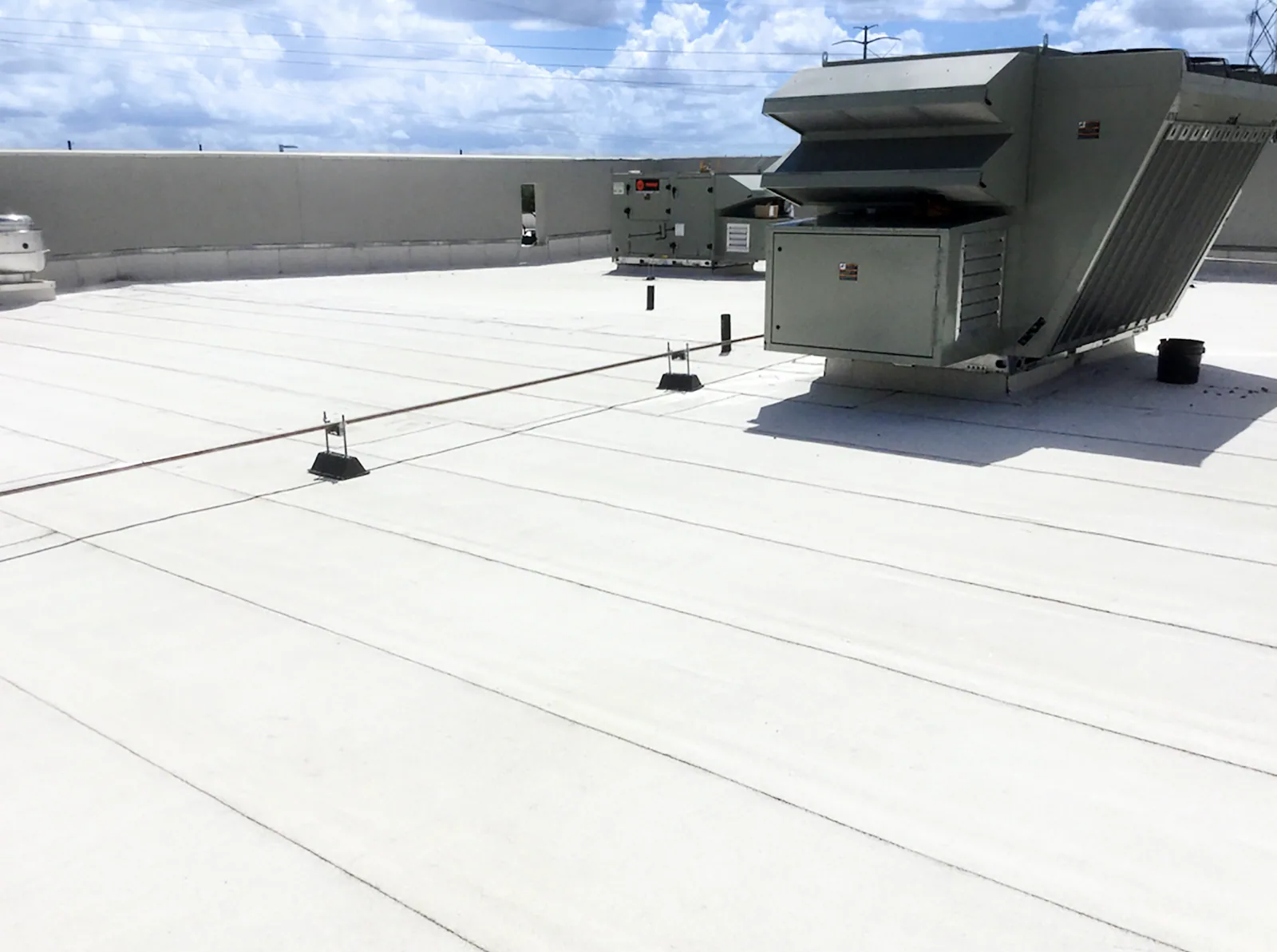
A SOPREMA roof can use a layered asphaltic assembly, a liquid-applied membrane, or a single-ply PVC system. The first step is to find out which one is specified or installed. In College Station, TX, we document visible layers, seams, flashing, drains, roof edges, penetrations, and past repairs, then compare those conditions with the product data and the owner’s operating calendar. A FM 158 corridor roof review in Bryan may involve retail, commercial, and multifamily properties, each with different access and phasing needs.
A destructive June 3, 2023 thunderstorm at College Station included an 85 mph wind gust in the weather record. That record gives the facilities team a date to check maintenance calls and photographs. It does not tell us what happened to an individual roof. We inspect the property, record current conditions, and connect every recommendation to an area that can be found on the roof plan.

Identify the construction method first
SOPREMA’s commercial range includes SBS-modified bitumen membranes, PVC single-ply products, and polymeric PMMA or PMA liquid-applied materials, alongside insulation and related components. These product families call for different substrates, details, and work sequences. We review the selected product documents and build a scope that identifies each layer, adhesive or attachment, flashing material, drain detail, and roof edge. The owner should be able to see what gets removed, what remains, and how the new system ties into the building.
A modified bitumen roof uses a layered assembly, and a built-up roof adds its own ply and surfacing sequence. We inspect the exposed cap sheet, laps, seams, ridges, patches, and wall transitions while noting that the visible surface may not show all concealed conditions. A built-up assembly review can include test cuts to verify the layers and check whether moisture or weak adhesion changes the removal boundary.
Liquid-applied products need a prepared, compatible substrate and careful treatment at transitions. We check the surface, seams, drains, penetrations, and coating edges before any restoration is priced. The proposal should identify cleaning, repairs, reinforcement, application limits, and cure or weather requirements from the selected product documents. A surface coating may extend a suitable assembly, but it cannot make wet insulation, a loose deck, or a failed drain disappear.
Plan hot work and occupied areas
Asphaltic roof work can involve heat or flame depending on the selected method. The project plan should identify the application approach, fire prevention measures, roof access, material staging, and any building restrictions. We confirm the site’s hot-work rules and coordinate with the owner before work begins. Where a torch method is not permitted or practical, the design and approved product options can be reviewed for another application method that fits the building.
The Bryan FM 158 corridor is identified in city development materials as a commercial and retail area, with multifamily and commercial projects also documented along the surrounding corridors. That mix can mean tenant access and pedestrian activity continue during a roofing project. We agree on lift placement, delivery hours, blocked routes, and roof-zone limits, then keep communication with the property contact as the sequence changes.
For an occupied building, we also consider odor, noise, work above sensitive rooms, and the timing of equipment shutdowns. Crews divide the project into phases with a secure dry-in point at the end of each shift. The contact below the work zone knows what area is open and when protection will be restored. These steps help avoid leaving a roof opening dependent on a later shift or a weather change.
Follow the membrane into each detail
Most water entry occurs where the field system meets a penetration, curb, drain, wall, expansion joint, or roof edge. We trace those connections and note whether the material is cracked, separated, patched, or concealed. On a multi-ply roof, a lap defect and a blister need different treatment. On PVC, the team reviews welds and flashing compatibility. Liquid-applied systems require attention to film continuity, reinforcement, and transitions. The inspection records the method that fits the identified system.
Drainage must be separated from membrane condition in the repair scope. We check strainers, bowls, clamping rings, scuppers, sumps, and the visible flow path. Debris can restrict an outlet, while a damaged ring or failed flashing needs a roof repair. A low area may require further review of slope or deck conditions. A drainage assessment can state which work is cleaning and which work restores the waterproofing detail.
On older roofs, a patch over a previous patch can make the original system hard to identify. We compare records with physical evidence and note where a sample or test cut would settle the question. If one section has different layers or a later addition, it gets a separate label on the plan. That helps the estimator avoid extending one repair method across roof areas that do not share the same construction.
Use the storm record as a timing reference
A work order following severe weather deserves comparison with dated photographs and the current roof condition. We compare the reported location with repair history and inspect that zone today. We look for open or displaced details, tears, impact marks, and interior reports. A regional report does not prove the cause of a leak at a specific building, so we separate documented weather from the findings at the roof.
Heat can affect handling and cure time for some materials. We check actual roof and air conditions before a work shift and follow the selected product’s instructions for application and protection. A hot roof surface may change access timing, while wind or rain can change when a section can be closed. The crew keeps material in the required condition, prepares only the area that can be completed, and secures the boundary before leaving.
Compare restoration with removal
Restoration can be appropriate when the existing roof is sound enough to prepare and the selected material is compatible. We check attachment, moisture, surface condition, drains, details, and the extent of prior repair. Where an area is wet or unstable, a coating does not correct the underlying assembly. Test results and repair mapping show whether restoration remains a reasonable option or if removal is needed.
A replacement scope should list the assembly by layer and include tear-off, insulation, cover board, membrane, perimeter, flashings, drains, equipment, protection below, disposal, and closeout. We note how concealed deck conditions will be handled and what approval is needed when field findings change the quantity. An owner can compare the restoration scope with a replacement proposal using consistent roof areas and access assumptions.
For an alternate brand review, a Johns Manville proposal or Duro-Last membrane scope should account for the same substrate, drainage, transitions, and project phasing. The specifications and approved details control the comparison. We can identify differences in material, preparation, or construction without treating a product name as proof of performance at that building.
Commercial Roofing Questions
Which SOPREMA system is installed on our building?
We check the roof documents, product labels, visible layers, membrane details, and repair materials. If the exact product is not clear, we record that limitation and identify what additional document or test would confirm the assembly.
Can a modified bitumen roof receive a liquid-applied restoration?
It depends on the roof’s surface, attachment, moisture, details, and compatibility with the selected product. We inspect the existing assembly, identify preparation and reinforcement needs, and confirm whether concealed conditions require testing before a restoration is priced.
How do you reduce risk during hot work?
We confirm the property’s hot-work rules, document the proposed application method, coordinate fire prevention and access, and phase the roof so open areas can be closed at each shift boundary. The specific plan follows the project documents and building restrictions.
Can a patch solve a leak in a multi-ply roof?
A patch can address a defined failure if the surrounding material is sound and the repair method matches the assembly. We trace the entry point, examine adjacent laps and flashing, and check whether moisture or a failed drain changes the repair boundary.
What information should we retain after roofing work?
Keep the roof plan, product data, approved details, photographs, repair locations, and maintenance notes together. A later inspection can then identify which layer or zone was serviced and whether a new condition follows the same path.
Review a SOPREMA roof system
Share product data, roof plans, repair history, hot-work requirements, and operating hours. We can inspect the existing layers and details, then set a repair, restoration, or replacement scope with clear limits.
Related Roofing Work
Request a Roof Assessment
Tell us about the building, the roof and what you are seeing. We look at leaks, storm and wind damage, aging membranes and planned replacements on commercial properties across College Station, Bryan and Brazos County.